Swiss Chard Identification Guide
How to identify Swiss chard (Beta vulgaris) by its large glossy crinkled leaves and brightly colored thick stalks and veins.
Read the full Swiss Chard encyclopedia entry →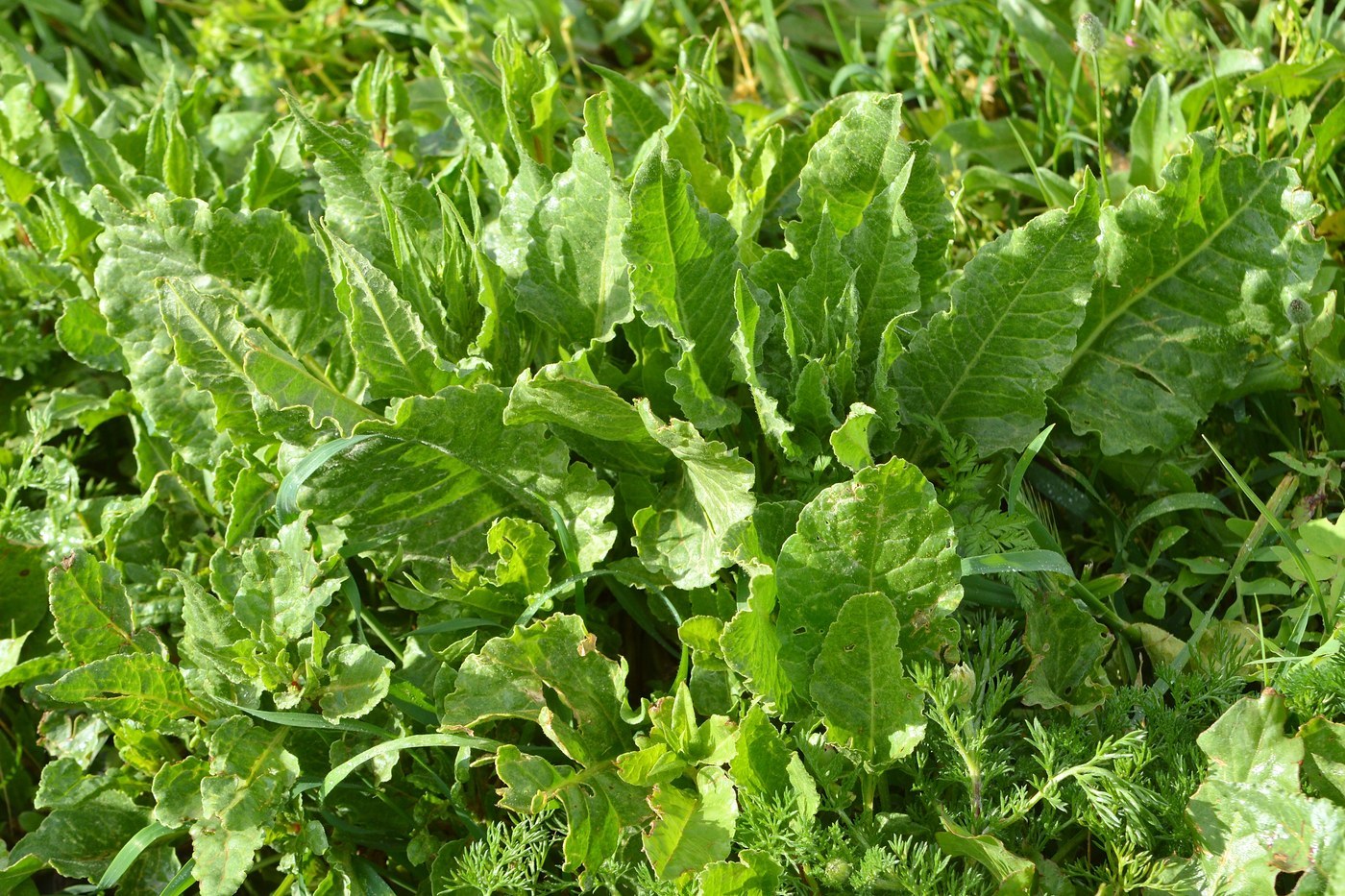
Key Identifying Features
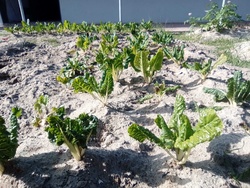
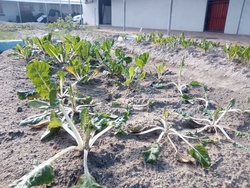
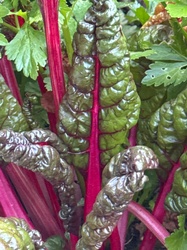
Swiss chard (Beta vulgaris subsp. vulgaris, Cicla/Flavescens group) is a leafy beet grown for its foliage rather than a root. Recognize it by the rosette of large, glossy, heavily crinkled green leaves rising on thick, fleshy, brightly colored stalks (petioles) that may be white, yellow, orange, pink, or red.
- Upright rosette of big, glossy, savoyed (puckered) leaves
- Wide, fleshy, colorful leaf stalks and midribs
- No swollen root (unlike beets)
- Smooth-edged, deep green or bronze-tinted leaf blades
Leaves & Stems
Leaves are large (up to 12 in or more), broad, and oval to triangular, with a glossy, deeply puckered or crinkled (savoyed) surface and smooth, wavy margins. Blades are deep green, sometimes flushed bronze or red. The most distinctive feature is the thick, flat, fleshy petiole and midrib, which can be brilliant white, gold, orange, crimson, or pink ("Rainbow" or "Bright Lights" mixes), with the color often bleeding into the leaf veins. The plant grows as a clumping rosette from a crown; chard is the same species as beet but bred for leaves, so the base does not swell into a round root.
Flowers & Fruit
Chard is biennial and bolts to flower in its second year or under stress. It sends up a tall, branching flower spike bearing many tiny, greenish, petalless flowers clustered along the stems, typical of the beet/amaranth family. These mature into small, hard, irregular seed clusters (each "seed" is actually a multigerm fruit containing several seeds). The flowering plant looks weedy and tall compared with the leafy rosette.
How to Tell It Apart from Look-Alikes
- Beets: same species, but beets form a swollen round root and have smaller, smoother leaves; chard has no bulbous root and bigger, more crinkled leaves on showy stalks.
- Spinach: smaller, tender, smooth-to-slightly-crinkled leaves with thin stalks; chard is much larger with thick colorful petioles.
- Rhubarb: has thick red/green stalks too, but rhubarb leaves are enormous and triangular on a single huge petiole; chard leaves are smaller with veined blades on multiple stalks.
Where You'll Find It
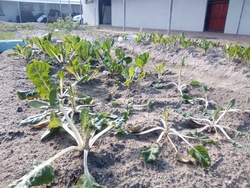
Grown in vegetable gardens, raised beds, and ornamental borders (the colorful stalks are decorative). Chard tolerates heat better than spinach and frost reasonably well, making it a long-season green across temperate and subtropical gardens.
Quick ID Checklist
- Rosette of large, glossy, crinkled (savoyed) leaves
- Thick, fleshy, brightly colored stalks (white/red/gold/pink)
- Color extends into the leaf veins
- No swollen root at the base
- Tiny greenish petalless flowers if bolting
Frequently asked questions
How is Swiss chard different from beets?
They are the same species, but beets form a swollen round root while chard is grown for its leaves and stalks. Chard has larger, more crinkled leaves on thick colorful stalks and does not form a round root.
Why are the stalks of my chard red, yellow, or pink?
Those colors are a natural varietal trait. Rainbow or Bright Lights chard mixes produce stalks and veins in white, gold, orange, pink, and crimson. The color is often the reason chard is grown as a colorful ornamental.
Is Swiss chard the same as spinach?
No. They are different plants in the same broad family. Chard has much larger, glossier, crinkled leaves and thick fleshy colorful stalks, while spinach has smaller, tender leaves on thin stalks.
Can I tell chard from rhubarb by the red stalks?
Look at the leaves. Chard has medium, veined leaves on slender-to-medium colorful stalks, while rhubarb has very large triangular leaves on a single massive petiole.
Swiss Chard identified by the community
Recent Swiss Chard specimens identified with Plant Identifier.