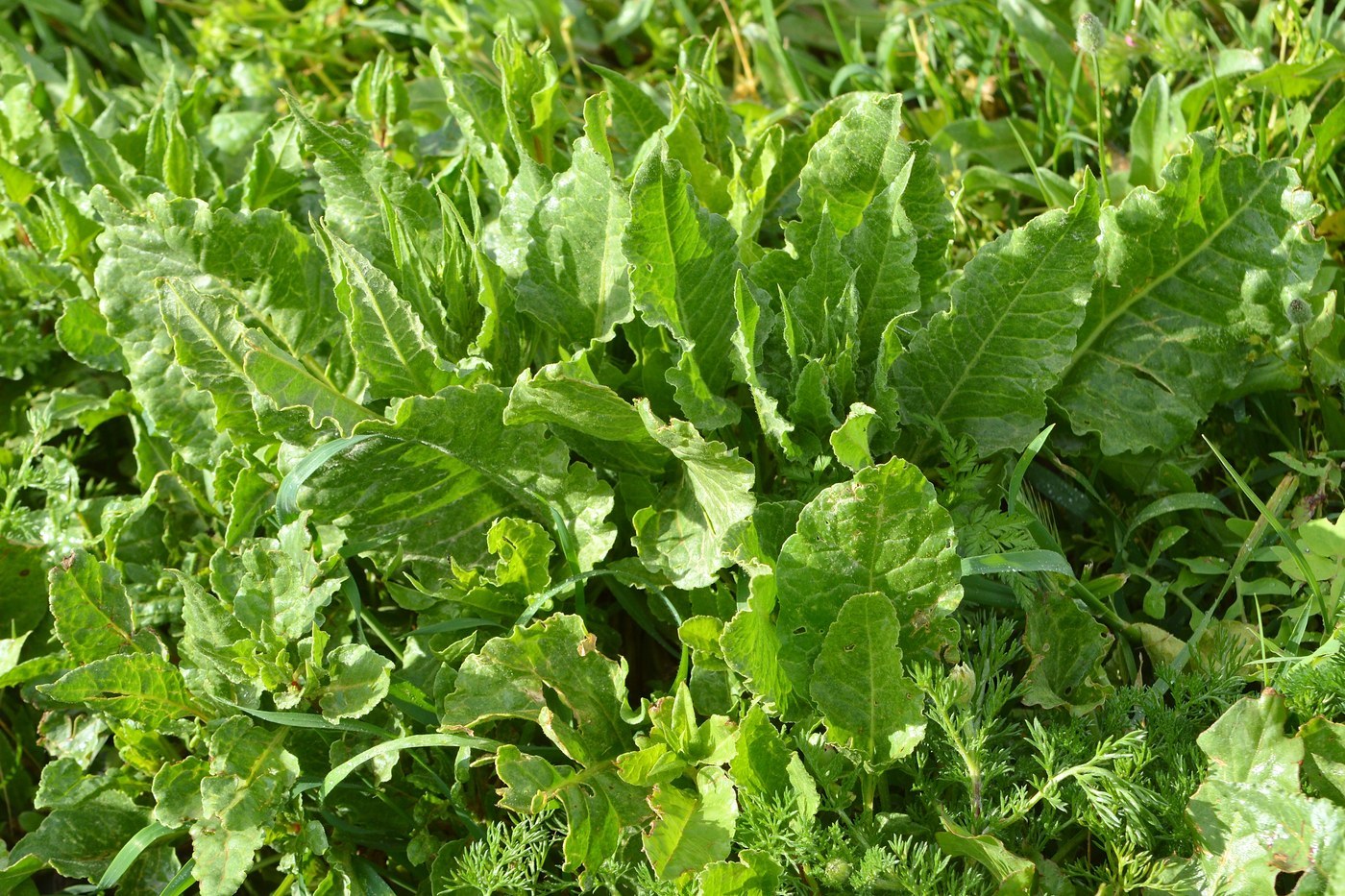
Swiss Chard
Beta vulgaris
Swiss chard is a leafy form of beet grown for its glossy leaves and colorful stalks. Easy, productive and heat- and cold-tolerant, it produces over a long season with cut-and-come-again leaf growth.
- Light
- Full sun to part shade
- Water
- Regular; keep evenly moist
- Difficulty
- Easy
Got a plant like this?
Identify any plant from a photo, free.
Overview
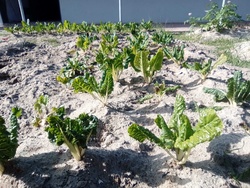
Swiss chard (Beta vulgaris, Cicla/Flavescens group) is a leaf beet, the same species as beetroot and sugar beet but selected for lush foliage and stems rather than a swollen root.
It is grown both as a leaf vegetable and as an ornamental, with varieties such as 'Bright Lights' and 'Rainbow' showing vivid red, yellow, pink, orange and white midribs.
Unusually forgiving, chard tolerates both heat and light frost better than many leafy greens, producing fresh foliage through much of the year.
How to identify it
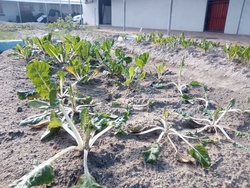
- Habit: Upright clump of large leaves, typically 30-60 cm (1-2 ft) tall
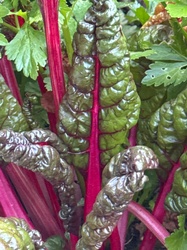
- Leaves: Large, glossy, crinkled or savoyed, deep green to bronze
- Stalks (midribs): Broad, fleshy and brightly colored white, red, yellow, pink or orange
- Habit detail: Grows as a rosette from a central crown; no swollen root
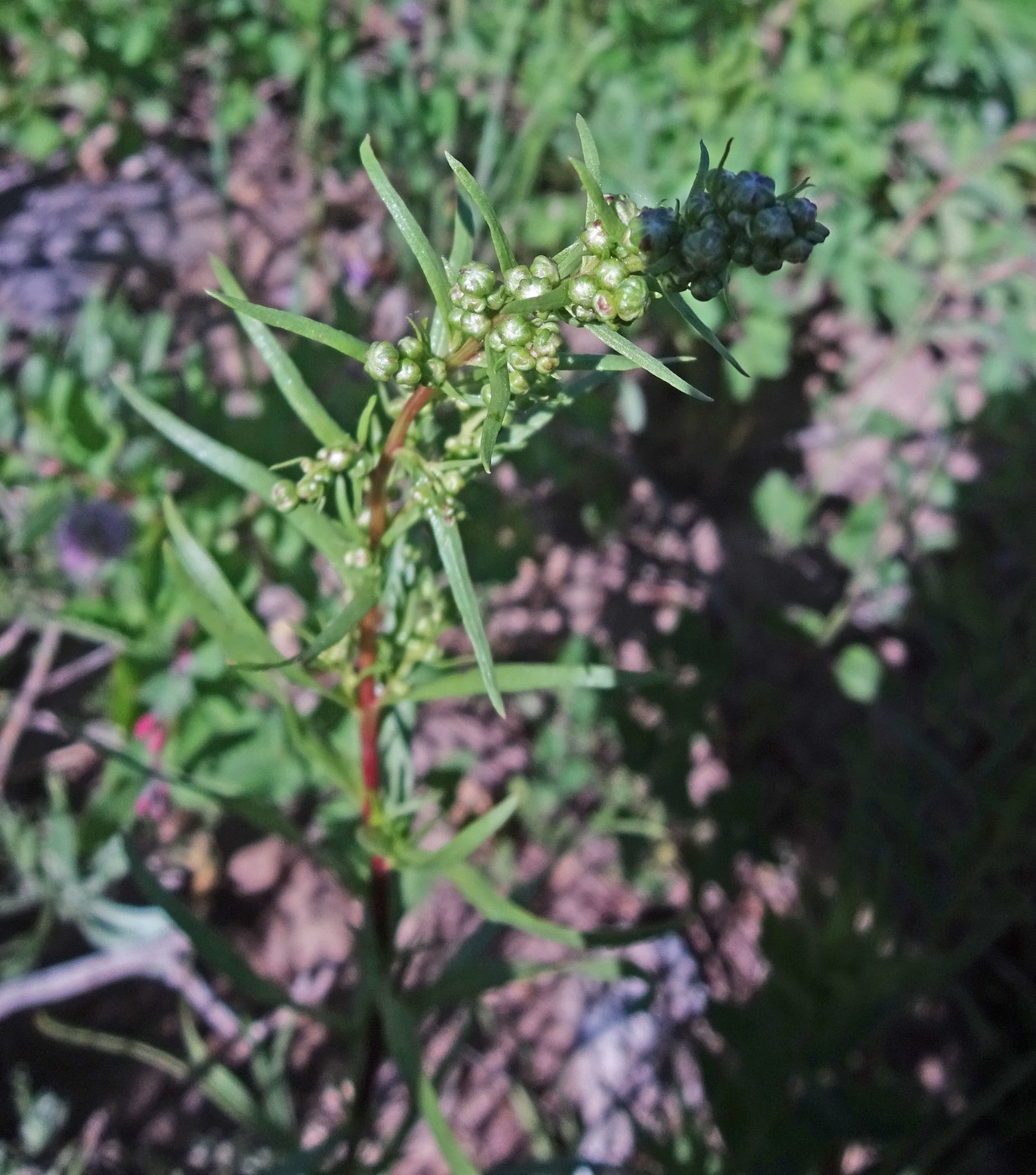
- Flowers (second year): Tall, branching spikes of small green flowers
Care & growing
Light: Full sun to partial shade; tolerates more shade than many vegetables.
Water: Keep evenly moist for tender, fast growth and to limit bolting.
Soil: Fertile, well-drained soil with good organic matter; pH 6.0-7.0.
Temperature: Adaptable; tolerates summer heat and light frost, making it a long-season green.
Feeding: Moderate feeder; periodic nitrogen keeps the leaves coming.
Propagation: Direct-sow or transplant seed. Pick outer leaves regularly for continued cut-and-come-again production.
Habitat & origin
Swiss chard derives from the wild sea beet (Beta vulgaris subsp. maritima), native to coastal areas of Europe, North Africa and western Asia.
Despite the name it was developed largely around the Mediterranean. It is now grown worldwide in home and market gardens and is especially valued in regions with hot summers where other leafy greens struggle.
Frequently asked questions
Is Swiss chard related to beets?
Yes, it is the same species (Beta vulgaris) as beetroot, but bred for leaves and stems rather than a storage root.
Does chard come back after cutting?
Yes. Pick the outer leaves and the central crown keeps producing new ones, often for many months.
Why is my chard bolting?
Bolting (flowering) is triggered by heat or stress, especially in the second year. Keep plants watered and pick leaves regularly to prolong leaf production.
Swiss Chard guides
In-depth guides for identifying, growing, and caring for Swiss Chard.
Swiss Chard identified by the community
Real specimens identified with Plant Identifier.