Tomato Identification Guide
Identify the tomato plant (Solanum lycopersicum) by its pungent, hairy compound leaves, yellow star-shaped flowers, and familiar red fruit. Covers leaf form, smell, and look-alikes.
Read the full Tomato encyclopedia entry →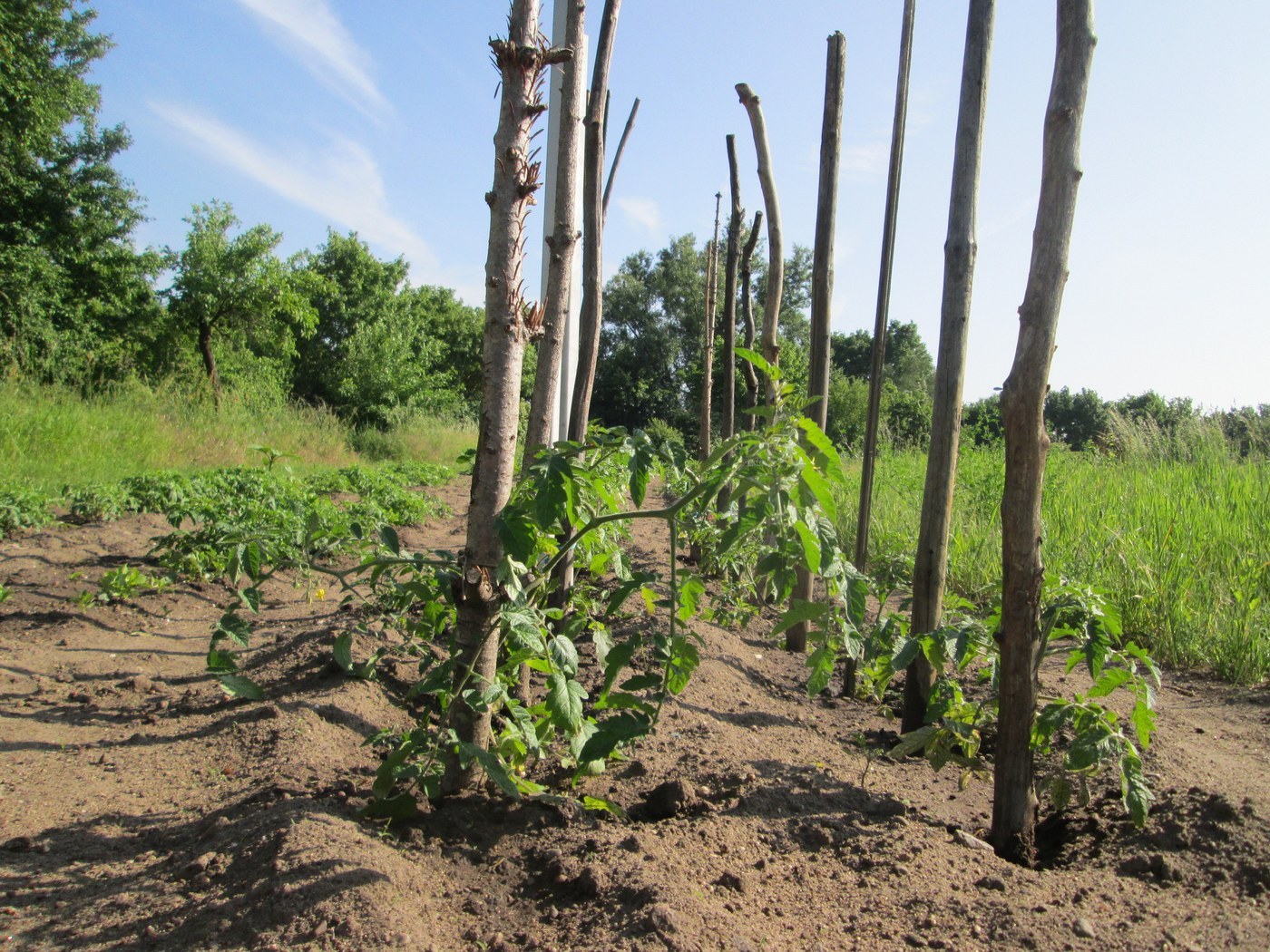
Key Identifying Features
The tomato (Solanum lycopersicum) is a member of the nightshade family (Solanaceae), grown worldwide as a fruiting vegetable. It's easy to identify by smell and form:
- Pinnately compound leaves divided into jagged, irregular leaflets
- A strong, distinctive pungent scent when leaves or stems are brushed
- Hairy, slightly sticky stems and leaves
- Yellow star-shaped flowers followed by round, fleshy red (or yellow/orange) fruits
Leaves & Stems
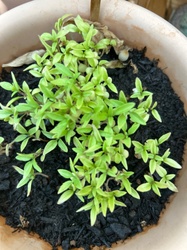
Leaves are alternate and pinnately compound, meaning each leaf is divided into several pairs of leaflets along a central stalk, with smaller leaflets between them. Individual leaflets are oval with deeply toothed or lobed, irregular margins, soft, and covered in fine hairs that release a famous sharp, green, 'tomato-plant' aroma when touched a quick and reliable ID. Stems are green, ribbed, hairy, and brittle, often becoming sprawling or vining; they readily root where they touch soil. Tiny glandular hairs make the foliage feel slightly sticky and can stain hands yellow-green. Plants may be bushy (determinate) or long and vining (indeterminate).
Flowers & Fruit
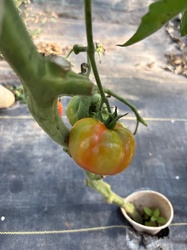
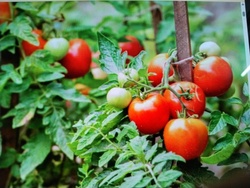
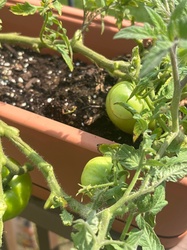
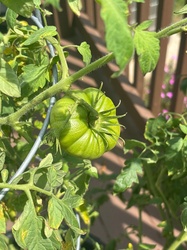
Flowers grow in clusters on side branches, each a bright yellow, star-shaped bloom with 5-6 pointed petals that curve back, surrounding a distinctive central cone of fused yellow anthers. After pollination, flowers become the fruit: a smooth, round to oval berry that ripens from green to red, yellow, orange, pink, or purple-black depending on variety, ranging from tiny cherry types to large beefsteaks. The fruit's interior has seed-filled jelly chambers the classic tomato cross-section.
How to Tell It Apart from Look-Alikes
- Potato (Solanum tuberosum): a close relative with similar compound leaves and yellow-to-white flowers, but potato leaflets are broader and rounder, the flowers are usually white/purple, and it forms underground tubers rather than red fruit (potato berries are small and green).
- Black nightshade (Solanum nigrum): smaller plant with white flowers and small black berries, simpler (not pinnately compound with paired leaflets) leaves.
- Other nightshades/peppers: peppers have simple (undivided) leaves and a different flower lack the tomato smell.
The pungent hairy compound leaves + yellow star flowers with a central anther cone + red berry fruit confirm tomato.
Where You'll Find It
Native to western South America, tomatoes are grown globally in vegetable gardens, greenhouses, containers, and farms. They are warm-season annuals (frost-tender) needing full sun, and are often staked, caged, or trellised. You'll also find self-seeded 'volunteer' plants near compost and old garden beds.
Quick ID Checklist
- Pinnately compound leaves with jagged, toothed leaflets
- Strong pungent smell when foliage is touched
- Hairy, sticky, ribbed stems
- Yellow star-shaped flowers with a central yellow anther cone
- Round red/yellow/orange fleshy berries with seedy jelly
- Warm-season plant, often staked or caged
Frequently asked questions
What's the quickest way to identify a tomato plant?
Gently rub a leaf and smell it tomato foliage gives off an unmistakable sharp, green scent. Combined with the hairy, jagged compound leaves and yellow star-shaped flowers, that confirms it fast.
How do I tell a tomato from a potato plant?
They look similar (both nightshades), but potato leaflets are broader and rounder, potato flowers are usually white or purple, and potatoes form underground tubers rather than red fruit. Potato berries are small and green.
Is a tomato a fruit or a vegetable?
Botanically it is a fruit, specifically a berry that develops from the flower's ovary. For identification, the seed-filled juicy berry is the giveaway.
What do tomato flowers look like?
Each flower is a bright yellow, star-shaped bloom with 5-6 pointed petals that curve back, surrounding a central cone of fused yellow anthers. They appear in clusters on side branches, a reliable confirming feature.
Tomato identified by the community
Recent Tomato specimens identified with Plant Identifier.