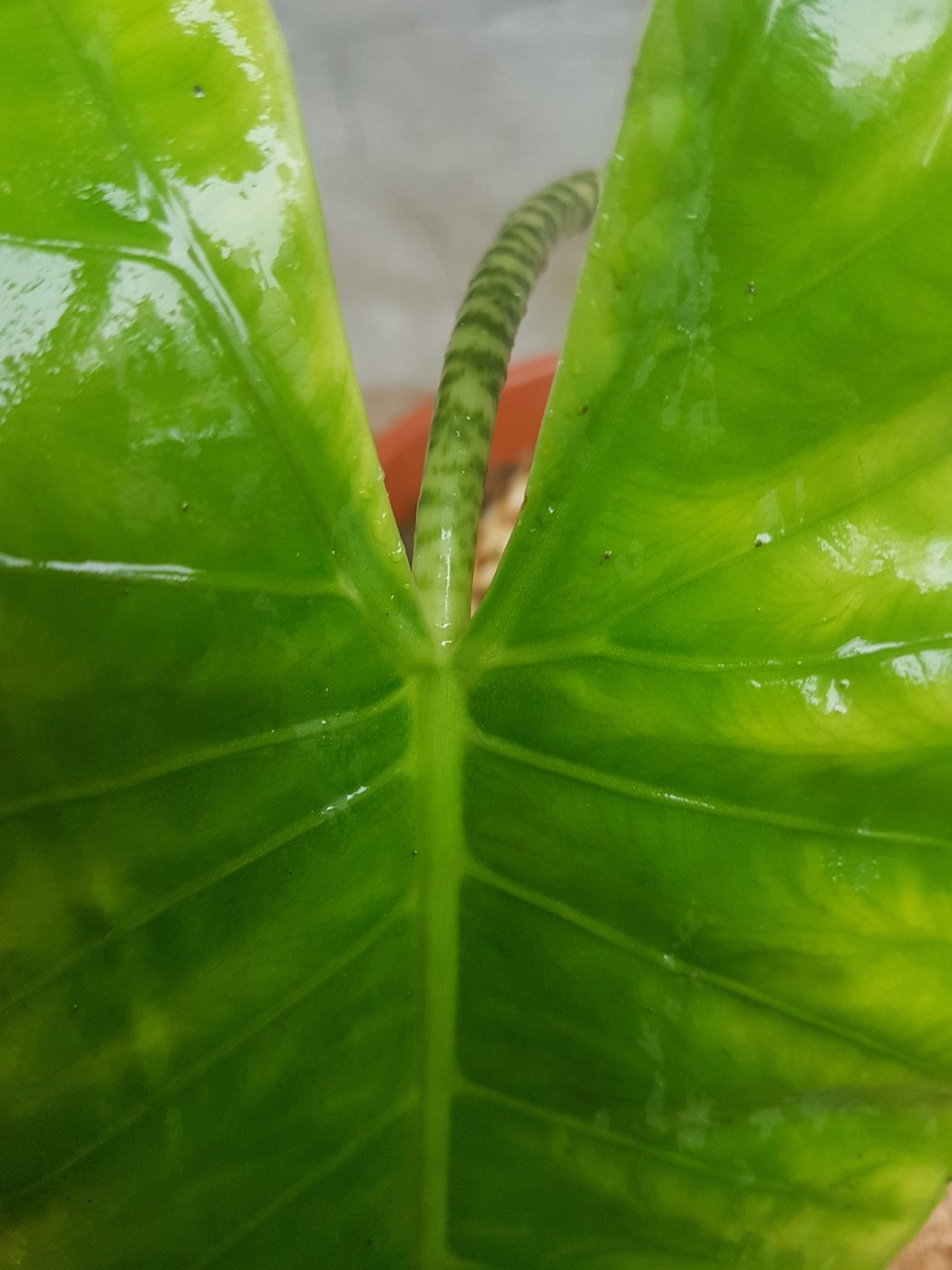
Alocasia Zebrina
Alocasia zebrina
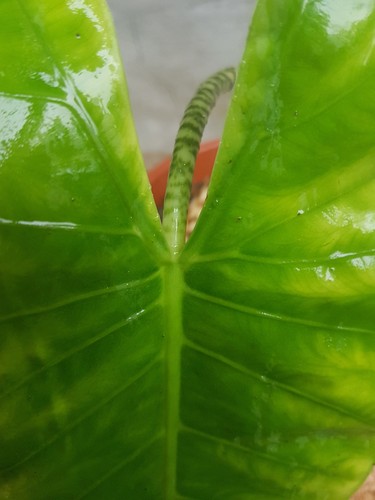
An elephant ear grown as much for its stems as its leaves — distinctive yellow-and-black zebra-striped petioles support glossy, arrow-shaped green leaves held aloft like umbrellas.
- Light
- Bright indirect light
- Water
- When top inch dries
- Difficulty
- Moderate
Got a plant like this?
Identify any plant from a photo, free.
Overview
Alocasia zebrina is a striking elephant ear distinguished by its zebra-patterned petioles — long, upright stems boldly mottled in yellow-green and dark brown-black bands.
Atop these eye-catching stems sit large, glossy, arrow-shaped green leaves. The plant's sculptural, upright form makes it a popular statement houseplant, and while not as fussy as the jewel Alocasias, it still appreciates warmth and humidity.
How to identify it
- Petioles: Long, upright stems with bold zebra-like yellow-and-dark banding — the signature feature
- Leaves: Large, glossy, arrow-shaped (sagittate), pointing skyward
- Color: Medium glossy green leaves
- Size: Reaches 2–3 ft tall indoors
- Habit: Upright, clumping; leaves held aloft on tall stems
Care & growing
Light: Bright, indirect light; avoid direct sun that can scorch leaves.
Water: Water when the top inch dries; keep lightly moist but never soggy — prone to root rot.
Soil: Light, fast-draining aroid mix with perlite and bark.
Humidity & temp: Prefers 50–60% humidity and warmth (65–80°F).
Feeding: Balanced fertilizer monthly in spring and summer.
Propagation: Divide rhizome offsets/corms when repotting.
Habitat & origin
Native to the Philippines, where it grows on rainforest floors and rocky slopes in warm, humid, shaded conditions.
It is grown worldwide as a sculptural houseplant, valued for its zebra-striped stems and upright leaves.
Frequently asked questions
Why is my Alocasia Zebrina's stem flopping over?
Long petioles bend toward light and can weaken from underwatering or low light. Rotate it regularly and give it bright, even light; some stake support helps.
Why are leaves yellowing and dropping?
Often overwatering, or natural shedding of old leaves. Let the topsoil dry between waterings and ensure excellent drainage.
Does it go dormant?
Yes, in cooler months it may slow or drop leaves and rest as a corm; reduce watering and it regrows in spring.
Alocasia Zebrina guides
In-depth guides for identifying, growing, and caring for Alocasia Zebrina.