Sweet Potato Vine
Ipomoea batatas
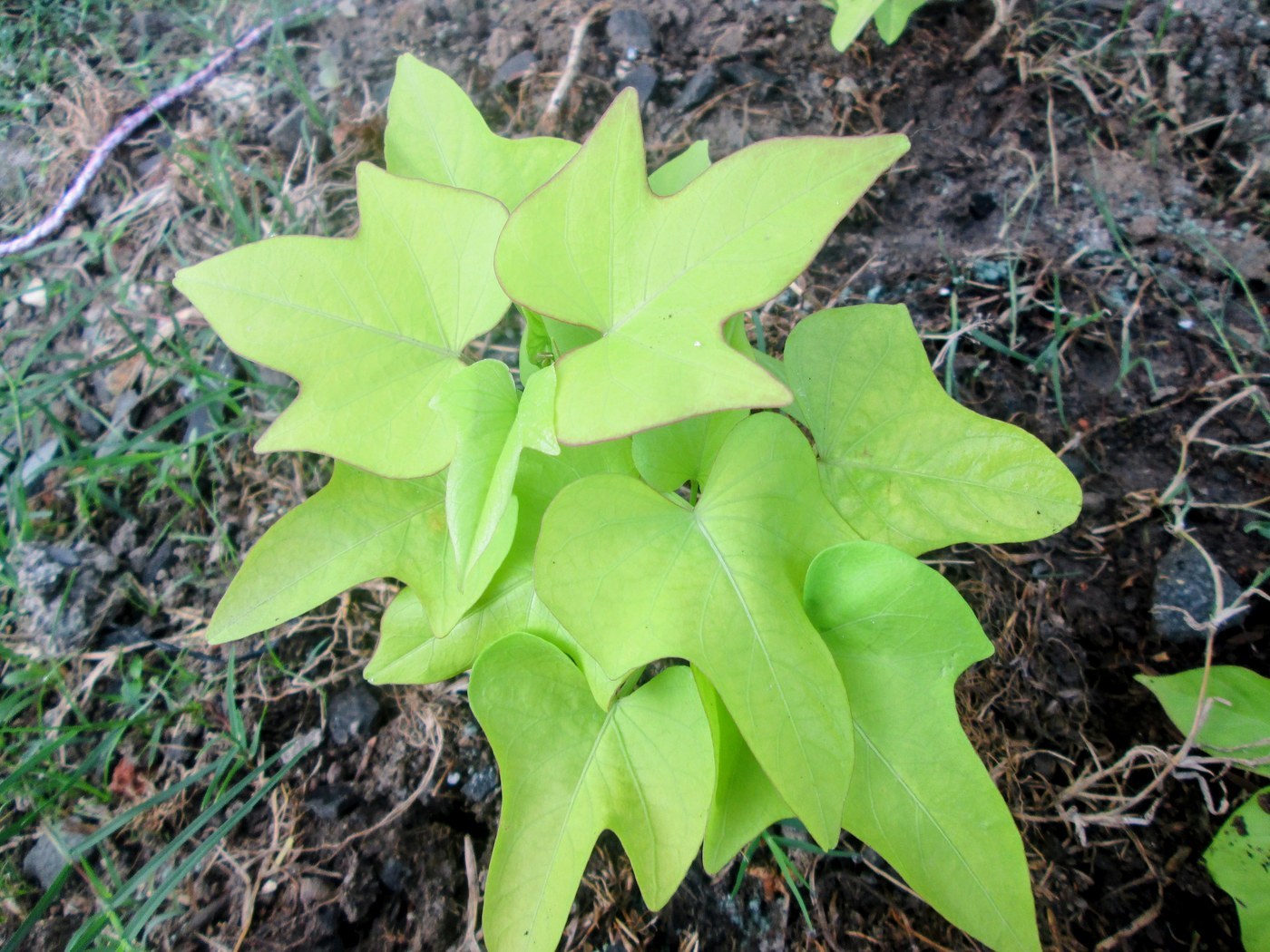
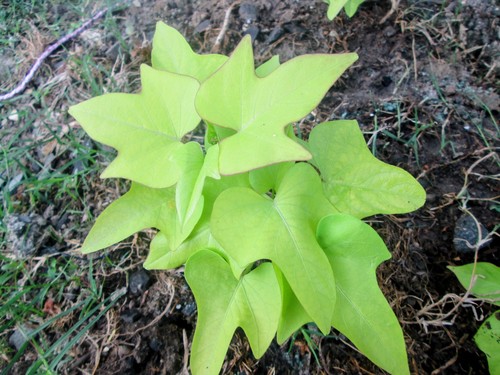
Ornamental sweet potato vine is a vigorous trailing plant grown for its bold chartreuse, purple-black, or variegated foliage that cascades from containers all season.
- Light
- Full sun to part shade
- Water
- Regular; keep moist
- Difficulty
- Easy
Got a plant like this?
Identify any plant from a photo, free.
Overview
The ornamental sweet potato vine is a selected form of the same species as the sweet potato, bred for striking foliage rather than tubers. It grows rapidly, spilling and trailing to fill containers and ground beds with vivid leaf color.
Popular cultivars range from bright chartreuse-lime to deep purple-black and tricolor variegation, with leaf shapes from broad hearts to deeply lobed. It is one of the easiest and most dramatic foliage spillers for summer plantings.
How to identify it
- Habit: Vigorous trailing and mounding vine, stems to several feet
- Leaves: Heart-shaped or deeply palmately lobed, depending on cultivar
- Colors: Chartreuse-lime, bronze, deep purple-black, tricolor variegation
- Flowers: Occasional trumpet-shaped morning-glory-like blooms (rare in cultivation)
- Roots: Forms small tubers underground
Care & growing
Light: Full sun gives the most intense color; tolerates part shade.
Water: Keep consistently moist; vigorous growth means it can be thirsty in containers.
Soil: Rich, well-drained potting mix or garden soil.
Temperature: A warm-season plant; not frost-hardy.
Feeding: Feed regularly to fuel its fast growth.
Propagation: Extremely easy from stem cuttings rooted in water or soil; tubers can be overwintered and replanted.
Habitat & origin
Ipomoea batatas originated in tropical Central and South America and has been cultivated for thousands of years for its tubers.
The ornamental forms are grown worldwide as warm-season annuals in hanging baskets, containers, and bedding schemes, prized as spiller and ground-cover foliage.
Frequently asked questions
How do I overwinter sweet potato vine?
Take stem cuttings and root them indoors, or dig and store the tubers in a cool, dry place, then replant after the last frost.
Why is my vine taking over the container?
It is naturally vigorous. Pinch or trim it regularly to keep it in bounds and to encourage bushier growth.
How do I get the brightest leaf color?
Grow it in full sun. The chartreuse and dark cultivars develop their richest color with more light.
Sweet Potato Vine guides
In-depth guides for identifying, growing, and caring for Sweet Potato Vine.
How to Care for Sweet Potato Vine
Grow ornamental sweet potato vine for fast, cascading foliage in chartreuse, bronze, and purple. An easy trailing plant for pots and beds.
Sweet Potato Vine Identification Guide
Identify ornamental Sweet Potato Vine by its trailing stems, heart-shaped or lobed leaves in chartreuse to near-black, and milky sap.