Velvetleaf
Abutilon theophrasti
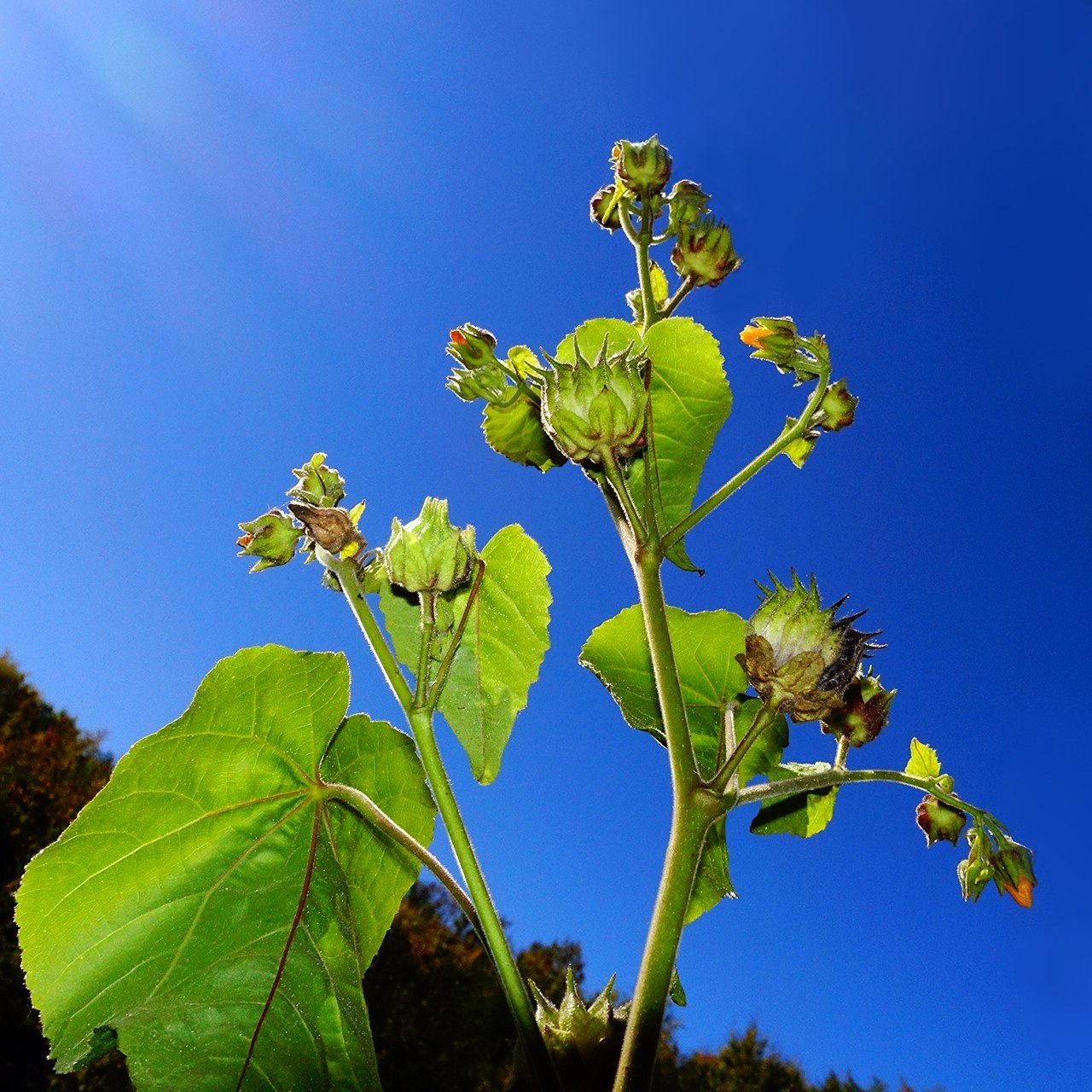
A tall summer annual with large, soft, heart-shaped velvety leaves and yellow flowers, a major agricultural weed of corn and soybean fields. Its distinctive cup-shaped seed pods and fibrous stems make it easy to recognize.
- Light
- Full sun
- Water
- Average; drought-tolerant
- Difficulty
- Easy
Got a plant like this?
Identify any plant from a photo, free.
Overview
Velvetleaf (Abutilon theophrasti) is a vigorous summer annual in the mallow family (Malvaceae). Once grown in Asia as a fiber crop, it is now a serious weed of row crops across North America.
It germinates in warm soil, grows rapidly to several feet tall, and competes strongly with corn and soybeans for light, water and nutrients. Its large velvety leaves, yellow flowers and unusual cup-shaped seed capsules make it one of the more recognizable field weeds.
How to identify it
Recognize velvetleaf by its large, soft, velvety heart-shaped leaves and distinctive seed pods.
- Erect annual reaching 2-8 ft tall
- Big, heart-shaped leaves covered in soft, velvety hairs, with a faint odor when crushed
- Sturdy, hairy, fibrous stems
- Solitary yellow to orange-yellow five-petaled flowers in leaf axils
- Cup-shaped, ribbed seed capsule (the source of names like butterprint and buttonweed) that turns dark and persists
Care & growing
Velvetleaf is an agricultural weed and is managed for removal.
- Light: Full sun
- Water: Average needs; tolerates drought once established
- Soil: Fertile, disturbed soils typical of crop fields
- Temperature: Warm-season annual killed by frost
- Propagation: By long-lived seed that can remain viable in soil for decades
- Control: Pull or cultivate young plants, maintain crop competition, and use pre- and post-emergent herbicides; preventing seed set is key due to the persistent seed bank
Habitat & origin
Native to southern Asia, velvetleaf was introduced to North America as a potential fiber crop and has since become a widespread weed.
It is most problematic in agricultural fields, especially corn and soybeans, and also grows along roadsides, in gardens and on disturbed ground. It favors rich, sunny, cultivated soils.
Frequently asked questions
Why is velvetleaf such a problem weed?
It grows fast and tall, competes strongly with crops like corn and soybeans, and its seeds can stay viable in the soil for decades, so infestations persist for years even after the visible plants are removed.
Why is it called velvetleaf?
Its large, heart-shaped leaves are covered in soft, dense hairs that give them a velvety feel, which is the source of the name.
How do I get rid of velvetleaf?
Pull or cultivate young plants before they flower, keep crops or turf dense to outcompete it, and use appropriate herbicides. The most important step is preventing seed production to deplete the long-lived seed bank.
Was velvetleaf ever a useful plant?
Yes, it was historically grown in China as a fiber crop, its stems yielding fibers for rope and coarse cloth, before it became known mainly as an agricultural weed.
Velvetleaf guides
In-depth guides for identifying, growing, and caring for Velvetleaf.
How to Care for Velvetleaf
Grow Velvetleaf (Abutilon theophrasti), a fast, upright annual prized for its large, soft, heart-shaped velvety leaves and cupped yellow flowers.
Velvetleaf Identification Guide
Identify velvetleaf by its large, soft, velvety heart-shaped leaves, yellow-orange flowers, and distinctive cup-shaped seed pods. Includes habitat and look-alikes.