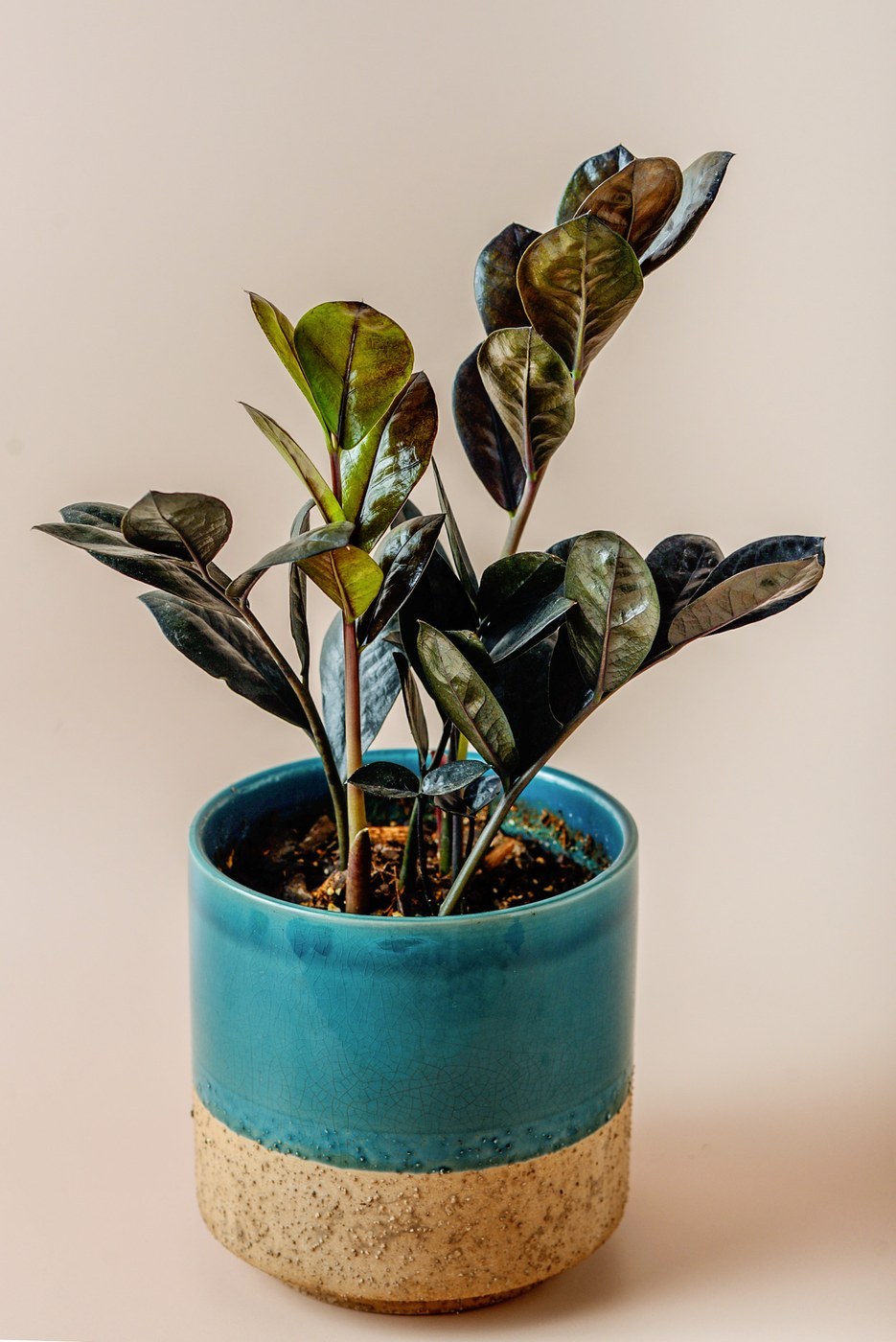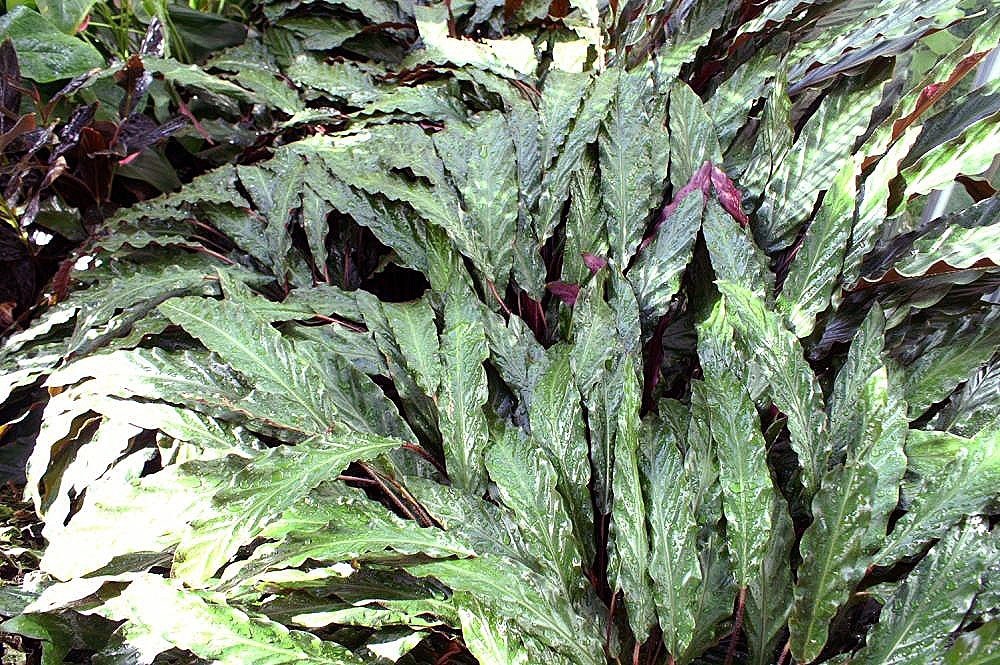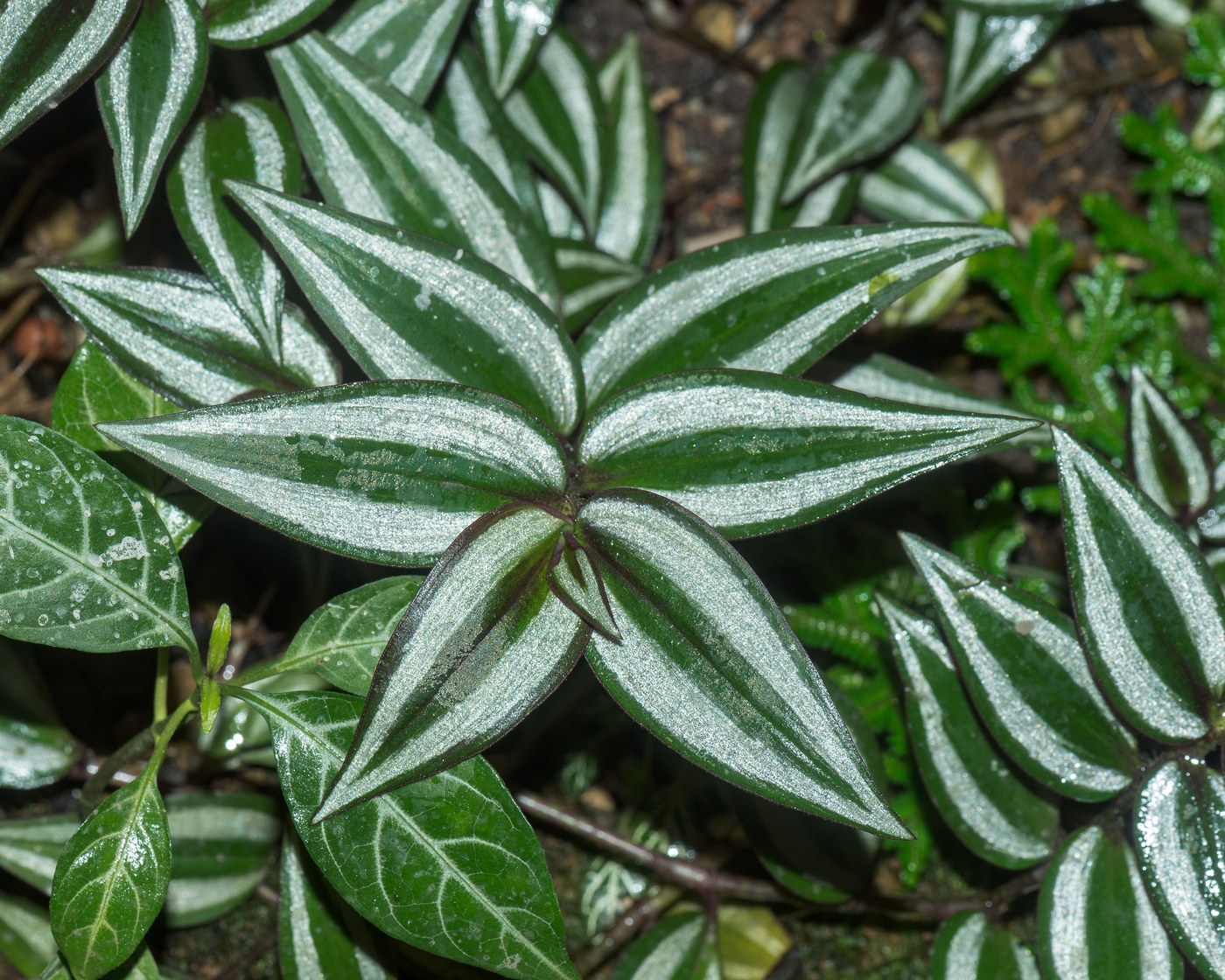
Calathea
Goeppertia makoyana
A group of tropical foliage plants prized for their elaborately patterned, often purple-backed leaves. Calatheas are humidity-loving and known for being fussy about water quality.
- Light
- Medium indirect light
- Water
- Keep evenly moist
- Difficulty
- Hard
Got a plant like this?
Identify any plant from a photo, free.
Overview
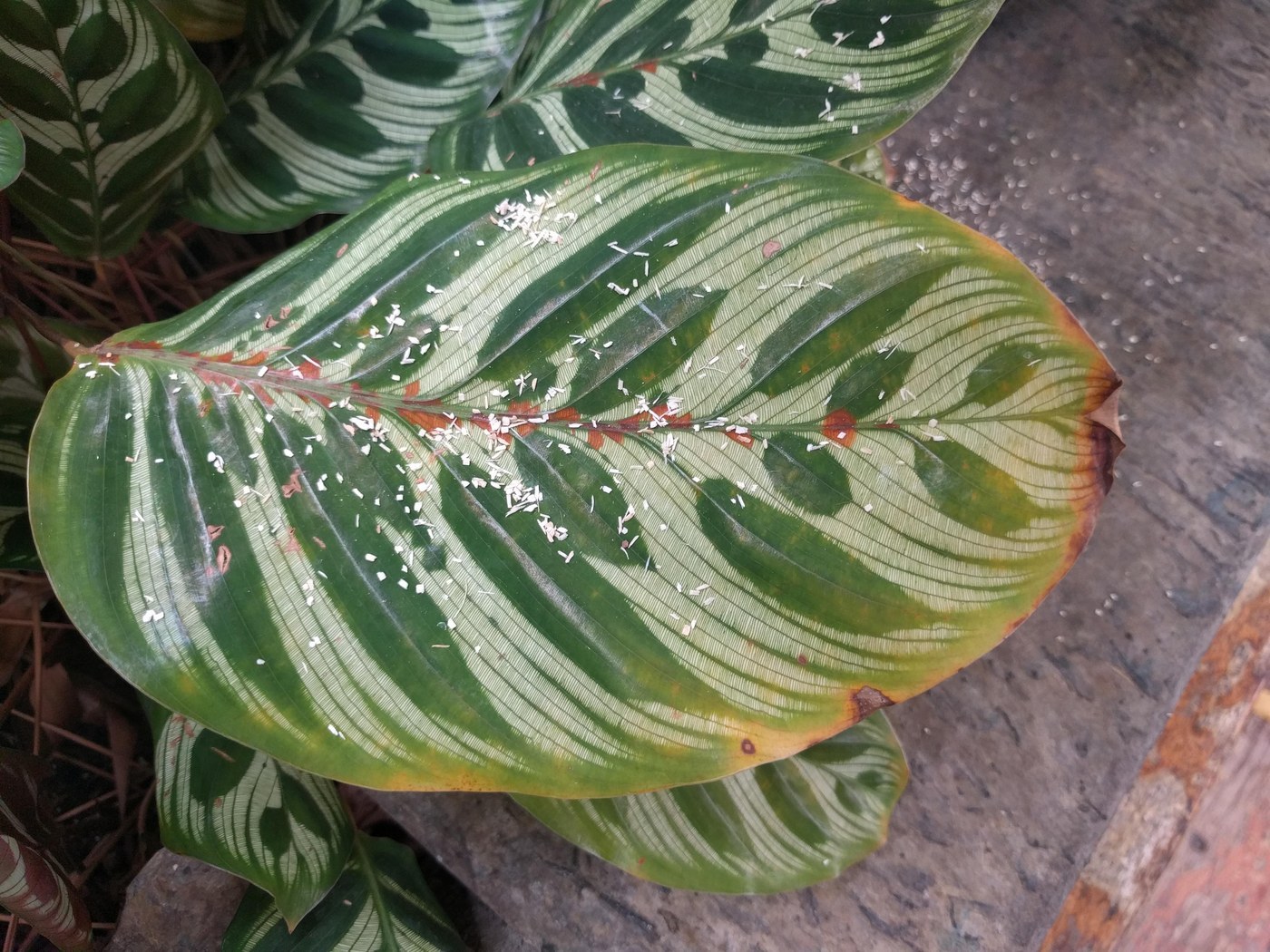
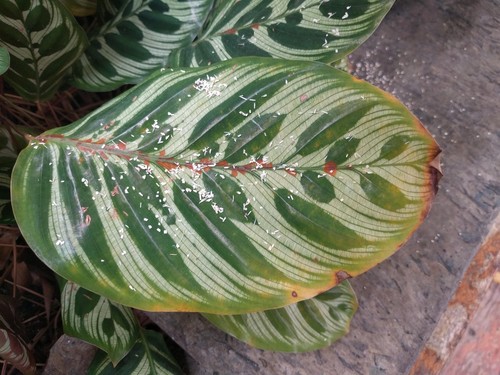
Calathea is the common name for a large group of striking foliage plants, many recently reclassified into the genus Goeppertia. They are grown for boldly marked leaves that can look brush-painted in greens, creams, pinks and purples, often with deep maroon undersides.
Like their prayer-plant relatives, many calatheas gently raise and lower their leaves on a daily rhythm. They are rewarding but demanding: they crave warmth, humidity and clean water, and they protest dry air or hard tap water with crispy edges.
How to identify it
Recognize calatheas by large, patterned oval leaves on slender stems, often with colored undersides.
- Leaves: broad ovals with intricate stripes, blotches or feathering; undersides frequently purple or maroon
- Movement: subtle daily raising and lowering of leaves
- Habit: clumping, upright, typically 30 to 90 cm tall
- Flowers: mostly grown for foliage; indoor flowering is uncommon
Care & growing
Provide medium, indirect light; too much sun bleaches the patterns and too little dulls them.
- Water: keep evenly moist, never soggy or bone dry; use filtered, distilled or rainwater because they are sensitive to fluoride, chlorine and salts
- Soil: light, well-draining, peat-based mix
- Humidity: high (60%+); a humidifier is often needed to avoid crispy edges
- Temperature: 18 to 27 C; no cold drafts
- Feeding: dilute balanced fertilizer monthly in the growing season
- Propagation: by division at repotting
Habitat & origin
Calatheas are native to the tropical Americas, especially the rainforests of Brazil and the wider Amazon basin, where they carpet the warm, humid, shaded forest floor. Recreating that consistent warmth and humidity is the key to growing them indoors, where they are popular but sometimes challenging houseplants.
Frequently asked questions
Why do my calathea's leaves have crispy brown edges?
Almost always low humidity or mineral buildup from tap water. Raise humidity and switch to filtered, distilled, or rainwater.
Why are the leaves curling?
Curling usually signals thirst, low humidity, or cold drafts. Check soil moisture and increase ambient humidity.
Why does the plant move its leaves?
Calatheas raise and lower their leaves daily via a joint at the leaf base, a natural light-tracking behavior shared with prayer plants.
How do I propagate a calathea?
By division. When repotting, gently separate the clump into sections, each with roots and leaves, and pot them up individually.
Calathea guides
In-depth guides for identifying, growing, and caring for Calathea.
How to Care for Calathea
Master Calathea care: this dramatic-leaved prayer plant demands steady moisture, high humidity, and clean water to look its best.
Calathea Identification Guide
Identify Calathea (now largely Goeppertia) by its large, dramatically patterned leaves, colorful purple undersides, and gentle daily leaf movement.