Calathea Medallion
Goeppertia roseopicta
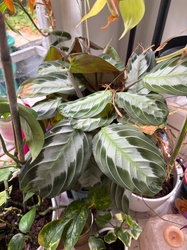
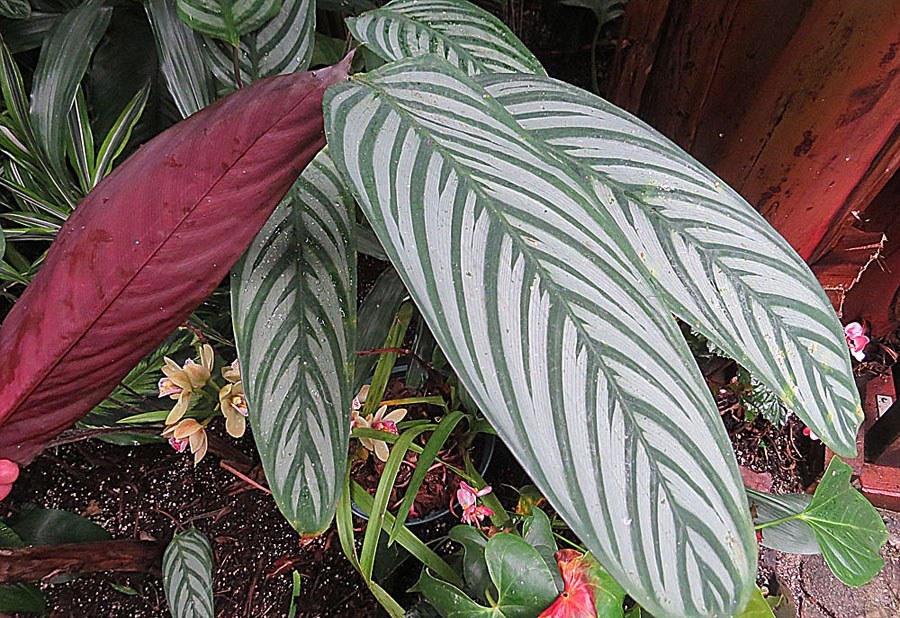
Calathea Medallion is admired for its rounded leaves painted with concentric rings of green and a deep maroon-purple underside. It folds its leaves upward at night, a prayer-plant trait.
- Light
- Bright indirect light
- Water
- Keep evenly moist
- Difficulty
- Moderate
Got a plant like this?
Identify any plant from a photo, free.
Overview
Calathea Medallion is a cultivar of Goeppertia roseopicta (formerly Calathea roseopicta), a member of the prayer-plant family Marantaceae native to the Brazilian rainforest.
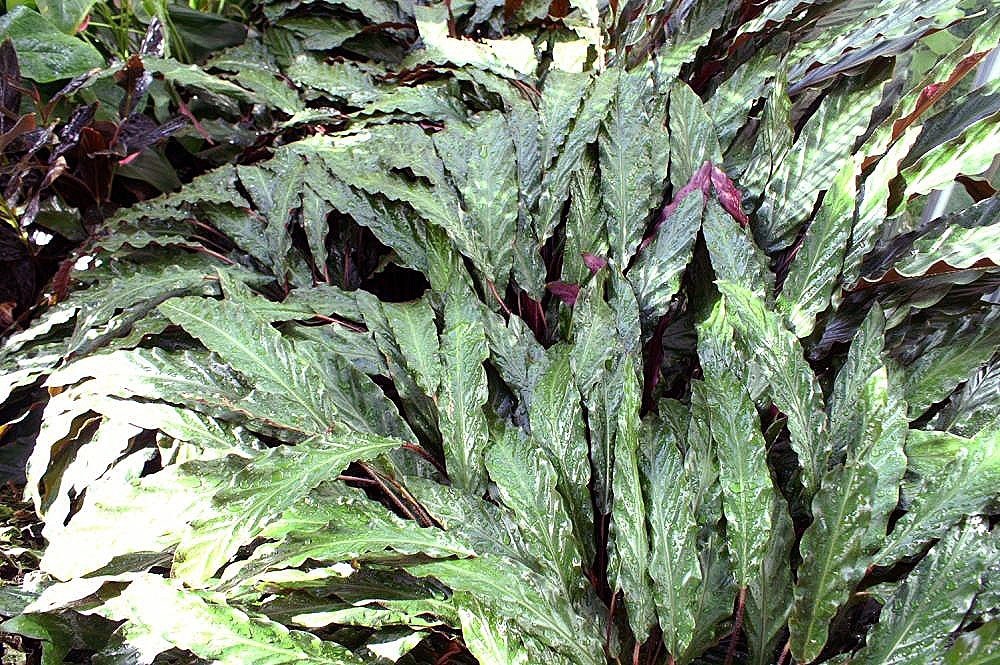
Its large, rounded leaves display a feathered, medallion-like pattern of light and dark green, with a striking purple-red reverse. Each evening the leaves rise and fold, a movement called nyctinasty driven by changes in the pulvinus at the leaf base.
It is treasured for its bold foliage but has a reputation for being thirsty and humidity-loving, requiring attentive care to keep the leaves pristine.
How to identify it
Key features to recognize Calathea Medallion:
- Leaves: large, oval to rounded, with a central feathered "medallion" of pale and dark green
- Underside: deep burgundy to purple
- Movement: leaves fold upward at night, lowering by day
- Size: typically 18-24 inches tall as a houseplant
- Habit: clumping, with leaves emerging from the base on slender stalks
Care & growing
Light: Bright, indirect light. Direct sun fades and scorches the pattern.
Water: Keep soil evenly moist but never soggy; use filtered, distilled, or rainwater, as it is sensitive to fluoride and salts.
Soil: Light, peat-based, well-draining mix.
Temperature: 65-80F (18-27C); avoid cold drafts.
Humidity: High (50%+); brown leaf edges signal dry air.
Feeding: Diluted balanced fertilizer monthly in the growing season.
Propagation: By division of the root clump during repotting.
Habitat & origin
Native to the tropical rainforests of Brazil, where it grows on the shaded forest floor under the canopy.
This low-light, high-humidity origin explains its houseplant demands: it dislikes direct sun, dry air, and hard tap water. It is grown worldwide as an indoor ornamental and thrives in terrariums or bathrooms with consistent moisture.
Frequently asked questions
Why are the leaf edges turning brown?
Usually low humidity or mineral buildup from tap water. Raise humidity and switch to filtered or distilled water.
Why do the leaves move?
Calatheas perform nyctinasty, folding up at night and opening by day via a swollen joint (pulvinus) at the leaf base.
Why is it sometimes called Goeppertia?
Many Calathea species, including roseopicta, were reclassified into the genus Goeppertia, though the trade name Calathea persists.
How tall does Calathea Medallion get?
As a houseplant it typically reaches 18-24 inches tall, forming a clump of leaves on slender stalks rising from the base.
Calathea Medallion guides
In-depth guides for identifying, growing, and caring for Calathea Medallion.
How to Care for Calathea Medallion
Grow Calathea Medallion (Goeppertia roseopicta), a striking tropical houseplant with rounded, painterly leaves that fold up at night.
Calathea Medallion Identification Guide
Identify Calathea Medallion by its round, medallion-shaped leaves with feathered green patterning above and deep purple undersides, plus its nightly leaf-folding movement.
Calathea Medallion identified by the community
Real specimens identified with Plant Identifier.