Candelabra Cactus
Euphorbia ingens
A tall, tree-like succulent euphorbia with upright branching ridged stems that form a candelabra silhouette. Though cactus-like, it is a spurge that exudes milky latex.
- Light
- Bright light, direct sun
- Water
- Sparingly; dry between waterings
- Difficulty
- Easy
Got a plant like this?
Identify any plant from a photo, free.
Overview
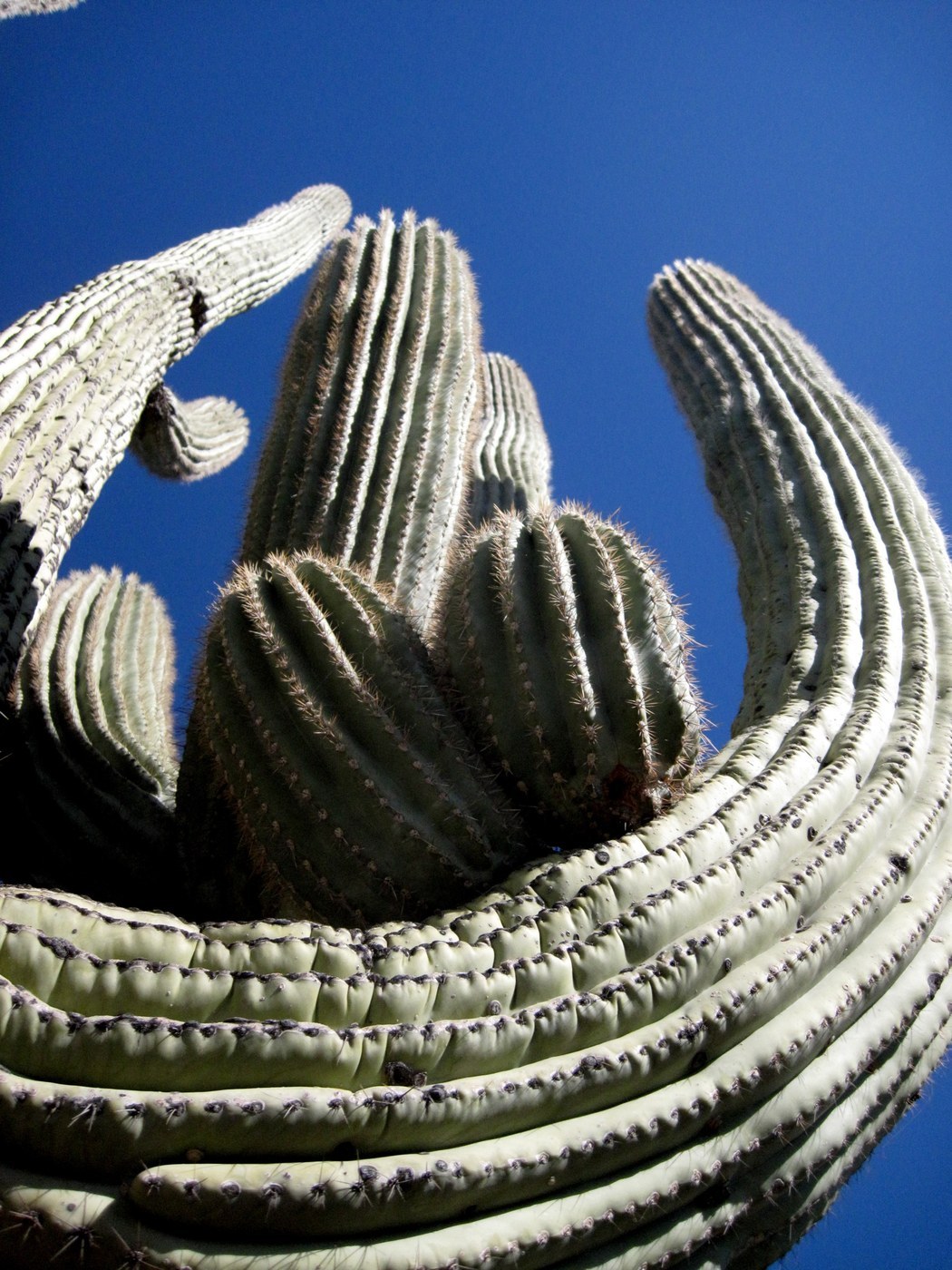
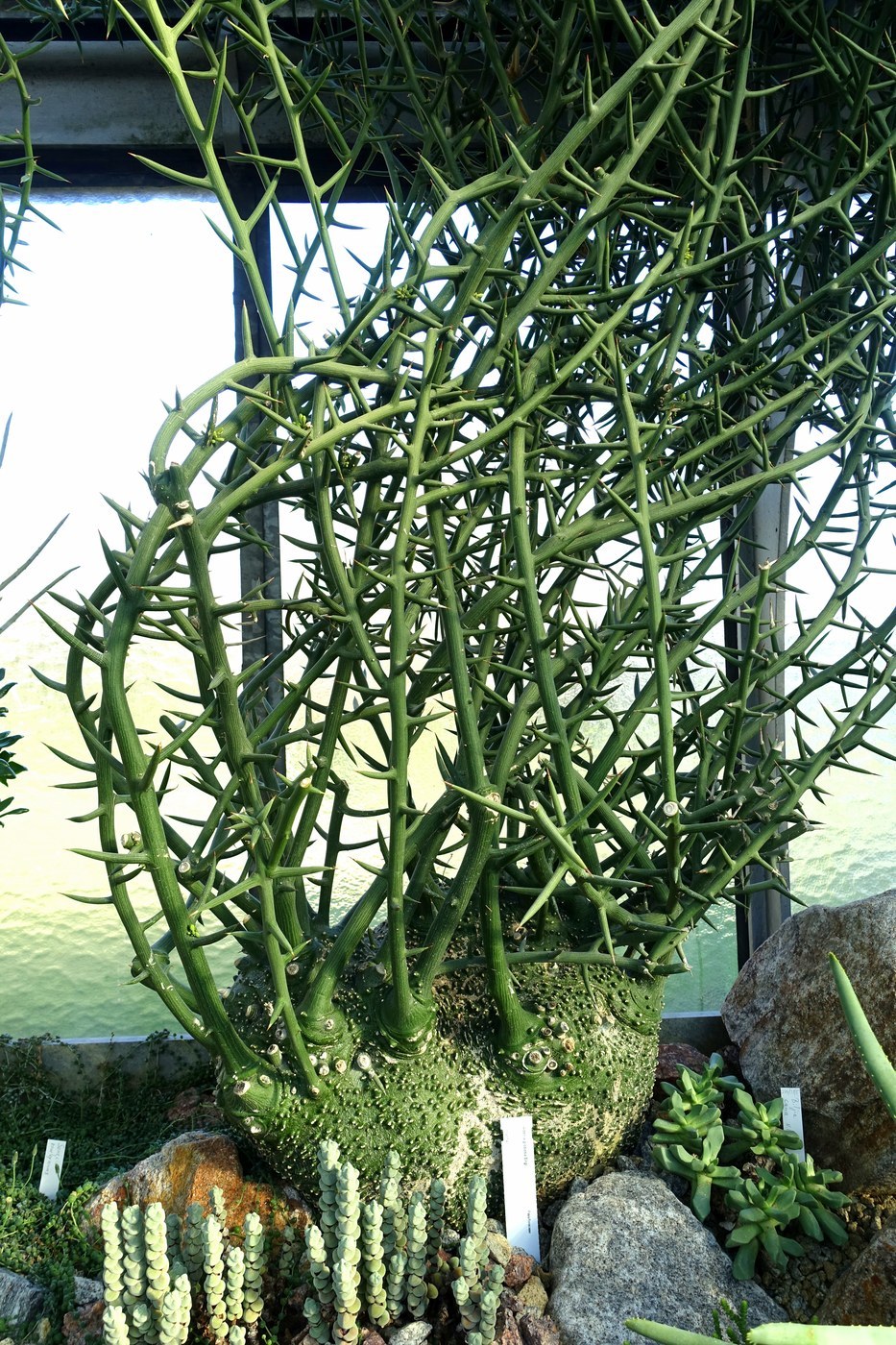
Candelabra Cactus is a common name for Euphorbia ingens, a large tree-like succulent from southern Africa whose green, ridged, branching stems rise and divide to form the shape of a many-armed candelabra. Despite the name, it is not a true cactus but a spurge.
Like all euphorbias it exudes a milky white latex when cut. Small spines line the ridges of the stems.
Indoors it is grown as a striking columnar specimen; in its native range it becomes a substantial tree and is sometimes planted as a living fence.
How to identify it
- Stems: Upright, four- to several-angled green ridged columns that branch upward into a candelabra form
- Spines: Small paired spines along the ridge margins
- Sap: Copious milky white latex when cut
- Flowers: Small yellow-green flowers along the ridge edges in season
- Size: A small tree to 30+ ft in habitat; kept much smaller in pots
- Note: Resembles a cactus but is a Euphorbia, not a true cactus
Care & growing
Light: Bright light with direct sun keeps it sturdy and well-colored.
Water: Water sparingly, letting soil dry between waterings; very drought tolerant and prone to rot if overwatered.
Soil: Fast-draining, gritty succulent or cactus mix.
Temperature: Warm; protect from frost.
Feeding: Light feeding occasionally in the growing season.
Propagation: From stem cuttings; rinse the cut to stop the latex flow, let it callus well, then root in dry mix.
Habitat & origin
Native to southern Africa, including South Africa, Zimbabwe, Mozambique, and surrounding regions, where it grows in hot, dry bushveld, rocky hillsides, and savanna as a prominent tree.
It is cultivated in frost-free climates as a landscape and hedge plant and grown worldwide as a dramatic indoor and greenhouse specimen.
Frequently asked questions
Is the candelabra cactus a real cactus?
No, it is a Euphorbia (a spurge); it only resembles a cactus through convergent evolution and produces milky latex that true cacti lack.
How do I propagate it?
Take a stem cutting, rinse the latex from the cut, let it callus for about a week, then root it in dry succulent mix.
Why is my plant rotting at the base?
Overwatering is the usual cause; let the soil dry fully between waterings and use a very fast-draining mix.
Candelabra Cactus guides
In-depth guides for identifying, growing, and caring for Candelabra Cactus.

How to Care for Candelabra Cactus
Grow the bold, columnar Candelabra Cactus (Euphorbia ingens) with bright direct sun, gritty soil, and sparing watering.
Candelabra Cactus Identification Guide
Identify the Candelabra Cactus (Euphorbia lactea / ingens-type) by its upright, ribbed, branching green stems that fork like a candelabra and ooze milky sap.