Collard Greens
Brassica oleracea var. viridis
Collard greens are a hardy, non-heading form of cabbage grown for their large, broad blue-green leaves. A leafy garden vegetable, they are cold-tolerant and productive over a long season.
- Light
- Full sun
- Water
- Consistent, even moisture
- Difficulty
- Easy
Got a plant like this?
Identify any plant from a photo, free.
Overview
Collard greens are a loose-leaf form of cabbage (Brassica oleracea), grown for their broad, smooth leaves rather than a head. They belong to the same species as kale, broccoli, and cabbage.
Robust and cold-hardy, collards crop over a long season. They are a dependable garden green grown across many regions.
How to identify it
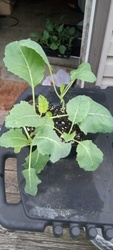
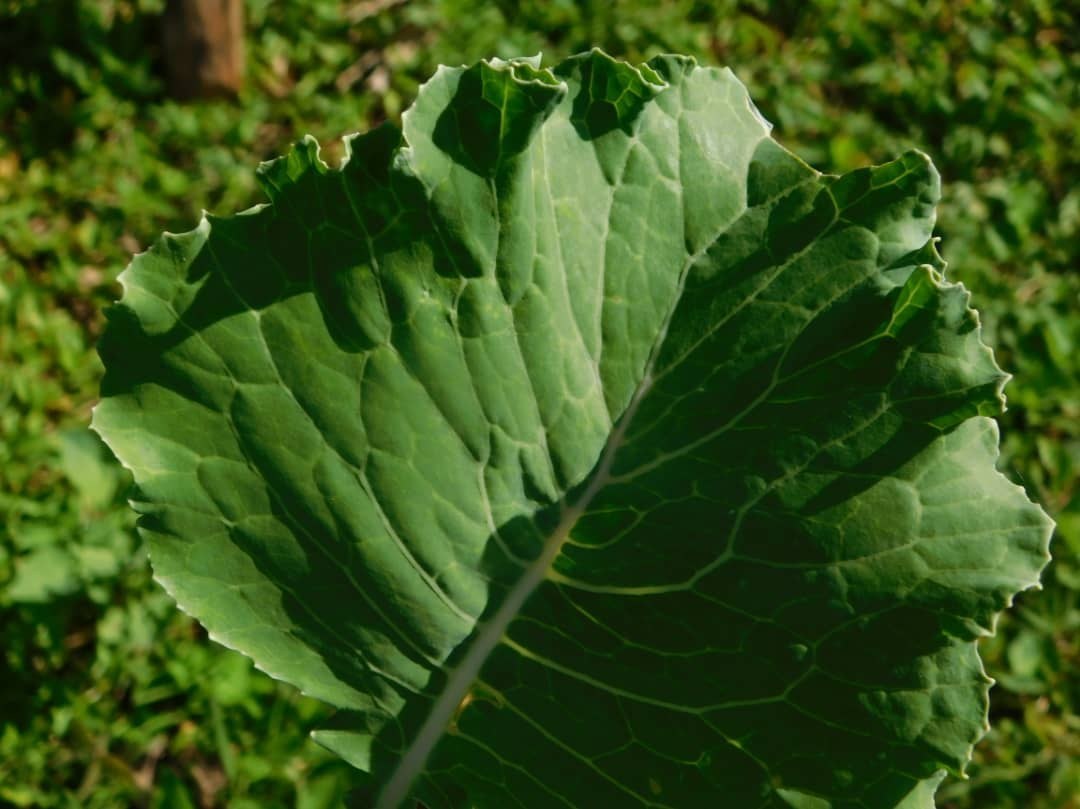
A tall, upright plant with large paddle-shaped leaves.
- Leaves: Big, smooth (not curly), oval to paddle-shaped, blue-green, with thick pale midribs
- Habit: Upright, non-heading, often 2-4 ft tall, with leaves arranged along a central stalk
- Stem: Sturdy, thickening as the plant grows; lower leaves picked first
- Flowers: Yellow brassica blooms in the second year if overwintered
- Note: Forms no head — leaves are harvested individually
Care & growing
Light: Full sun for vigorous growth.
Water: Consistent, even moisture supports healthy leaves; about an inch per week.
Soil: Fertile, well-drained soil rich in organic matter; pH 6.0-7.0.
Temperature: Cool-season crop tolerant of heat and frost.
Feeding: Moderate nitrogen feeding supports continuous leaf production.
Propagation: From seed sown directly or transplanted; pick outer leaves regularly for a long, ongoing crop.
Habitat & origin
Collards descend from wild cabbage of the Mediterranean and Atlantic coasts and are one of the oldest cultivated brassicas, grown by the Greeks and Romans. They later became widespread in the American South via the transatlantic exchange.
They grow across temperate and subtropical regions and are especially productive in the warm-but-mild conditions of the southern United States, where they crop into winter.
Frequently asked questions
How do I harvest collards so they keep producing?
Pick the lower, outer leaves while leaving the central growing tip intact. The plant will keep producing new leaves from the top over a long season.
Are collard greens the same as kale?
They are different cultivars of the same species, Brassica oleracea. Collards have large, flat, smooth leaves while kale has curly or bumpy leaves.
How tall do collard plants get?
They grow upright, typically 2-4 feet tall, with broad leaves arranged along a sturdy central stalk.
How are collards different from cabbage?
Collards are the same species as cabbage but form no head; their leaves grow loosely along an upright central stem.
Collard Greens guides
In-depth guides for identifying, growing, and caring for Collard Greens.
Collard Greens identified by the community
Real specimens identified with Plant Identifier.