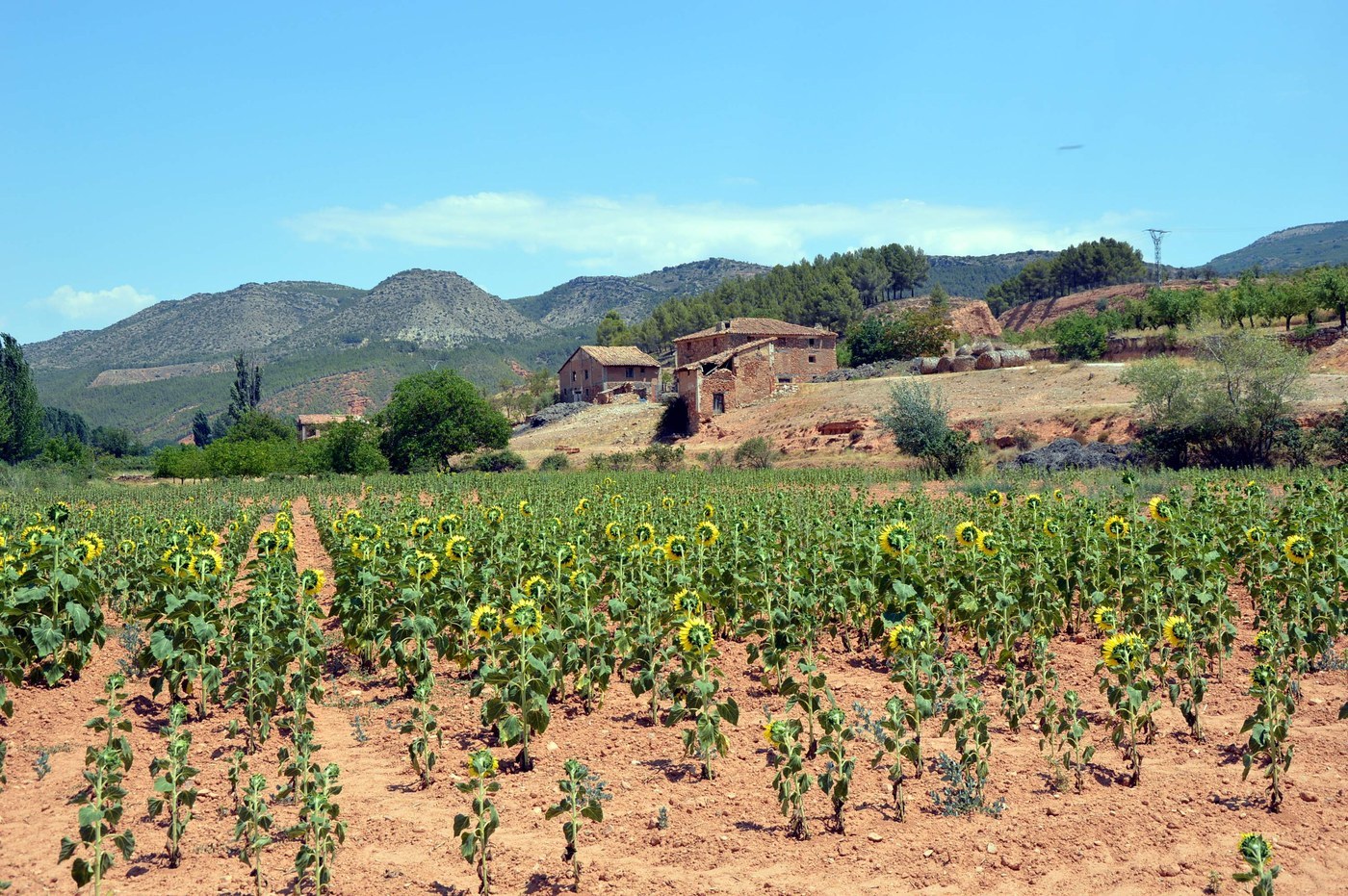
Common Sunflower
Helianthus annuus
The common sunflower is a fast-growing annual famous for its large golden flower heads that track the sun; it is grown worldwide as an ornamental and oilseed crop.
- Light
- Full sun
- Water
- Moderate; deep, regular watering
- Difficulty
- Easy
Got a plant like this?
Identify any plant from a photo, free.
Overview
The common sunflower (Helianthus annuus) is a tall annual in the aster family, native to North America and domesticated by Indigenous peoples thousands of years ago. It is one of the world's major oilseed crops and an enduringly popular garden flower.
Its large 'flower' is actually a composite head of hundreds of tiny florets — a ring of golden ray florets around a central disk that develops into the familiar seeds. Young plants display heliotropism, with the buds turning to follow the sun across the sky each day.
How to identify it
A robust annual ranging from dwarf 60 cm forms to giants over 3 m tall.
- Stem: thick, erect, rough-hairy, often unbranched in single-stem types
- Leaves: large, broad, heart-shaped to oval, coarse and rough-textured, arranged alternately
- Flower head: a large disk (10–30+ cm) of yellow ray florets surrounding a brown-to-purple central disk of fertile florets
- Seeds: the familiar striped or black achenes packed into the disk
- Behavior: young flower buds track the sun (heliotropism); mature heads usually face east
Care & growing
One of the easiest and most rewarding annuals to grow.
- Light: full sun, the more the better
- Water: moderate but deep watering, especially while establishing and flowering
- Soil: deep, well-drained, fertile soil; tolerates a range of conditions
- Temperature: warm-season annual sown after frost danger passes
- Feeding: benefits from rich soil; avoid excess nitrogen, which delays bloom
- Propagation: sow seed directly outdoors; tall types may need staking and protection from birds at seed stage
Habitat & origin
Native to North America, the common sunflower grew wild across the central United States and was domesticated by Indigenous peoples. It is now cultivated and naturalized worldwide.
Wild and weedy forms occupy prairies, fields, roadsides and disturbed ground, while cultivated forms are grown on farms and in gardens across temperate regions globally.
Frequently asked questions
Do sunflowers really follow the sun?
Young sunflower buds track the sun east to west during the day (heliotropism), but once the flower fully opens it generally stays facing east.
How tall do common sunflowers get?
It varies hugely by variety — from compact dwarfs under 60 cm to record-setting giants over 3–4 m tall.
Why does a sunflower 'flower' look like one big bloom?
Each head is actually a composite of hundreds of tiny florets: a ring of showy golden ray florets surrounds a dense central disk of fertile florets that form the seeds.
Where are common sunflowers native to?
They originated in North America, growing wild across the central United States, and are now cultivated and naturalized in temperate regions around the world.
Common Sunflower guides
In-depth guides for identifying, growing, and caring for Common Sunflower.
How to Care for Common Sunflower
Fast, cheerful full-sun annual: give it heat, room, and deep drinks, and it rewards you with towering golden blooms.
Common Sunflower Identification Guide
Identify the common sunflower (Helianthus annuus) by its tall rough-hairy stem, large heart-shaped leaves, and big flower heads with golden-yellow rays around a brown central disk. Includes how to separate it from relatives.