Creeping Charlie
Glechoma hederacea
Creeping Charlie is a low, aromatic perennial in the mint family that spreads aggressively by creeping stems to form dense mats in lawns and shady gardens. Its scalloped, round leaves and small blue-violet flowers make it easy to recognize and notoriously hard to eradicate.
- Light
- Part shade to shade
- Water
- Moderate; prefers moist soil
- Difficulty
- Easy
Got a plant like this?
Identify any plant from a photo, free.
Overview
Creeping Charlie (Glechoma hederacea), also widely called ground ivy, is a perennial member of the mint family native to Europe and Asia and now a common weed across North America. It hugs the ground, spreading by square, creeping stems that root at every node, allowing it to blanket lawns and shady beds.
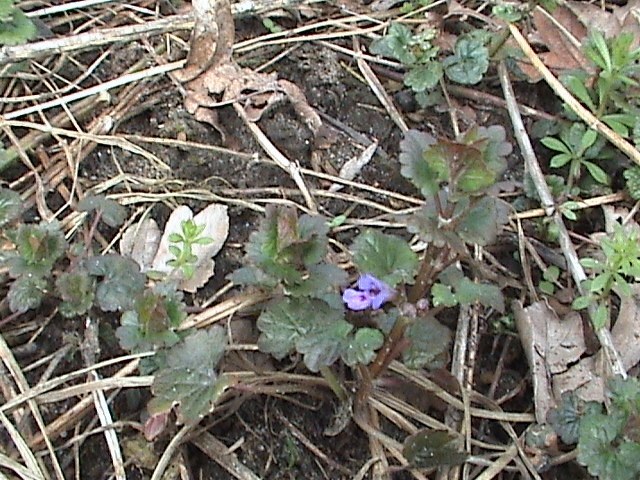
Like other mints it is aromatic, releasing a distinctive minty-musky scent when crushed or mowed. In spring it produces small two-lipped blue-violet flowers.
It was once deliberately introduced as a groundcover, but its vigorous spread has made it one of the most persistent lawn weeds, especially in moist, shaded sites.
How to identify it
A low, creeping, mat-forming perennial only a few inches tall.
- Stems: square in cross-section (mint family), creeping along the ground and rooting at the nodes
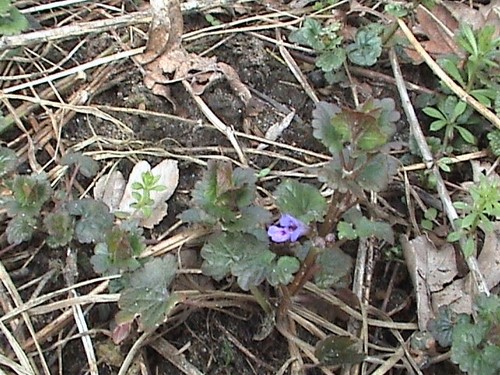
- Leaves: opposite, rounded to kidney-shaped with scalloped (rounded-toothed) edges, bright green, aromatic when crushed
- Flowers: small, two-lipped, funnel-shaped, blue to violet, in clusters in leaf axils in spring
- Scent: minty, slightly musky when bruised or mowed (a reliable tell vs. similar weeds)
- Habit: spreads outward rapidly, thriving where grass thins in shade
Care & growing
Generally managed as a weed rather than grown on purpose.
- Light: Prefers part shade to shade but tolerates sun in moist soil
- Water: Likes consistently moist conditions; spreads fastest in damp ground
- Soil: Tolerant of most soils, favoring rich, moist sites
- Control (cultural): Improve lawn density and light (it exploits thin, shady turf); hand-pull or rake out, removing all rooted stems
- Control (chemical): Broadleaf herbicides containing triclopyr are most effective, applied in fall as the plant moves resources to its roots
- Note: Mowing alone spreads it, since fragments can re-root
Habitat & origin
Native to Europe and southwestern Asia, creeping Charlie was carried to North America by settlers as a groundcover and has naturalized widely across the continent's temperate regions.
It favors moist, shaded to partly shaded sites: lawns under trees, woodland edges, damp gardens, stream banks and disturbed ground, where it readily outcompetes thin turf.
Frequently asked questions
How do I tell creeping Charlie from similar weeds?
Crush a leaf: a minty, musky scent plus square stems and scalloped round leaves with blue-violet spring flowers confirm creeping Charlie.
How do I get rid of creeping Charlie?
Improve lawn health and reduce shade, hand-pull rooted stems, and for heavy infestations apply a triclopyr-based broadleaf herbicide in fall when it moves nutrients to its roots.
Why does it grow in my lawn?
It thrives in moist, shady, thin turf. Trees overhead and damp soil give it the conditions where grass struggles and it takes over.
Is creeping Charlie the same as ground ivy?
Yes, they are two common names for the same plant, Glechoma hederacea.
Creeping Charlie guides
In-depth guides for identifying, growing, and caring for Creeping Charlie.
How to Care for Creeping Charlie
Growing guide for creeping Charlie (Glechoma hederacea), a low, spreading groundcover with scalloped leaves and small violet flowers.
Creeping Charlie Identification Guide
How to identify creeping Charlie (Glechoma hederacea), a low mint-family lawn weed with scalloped leaves and square stems.