Ginseng
Panax ginseng
Ginseng is a slow-growing, shade-loving woodland perennial recognized by its whorls of compound leaves and its fleshy, often forked root.
- Light
- Deep to partial shade
- Water
- Keep soil consistently moist but well-drained
- Difficulty
- Hard
Got a plant like this?
Identify any plant from a photo, free.
Overview
Ginseng refers to several slow-growing perennial herbs in the genus Panax, most notably Asian ginseng (Panax ginseng) and American ginseng (Panax quinquefolius). They are woodland understory plants known for their fleshy, aromatic roots.
Ginseng demands shade, cool conditions and patience the root needs several years to reach full size. Wild plants have been heavily collected, raising conservation concern for native populations.
The genus name Panax derives from the Greek for "all-healing," reflecting the plant's long-revered cultural status.
How to identify it
Ginseng is identified by its whorled compound leaves and forked root.
- Leaves: Palmately compound, with leaflets arranged like a hand, in a whorl atop the stem; the number of "prongs" increases with age
- Flowers: Small, greenish-white, in a single rounded umbel
- Fruit: Clusters of bright red berries in late summer
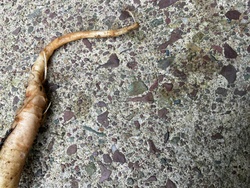
- Root: Fleshy, pale tan, often forked and sometimes resembling a human figure
- Height: Low, typically 30-60 cm (1-2 ft), depending on age and species
Care & growing
Ginseng is challenging and demands woodland conditions and patience.
- Light: Deep to dappled shade (around 70-90% shade), mimicking a forest floor
- Water: Keep soil consistently moist but never waterlogged
- Soil: Rich, loose, humus-laden, well-drained woodland soil that is slightly acidic
- Temperature: Needs a cold winter dormancy; suited to temperate woodlands
- Feeding: Relies on natural leaf-litter humus rather than heavy fertilizing
- Propagation: From seed, which requires lengthy cold stratification and may take 18 months to germinate. Roots need 4-6 or more years to reach full size.
Habitat & origin
Asian ginseng is native to the mountainous forests of northeastern China, Korea and far-eastern Russia, while American ginseng is native to the deciduous woodlands of eastern North America. Both grow as understory plants in cool, shaded, humus-rich forests.
Wild ginseng has been heavily collected and is now protected or regulated in many areas. Much commercial ginseng is cultivated under artificial shade or in managed forests, notably in China, Korea, Canada and the United States.
Frequently asked questions
Why is ginseng so highly valued?
It grows very slowly, taking many years to produce a sizeable root, requires specific shaded woodland conditions, and wild plants are increasingly rare, all of which drive up its value.
Can I grow ginseng in my garden?
It is possible but difficult. Ginseng needs deep shade, cool moist humus-rich soil, a cold dormancy, and several years of patience before the root matures.
How can I identify ginseng?
Look for whorls of palmately compound leaves atop a single stem, small greenish-white flowers in a rounded umbel, and clusters of bright red berries in late summer above a fleshy, often forked root.
How long does ginseng take to mature?
The root needs roughly four to six or more years to reach full size, and the number of leaf 'prongs' increases as the plant ages.
Ginseng guides
In-depth guides for identifying, growing, and caring for Ginseng.
How to Care for Ginseng
Grow ornamental Panax ginseng with deep woodland shade, cool moist humus-rich soil, and patience for this slow, demanding shade perennial.
Ginseng Identification Guide
Recognize ginseng by its whorl of palmately compound five-leaflet leaves, central cluster of greenish flowers, bright red berries, and forked aromatic root. Includes how to age plants by prongs.
Ginseng identified by the community
Real specimens identified with Plant Identifier.