Gorgon's Grotto
Aeonium 'Gorgon's Grotto'
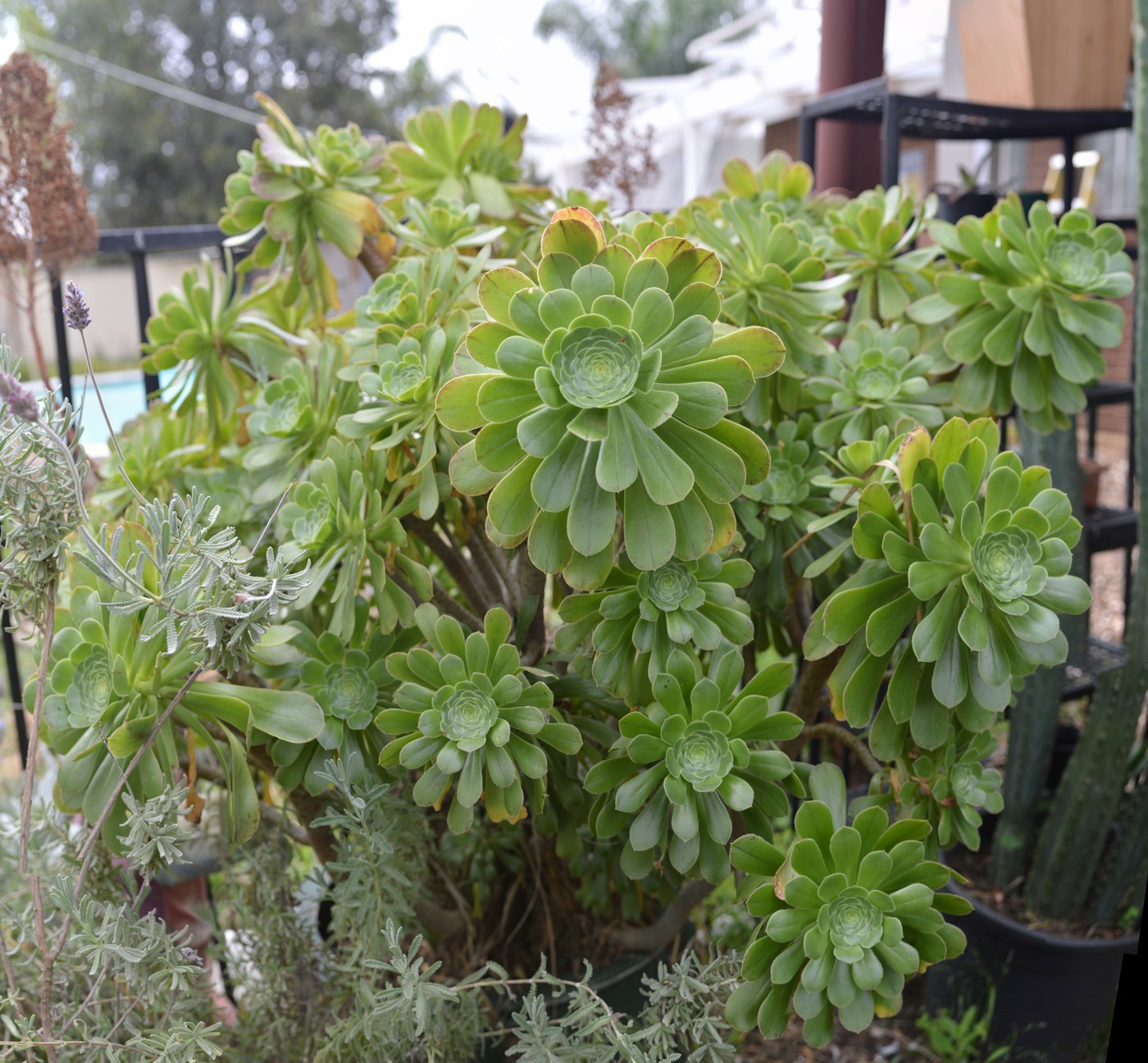
A bold aeonium hybrid forming large, layered rosettes of green leaves often streaked with cream-yellow variegation and red margins. Its dense, ruffled rosettes look like coral or a sea grotto.
- Light
- Bright light to full sun
- Water
- When soil dries; less in summer dormancy
- Difficulty
- Easy
Got a plant like this?
Identify any plant from a photo, free.
Overview
Gorgon's Grotto is a dramatic aeonium hybrid grown for its large, densely layered rosettes that can appear coral-like or labyrinthine — an effect that inspired its mythological name. Leaves are green, frequently variegated with cream-yellow streaks and edged in red, especially in strong light.
Like other aeoniums, it is a cool-season grower, active from fall through spring and resting in summer. It branches over time into a shrubby, multi-headed plant.
Fast and forgiving, it offers eye-catching color and texture, making it a favorite among aeonium collectors and succulent gardeners.
How to identify it
- Large, densely layered rosettes of flat leaves, often with a ruffled, coral-like look
- Green leaves frequently variegated with cream-yellow and edged in red/pink in sun
- Branching woody stems that build a shrubby, multi-headed clump
- Leaves thin and spoon-shaped with fine margin lashes
- Yellow star-flowers on conical clusters from mature rosettes (which then die back)
Care & growing
Light: Bright light to full sun intensifies the variegation and red edging; too little light dulls the color.
Water: Water when the soil dries during the cool growing season; reduce sharply in summer dormancy.
Soil: Well-draining cactus or succulent mix.
Temperature: Mild conditions, 40-70 F (4-21 C); protect from frost and prolonged extreme heat.
Feeding: Light feeding once or twice in the active season.
Propagation: Easy from stem cuttings — callus the cut end and root in barely-moist mix.
Habitat & origin
As a hybrid, Gorgon's Grotto has no wild habitat, but its aeonium ancestry traces to the Canary Islands and nearby Macaronesia, where aeoniums grow on mild, frost-free rocky coastal slopes with wet winters and dry summers.
It is grown worldwide in containers and mild-climate gardens, and indoors in very bright light, thriving on the same cool-season growth rhythm as its relatives.
Frequently asked questions
Why is the variegation on my Gorgon's Grotto fading?
It needs brighter light. Strong sun brings out the cream-yellow streaking and red edges; in shade it tends toward plain green.
Why does it lose leaves and shrink in summer?
That's normal aeonium summer dormancy. It tightens its rosettes and may shed lower leaves during hot, dry months, then revives in cooler weather.
How do I make it bushier?
Cut or pinch the growing tips to encourage branching. The removed rosettes root easily as new plants.
Does a rosette die after flowering?
Yes — aeonium rosettes are monocarpic, so a rosette dies after blooming, but side branches on the plant carry on.
Gorgon's Grotto guides
In-depth guides for identifying, growing, and caring for Gorgon's Grotto.
How to Care for Gorgon's Grotto
Grow the crested Aeonium 'Gorgon's Grotto', a sculptural succulent, with bright light, gritty soil, and careful watering through its summer dormancy.
Gorgon's Grotto Identification Guide
Identify Aeonium 'Gorgon's Grotto' by its large rosettes of glossy, variably variegated green-and-cream leaves on tall branching stems.