Haworthia
Haworthiopsis attenuata
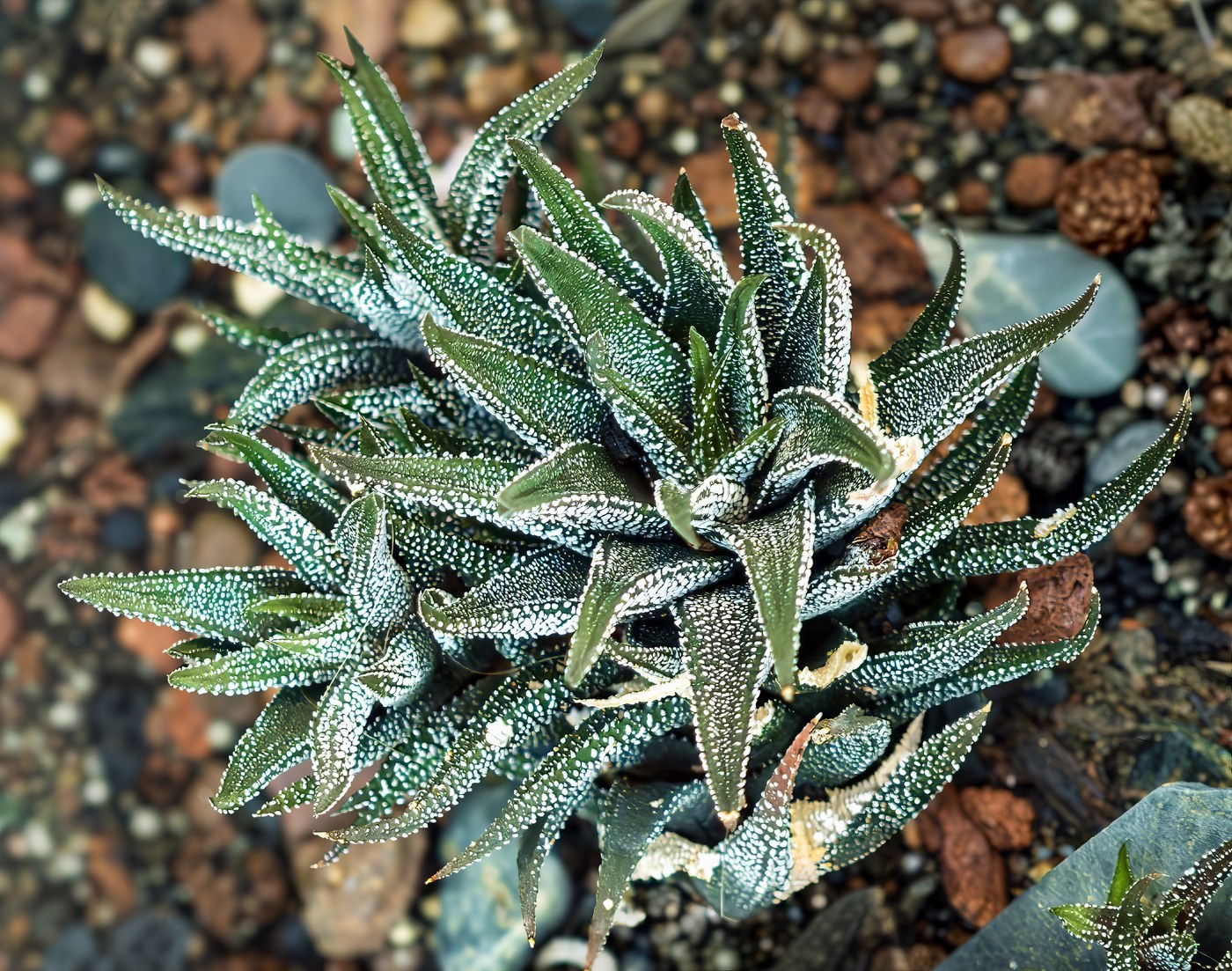
A small, slow-growing rosette succulent often called the zebra plant for the raised white bands on its dark green leaves. Compact and slow-growing, it thrives on neglect and tolerates lower light than most succulents.
- Light
- Bright indirect light
- Water
- Every 2-3 weeks; let soil dry fully
- Difficulty
- Easy
Got a plant like this?
Identify any plant from a photo, free.
Overview
Haworthia (including the closely related Haworthiopsis) is a genus of small South African rosette succulents popular for windowsills and desks. The best-known is the zebra plant, with stiff, pointed dark-green leaves marked by raised white tubercles in striped bands.
Unlike sun-hungry succulents, haworthias come from partly shaded habitats and tolerate bright indirect light, making them well suited to indoor life. They stay small, grow slowly, produce offsets, and are beginner-friendly.
How to identify it
Identify it by:
- Form: Compact, tight rosette of thick, pointed leaves, usually 3-5 inches across
- Leaves: Stiff, dark green, often marked with raised white dots or horizontal bands (zebra types) or with translucent 'windowed' tips (some species)
- Habit: Clumping; produces offsets around the base
- Flowers: Small white tubular flowers on a thin, tall stalk
- Size: Stays small, rarely exceeding a few inches tall
Care & growing
- Light: Bright indirect light; tolerates lower light than most succulents and dislikes harsh midday sun
- Water: Soak, then let the soil dry completely; roughly every 2-3 weeks, much less in winter
- Soil: Gritty, fast-draining cactus or succulent mix
- Temperature: 65-80F (18-27C); protect from frost
- Feeding: Minimal; diluted succulent fertilizer once or twice in the growing season
- Propagation: Easy by separating offsets; some from leaf cuttings
Habitat & origin
Native to South Africa, where species grow in semi-arid grassland and scrub, often nestled in the partial shade of rocks and other plants rather than in full exposure.
They are grown worldwide as small, easy-care houseplants, popular for terrariums, dish gardens, and bright windowsills.
Frequently asked questions
How is haworthia different from aloe?
Haworthias are much smaller and slower-growing, and are often marked with white bumps or windowed tips, unlike the larger leaves of aloe.
Why is my haworthia turning red or orange?
Too much direct sun can stress the plant, causing it to blush red or brown. Move it to bright indirect light to keep it green.
How do I propagate it?
Gently separate the offsets (pups) that form around the base, let them callus briefly, and pot them in dry succulent mix.
Why is my haworthia growing tall and stretched?
Stretching usually means too little light. Move it to a brighter spot with plenty of bright indirect light to keep the rosette compact.
Haworthia guides
In-depth guides for identifying, growing, and caring for Haworthia.
How to Care for Haworthia
Haworthia is a compact, easygoing succulent that thrives in bright indirect light with infrequent, thorough watering.
Haworthia Identification Guide
Identify Haworthia by its small rosettes of fleshy leaves, often marked with white tubercles or translucent leaf windows, and clumping habit.