Lucky Bamboo
Dracaena sanderiana
Despite the name, lucky bamboo is not a bamboo but a Dracaena, often grown in water and trained into curls or stalks. It is a popular feng shui gift symbolizing good fortune.
- Light
- Bright indirect light
- Water
- Keep roots in clean water
- Difficulty
- Easy
Got a plant like this?
Identify any plant from a photo, free.
Overview
Lucky Bamboo is Dracaena sanderiana, a tropical African plant whose upright green canes resemble true bamboo but belong to the asparagus family. It is famous for being grown in vases of water and pebbles and for canes trained into spirals, lattices and tiers by rotating them toward light.
In feng shui it is given as a symbol of luck and prosperity, with the number of stalks carrying different meanings. It is one of the most forgiving houseplants, thriving in water alone as long as the water is kept clean.
How to identify it
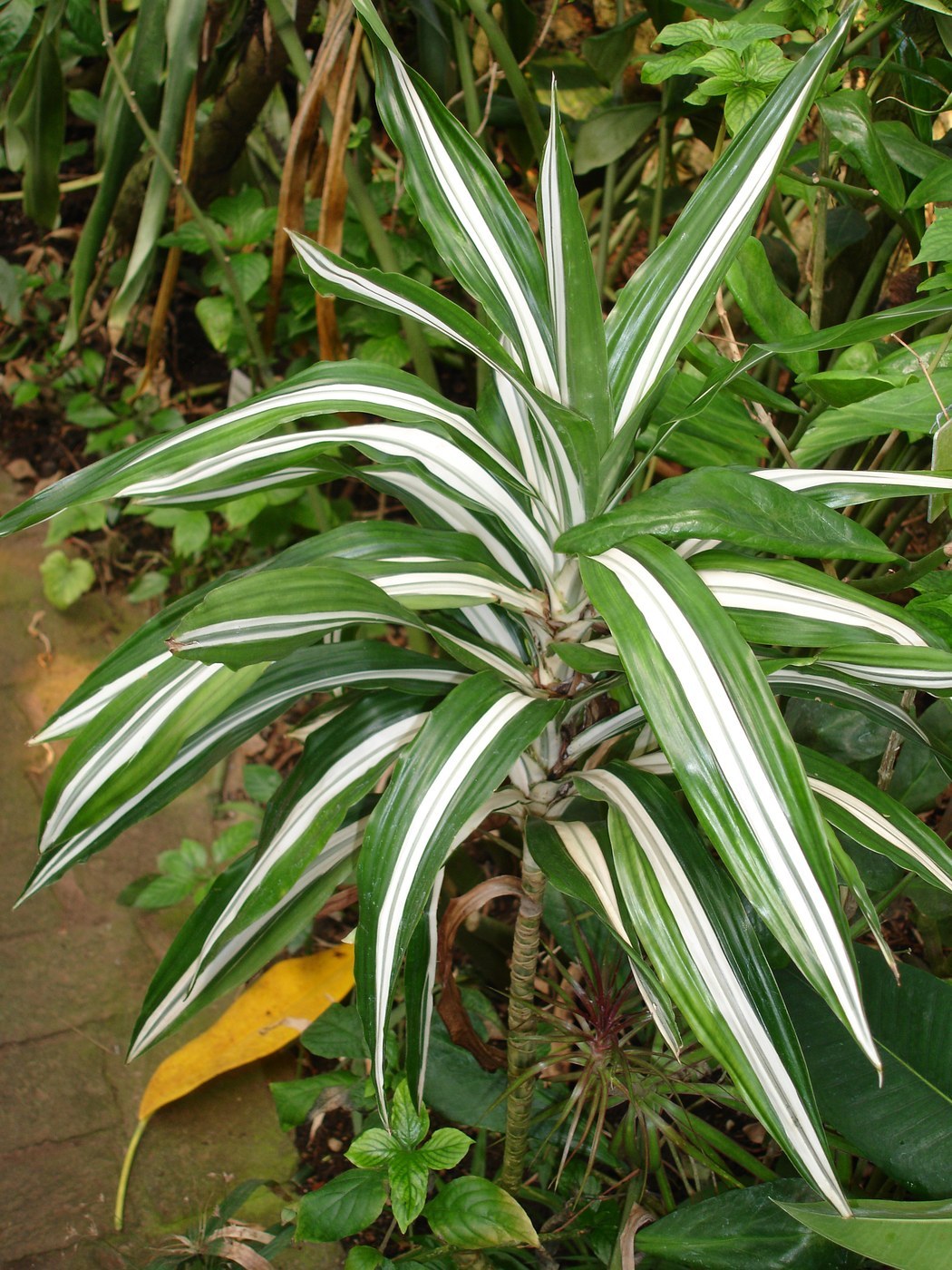
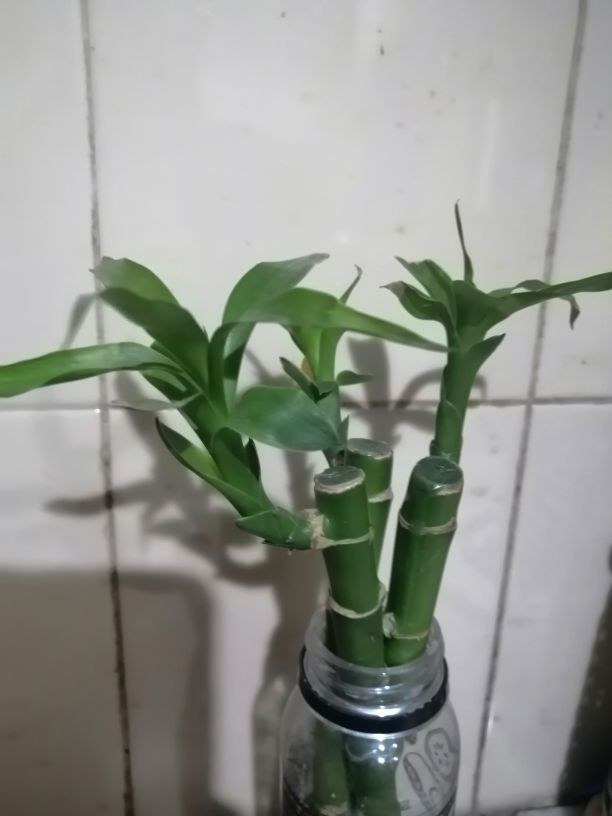
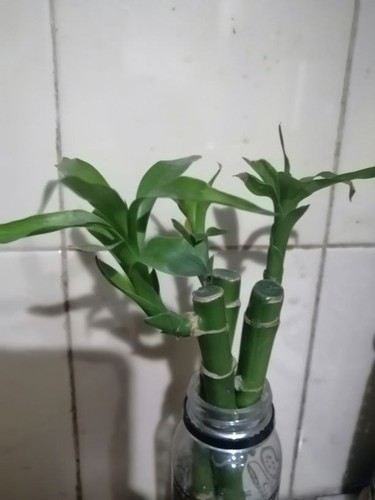
Identify it by jointed, bamboo-like green stalks topped with strappy leaves, often sold in water.
- Stalks: thick, segmented, bright green canes, frequently curled or braided
- Leaves: narrow, lance-shaped, gray-green, sprouting from the cane joints
- Roots: red-tinged roots visible when grown in clear vases
- Size: typically 30 to 90 cm indoors
Care & growing
Give bright indirect light; direct sun scorches the leaves and deep shade causes leggy, pale growth.
- Water: if grown in water, keep stalks submerged a few centimeters and change the water every 1 to 2 weeks; use filtered or distilled water since it is sensitive to fluoride and chlorine
- Soil: can also grow in well-draining potting mix kept lightly moist
- Temperature: 18 to 27 C; avoid cold drafts
- Feeding: a few drops of dilute fertilizer monthly
- Propagation: cut a healthy top section below a node and root it in water
Habitat & origin
Native to Central Africa, particularly Cameroon, where it grows in the rainforest understory. Despite its tropical origin it has become a global symbol of good fortune through feng shui, especially across East Asia, and is mass-produced and exported worldwide as a novelty and gift plant.
Frequently asked questions
Is lucky bamboo really bamboo?
No. It is Dracaena sanderiana, related to corn plants and asparagus, not a true bamboo. It just resembles one.
Why are the leaves turning yellow?
Common causes are chlorinated or fluoridated tap water, too much fertilizer, or direct sun. Use filtered water and indirect light.
How often should I change the water?
Every 1 to 2 weeks, keeping the level high enough to cover the roots and the bottom of the stalks.
How do I propagate lucky bamboo?
Cut a healthy top section just below a node and place it in clean water to root, keeping it in bright, indirect light.
Lucky Bamboo guides
In-depth guides for identifying, growing, and caring for Lucky Bamboo.
How to Care for Lucky Bamboo
Grow easy-care Lucky Bamboo (Dracaena sanderiana) in water or soil with bright indirect light and clean, chlorine-free water.
Lucky Bamboo Identification Guide
Identify Lucky Bamboo (Dracaena sanderiana) and learn why this water-grown 'bamboo' is actually a Dracaena, not a true bamboo.