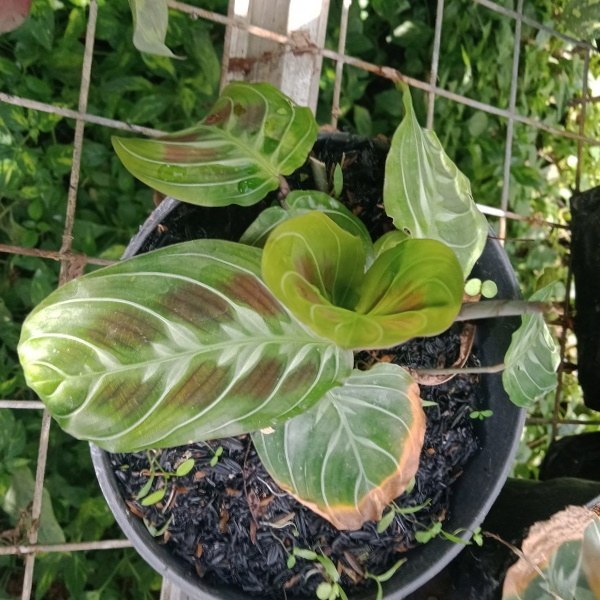
Prayer Plant
Maranta leuconeura
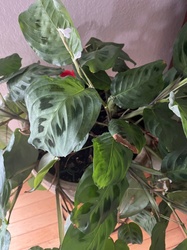
A low-growing tropical foliage plant famous for folding its decoratively veined leaves upward at night, like hands in prayer. Its oval leaves show striking patterns of green, cream and red.
- Light
- Medium to bright indirect light
- Water
- Keep evenly moist
- Difficulty
- Moderate
Got a plant like this?
Identify any plant from a photo, free.
Overview
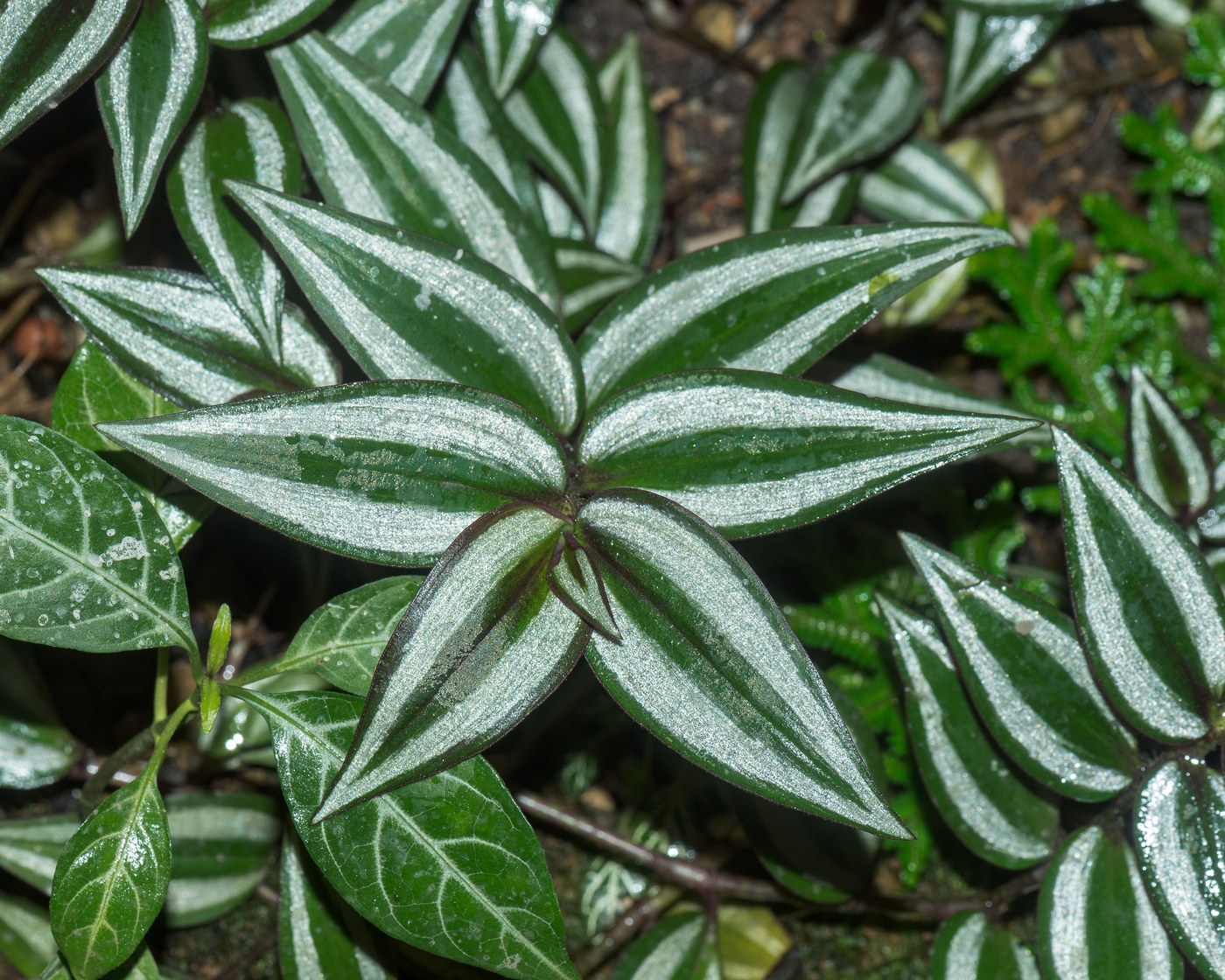
The Prayer Plant earns its name from nyctinasty: its leaves lie flat by day to catch light and fold upright at dusk, a daily rhythm driven by a hinge-like joint (the pulvinus) at the leaf base. The most popular variety, Maranta leuconeura var. erythroneura, has dark green leaves veined in bright red over a herringbone pattern.
Native to the Brazilian rainforest floor, it is a creeping, mat-forming perennial that stays compact, making it well suited to tabletops, shelves and terrariums. It rewards humidity and consistency but sulks in dry, drafty air.
How to identify it
Recognize it by its boldly patterned oval leaves that visibly move through the day.
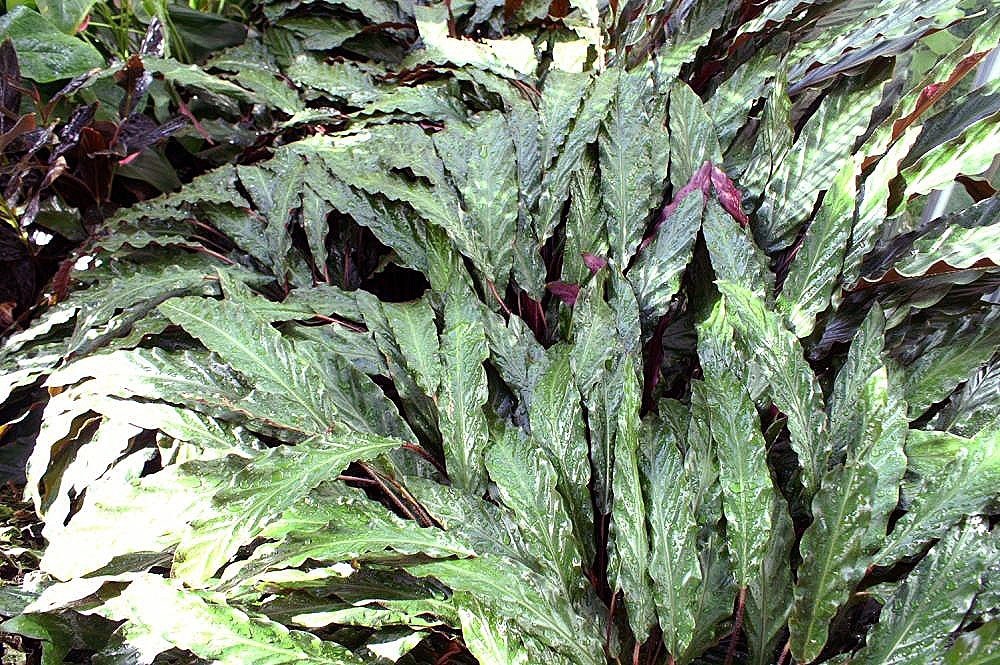
- Leaves: broad ovals, often with a feathered herringbone pattern; veins may be red or silvery on a green background, purple underneath
- Movement: leaves fold upward at night and lie flat by day
- Habit: low, spreading, 20 to 30 cm tall; trailing stems
- Flowers: small, insignificant white-to-lilac blooms (rare indoors)
Care & growing
Provide medium to bright indirect light; direct sun fades the markings, while deep shade dulls them.
- Water: keep the soil evenly moist but not soggy; use lukewarm, ideally filtered or rainwater, as it is sensitive to fluoride and chlorine
- Soil: rich, well-draining peat-based mix
- Humidity: high; mist, group plants, or use a pebble tray
- Temperature: 18 to 27 C, no cold drafts
- Feeding: dilute balanced fertilizer monthly in spring and summer
- Propagation: division at repotting, or stem cuttings at a node
Habitat & origin
Native to the tropical rainforests of Brazil, where it grows as ground cover in the warm, humid, shaded understory. These conditions explain its love of consistent moisture, warmth and dappled light. It is grown worldwide as a popular indoor foliage plant and is a frequent choice for terrariums.
Frequently asked questions
Why are the leaf tips turning brown?
Usually low humidity or mineral buildup from tap water. Raise humidity and switch to filtered, distilled, or rainwater.
Why don't my leaves fold up at night?
The nightly fold depends on a healthy day-night light cycle; too little daytime light or stress can weaken the movement.
How do I propagate it?
Divide the root clump at repotting, or take a stem cutting just below a node and root it in water or moist soil.
Prayer Plant guides
In-depth guides for identifying, growing, and caring for Prayer Plant.
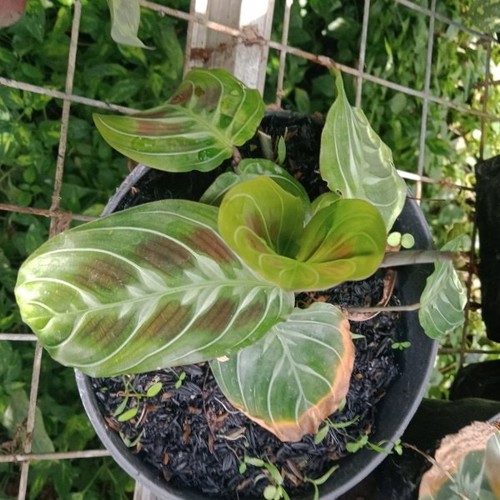
How to Care for Prayer Plant
Grow the prayer plant (Maranta leuconeura), a striking houseplant with patterned leaves that fold upward at night, needing warmth and moisture.
Prayer Plant Identification Guide
Identify the Prayer Plant (Maranta leuconeura) by its strikingly patterned oval leaves and its nightly folding movement that gives the plant its name.
Prayer Plant identified by the community
Real specimens identified with Plant Identifier.