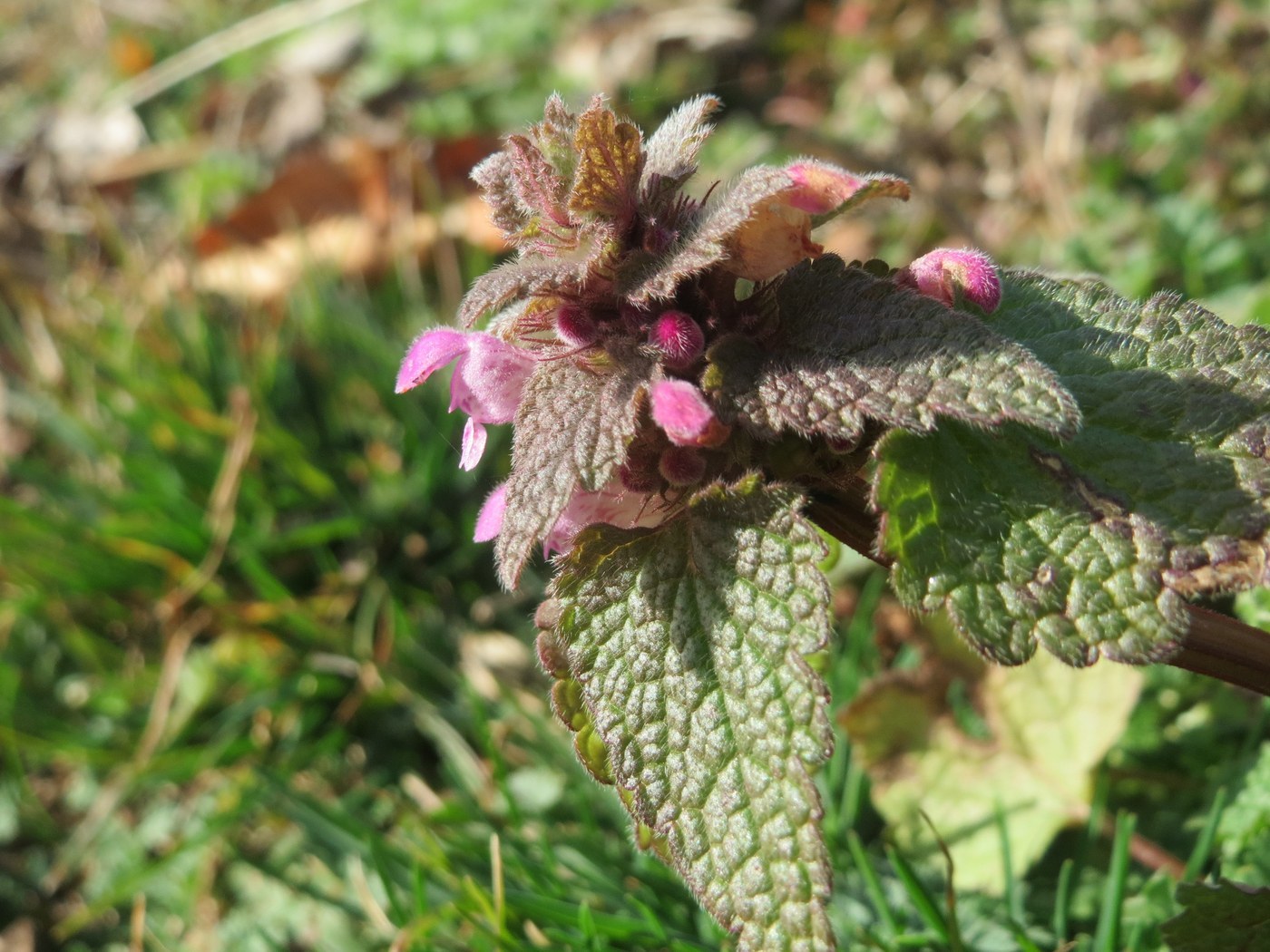
Purple Deadnettle
Lamium purpureum
Purple deadnettle is a low winter annual in the mint family, recognized by its triangular, reddish-purple-tinged upper leaves and small pink-purple flowers. A close relative of henbit, it is a harmless, bee-friendly weed that carpets gardens and fields in early spring.
- Light
- Full sun to part shade
- Water
- Moderate; prefers moist soil
- Difficulty
- Easy
Got a plant like this?
Identify any plant from a photo, free.
Overview
Purple deadnettle (Lamium purpureum) is a low-growing winter annual in the mint family, native to Europe and Asia and naturalized widely in North America and other temperate regions. 'Deadnettle' means its soft, nettle-like leaves do not sting, and 'purple' refers to the reddish-purple flush of its upper foliage.
Like its relative henbit, it germinates in fall or early spring and blooms early, often turning fields and gardens a hazy reddish-purple before the growing season fully begins. The two are frequently confused.
Though treated as a weed, it is an important early food source for bees.
How to identify it
A low, mounding winter annual usually 4-10 in tall.
- Stems: square (mint family), often purplish, branching from the base
- Leaves: broadly triangular to heart-shaped with scalloped edges, on short stalks; the upper leaves are tinged reddish-purple and crowded toward the top, often overlapping
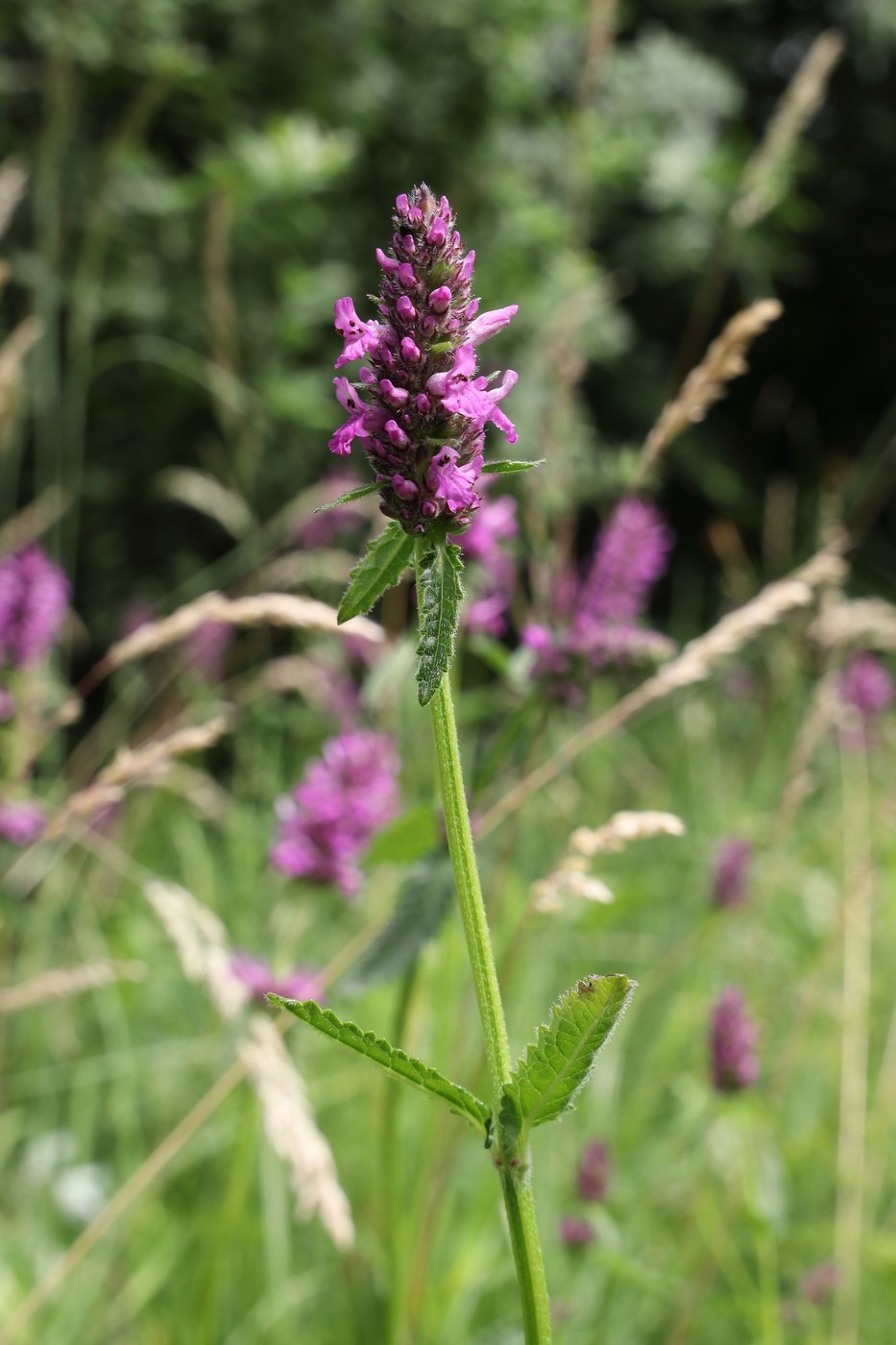
- Flowers: small, tubular, two-lipped, pink to purple, nestled among the upper leaves in spring
- Habit: dense, low clumps, among the earliest spring bloomers
- Distinction: vs. henbit, the upper leaves are stalked, triangular and purple-flushed (henbit's upper leaves clasp the stem and stay green)
Care & growing
A weed in most settings, easily controlled as an annual.
- Light: Full sun to part shade
- Water: Prefers moist soil; common in cool, damp spring weather
- Soil: Favors rich, moist, disturbed ground
- Control (cultural): Keep turf and beds dense; hand-pull or hoe young plants before they flower and seed
- Control (chemical): Fall pre-emergent or a broadleaf herbicide on young growth works best
- Life cycle note: As a winter annual it naturally dies off in summer heat, so target control in fall and early spring
Habitat & origin
Native to Europe and Asia, purple deadnettle has naturalized across North America and other temperate parts of the world and is a very common late-winter and early-spring weed.
It favors moist, fertile, disturbed soils: lawns, gardens, crop fields (especially no-till and winter grain), orchards, roadsides and waste ground, where large stands can turn the landscape purple in early spring.
Frequently asked questions
How do I tell purple deadnettle from henbit?
Purple deadnettle has stalked, triangular upper leaves flushed reddish-purple, while henbit's upper leaves clasp the stem directly and stay green. Both are low spring mint-family weeds.
Is purple deadnettle a stinging nettle?
No. Despite the name, it is in the mint family and has no sting; 'deadnettle' means its nettle-shaped leaves are harmless to touch.
Is it good for bees?
Very. It is one of the first nectar and pollen sources of the year, helping bees emerging in late winter and early spring.
Purple Deadnettle guides
In-depth guides for identifying, growing, and caring for Purple Deadnettle.
How to Care for Purple Deadnettle
Purple deadnettle (Lamium purpureum) is an easy, fast-spreading low grower with soft purple-tinged leaves and small hooded flowers.
Purple Deadnettle Identification Guide
How to identify purple deadnettle (Lamium purpureum), a cool-season mint weed with reddish-purple stalked upper leaves and pink-purple flowers.