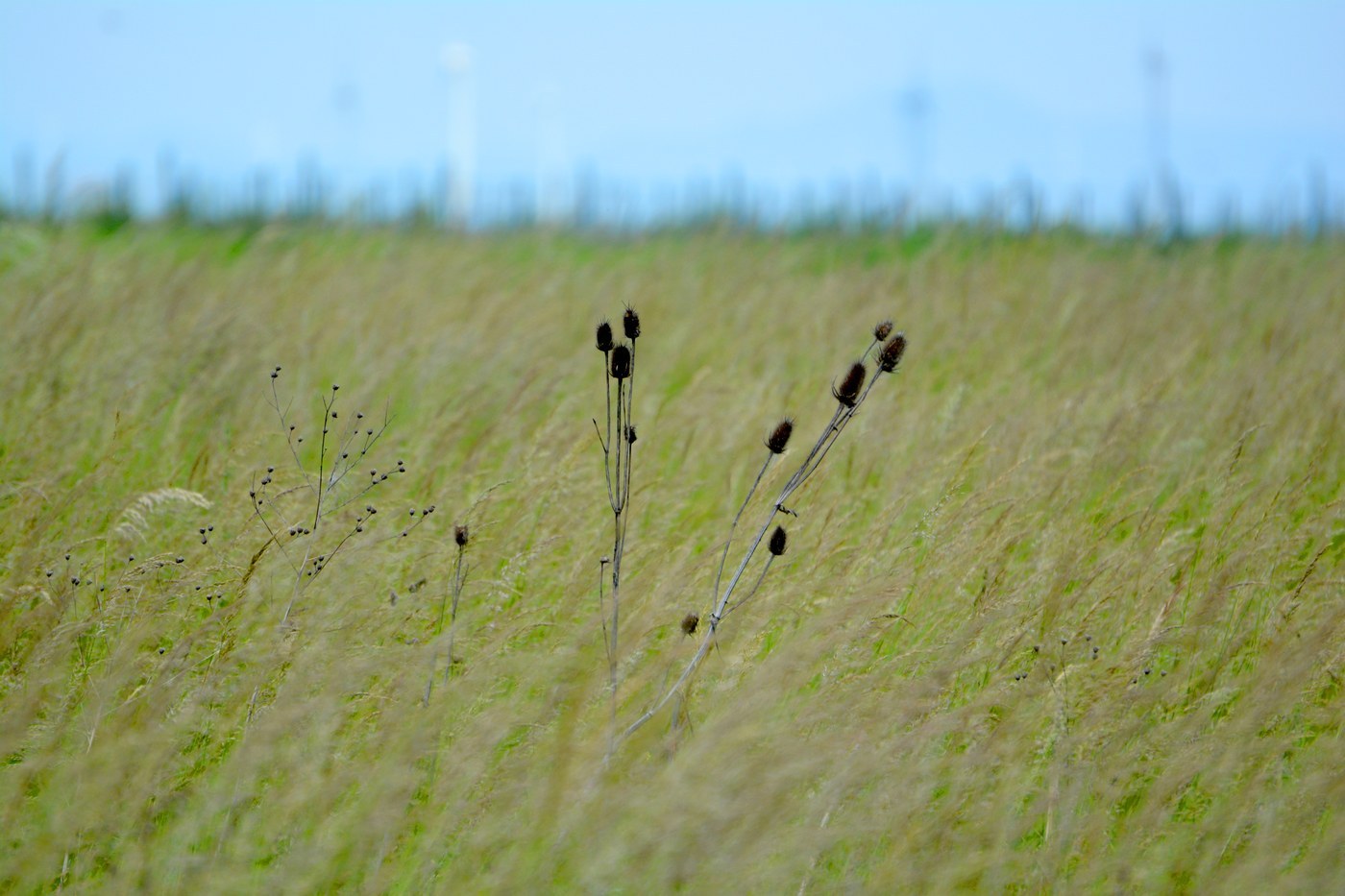
Teasel
Dipsacus fullonum
Teasel is a tall, spiny biennial topped with egg-shaped, prickly flower heads ringed by tiny lavender blooms. Once used to raise the nap on woolen cloth, it is now considered an invasive weed in much of North America.
- Light
- Full sun
- Water
- Moderate; tolerates dry once established
- Difficulty
- Easy
Got a plant like this?
Identify any plant from a photo, free.
Overview
Teasel (Dipsacus fullonum) is a biennial native to Europe, western Asia, and North Africa, now widely naturalized elsewhere. In its first year it forms a basal rosette; in its second it sends up a tall, prickly flowering stem.
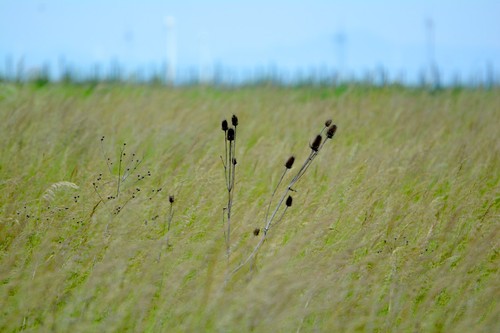
The signature conical, spiny seed heads persist long after the small purple flowers fade, making them popular in dried arrangements and a familiar sight along roadsides.
Historically the closely related fuller's teasel was used in the textile industry to comb and raise the nap of wool. Today common teasel is regarded as an invasive weed in many U.S. states.
How to identify it
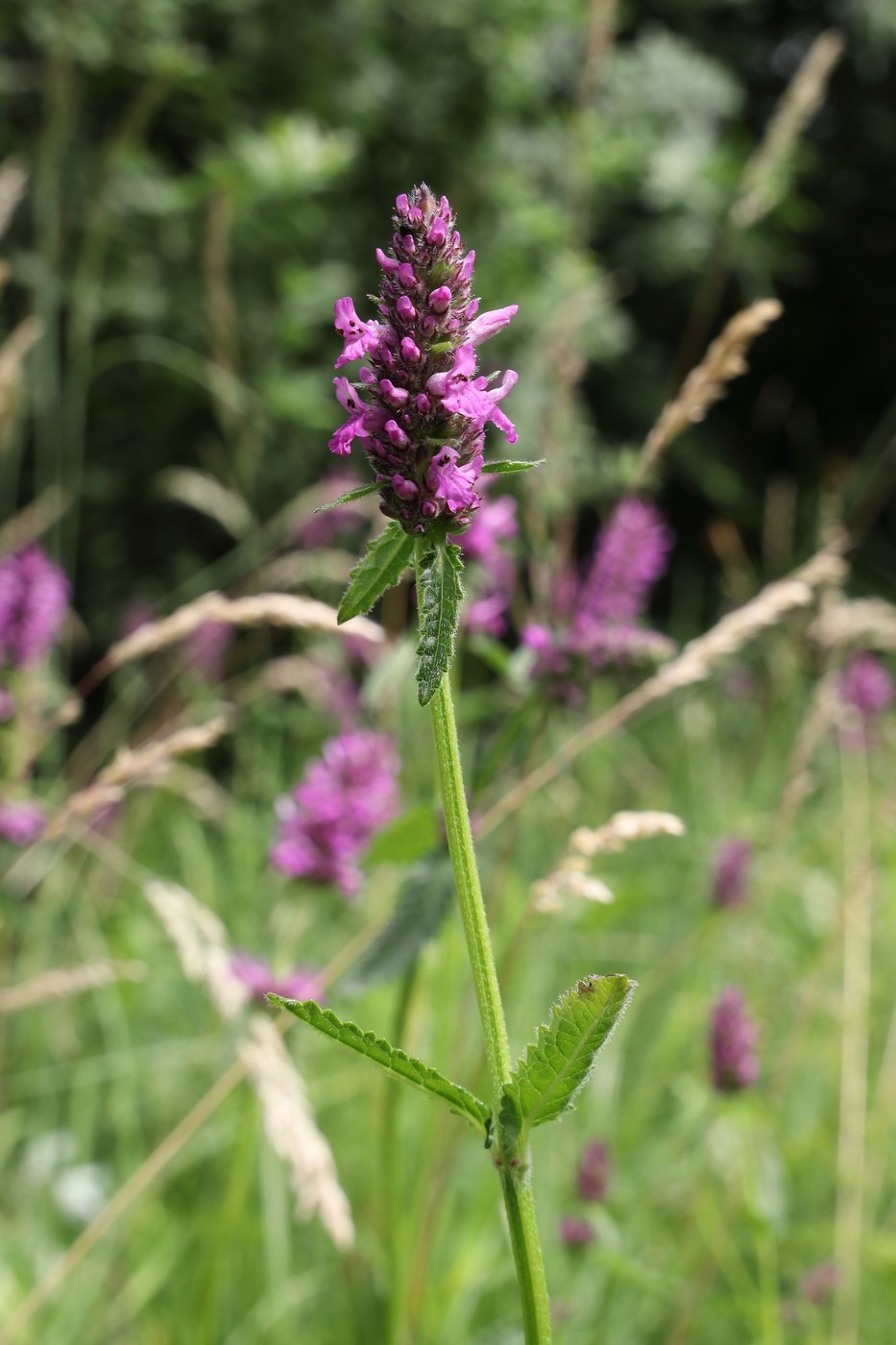
Recognize Teasel by:
- A tall, rigid, prickly stem reaching 0.5 to 2.5 m (1.5 to 8 ft)
- Egg-shaped, spiny flower heads with stiff bracts curving up around them
- Bands of small lavender to pale-purple flowers that open in a ring around the head
- Opposite leaves fused at the base to form a cup that collects rainwater
- Prickles along leaf midribs and stems; dried brown seed heads in winter
Care & growing
Vigorous and self-sufficient, sometimes too much so.
- Light: Full sun is essential
- Water: Moderate; established plants tolerate drought
- Soil: Tolerates a wide range, including poor and disturbed ground
- Temperature: Hardy across temperate zones, roughly USDA 3 to 9
- Feeding: None needed
- Propagation: Self-seeds prolifically; remove spent heads to prevent unwanted spread. Check local regulations, as it is listed as noxious in some areas
Habitat & origin
Native to Europe, western Asia, and North Africa, and naturalized across North America, Australia, and New Zealand.
It colonizes roadsides, old fields, ditches, riverbanks, and disturbed ground, often forming dense stands. Because it outcompetes native vegetation, deliberate planting is discouraged in regions where it is invasive.
Frequently asked questions
What was Teasel used for in making cloth?
The stiff, hooked spines of fuller's teasel heads were used to comb wool and raise its nap, an industrial use no metal substitute fully matched for fine cloth.
Is Teasel invasive?
Yes. Common teasel is listed as a noxious or invasive weed in many U.S. states because it spreads aggressively and crowds out native plants.
Why does water collect at the leaves?
The opposite leaves fuse around the stem to form a cup that traps rainwater, which may help deter climbing insects and provide habitat.
Do birds use teasel?
Yes, goldfinches in particular relish the seeds, which is one reason the dried heads are sometimes left standing through winter.
Teasel guides
In-depth guides for identifying, growing, and caring for Teasel.