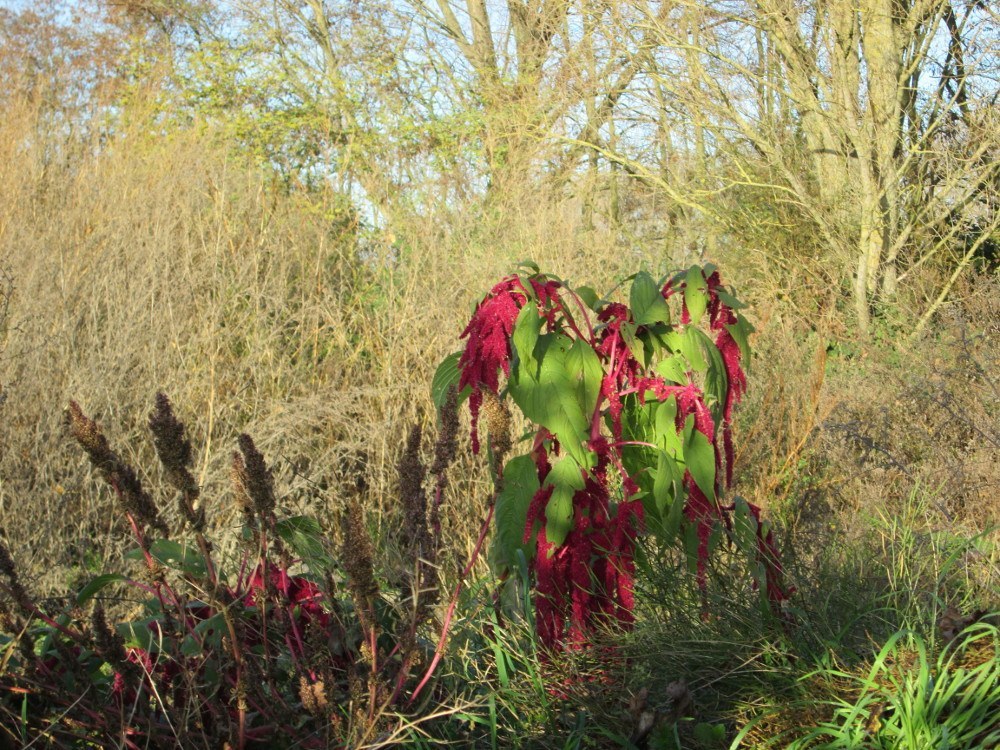
Amaranth
Amaranthus caudatus
Amaranth is a vigorous annual grown for its dramatic drooping crimson flower tassels and broad, often red-tinged leaves. It has been cultivated for thousands of years across the Americas, Asia, and Africa.
- Light
- Full sun
- Water
- Moderate; drought tolerant once established
- Difficulty
- Easy
Got a plant like this?
Identify any plant from a photo, free.
Overview
Amaranth is a diverse genus of annuals that includes ornamental, leafy, and grain-producing types. The best-known ornamental, Amaranthus caudatus (love-lies-bleeding), produces long, rope-like ruby tassels that cascade dramatically.
Grain amaranths such as A. cruentus and A. hypochondriacus were important crops of the Aztec and Inca civilizations.
Fast-growing and adaptable, amaranth tolerates heat and poor soil, making it an easy ornamental grown around the world.
How to identify it
- Height: Typically 3-5 ft, sometimes taller, with a strong upright stem.
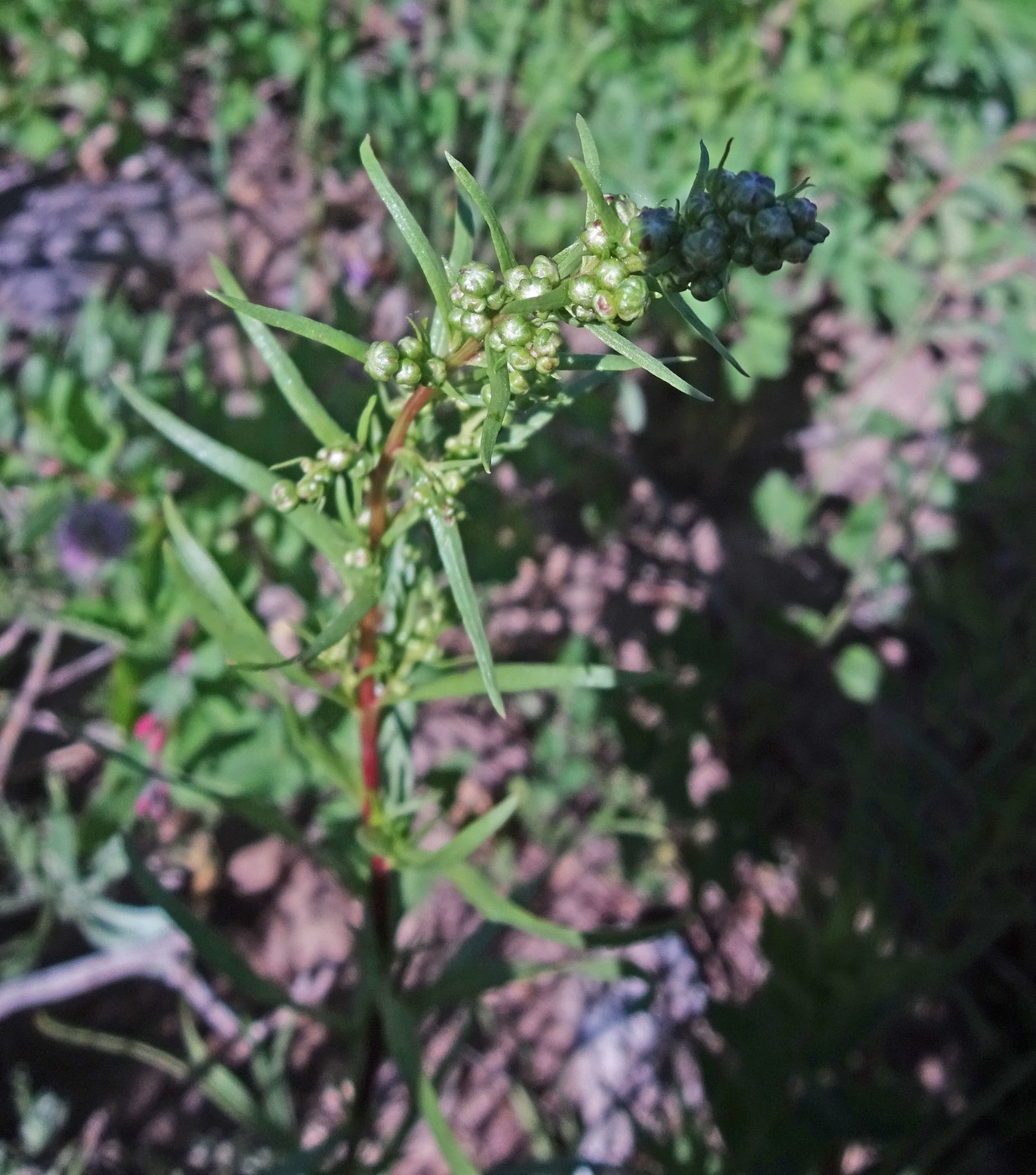
- Flowers: Tiny flowers densely packed into long, drooping or upright tassels, often deep crimson, but also green, gold, or purple.
- Leaves: Broad, oval, alternate leaves, often tinged red or purple.
- Seeds: Tiny, lens-shaped, pale to dark seeds produced in large quantities.
- Habit: Coarse, bushy, with a tropical appearance.
Care & growing
Light: Full sun for strongest growth and color.
Water: Moderate watering; established plants tolerate drought well.
Soil: Adaptable to most soils, including poor ones, but does best in well-drained, moderately fertile ground.
Temperature: Warm-season plant; sow after the last frost when soil has warmed.
Feeding: Minimal feeding required; too much nitrogen can cause floppy growth.
Propagation: Grown from seed sown directly outdoors or started indoors. Seeds are tiny, so sow shallowly and thin seedlings.
Habitat & origin
Amaranthus caudatus likely originated in the Andean region of South America, while other species are native across the Americas, Asia, and Africa.
Amaranths grow in cultivated fields, gardens, and disturbed ground worldwide. Several wild species are common weeds (pigweed), while cultivated forms are grown for ornament or grain in warm regions globally.
Frequently asked questions
Is amaranth the same as pigweed?
They are closely related. Several wild amaranth species are known as pigweed; cultivated grain and ornamental types are selected forms of the same genus.
Is amaranth annual or perennial?
It is grown as a warm-season annual and self-seeds readily, often returning the following year from dropped seed.
How tall does amaranth grow?
Most types reach 3 to 5 feet, sometimes taller, on a strong upright stem with a coarse, tropical appearance.
What gives love-lies-bleeding its name?
Amaranthus caudatus produces long, rope-like crimson tassels that droop and cascade dramatically, inspiring the name love-lies-bleeding.
Amaranth guides
In-depth guides for identifying, growing, and caring for Amaranth.
How to Care for Amaranth
Grow ornamental amaranth (Amaranthus caudatus) for its cascading crimson tassels: an easy, sun-loving annual that thrives in warm gardens.
Amaranth Identification Guide
Identify amaranth (Amaranthus) by its upright stems, alternate veined leaves, and dense tassels or plumes of tiny chaffy flowers.