Angelica
Angelica archangelica
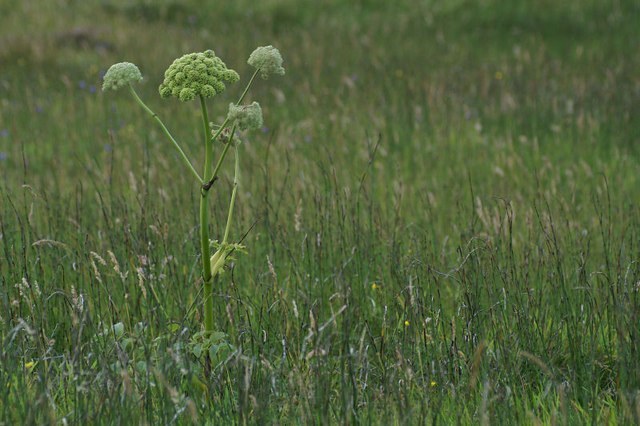
Angelica is a stately, architectural biennial herb in the carrot family with huge domed greenish-white flower heads and bold, divided foliage. It is a dramatic showpiece in herb and ornamental gardens.
- Light
- Part shade to full sun
- Water
- Regular; keep soil moist
- Difficulty
- Moderate
Got a plant like this?
Identify any plant from a photo, free.
Overview
Angelica (Angelica archangelica), or garden angelica, is a tall biennial or short-lived perennial in the carrot family (Apiaceae), native to northern and eastern Europe.
Every part is aromatic. Bold and dramatic, a flowering angelica can reach 2 metres with great spherical umbels, making it a showpiece in herb and ornamental gardens.
How to identify it
- Flowers: very large, rounded, greenish-white umbels (often 10-15 cm across) on stout hollow stalks in early summer of its second year
- Leaves: large, divided into broad, toothed leaflets on inflated, sheathing leaf bases that clasp the stem
- Stems: thick, hollow, ribbed, often purplish, 1-2 m tall
- Roots: stout taproot
- Note: distinguished by its rounded (not flat-topped) greenish-white flower clusters and inflated, sheathing leaf bases
Care & growing
Light: Partial shade to full sun; appreciates cooler conditions.
Water: Keep soil consistently moist; it dislikes drying out.
Soil: Deep, rich, moist, well-drained soil high in organic matter.
Temperature: Cool-climate plant, hardy through about USDA zones 4-9.
Feeding: Apply compost in spring; it appreciates fertile ground.
Propagation: Sow fresh seed (viability fades quickly) in late summer or autumn; it usually flowers in its second year, then dies after setting seed unless flower stalks are removed. Self-seeds readily.
Habitat & origin
Angelica archangelica is native to northern and northeastern Europe, including Scandinavia, Iceland and parts of Russia, where it grows in damp meadows, riverbanks and cool mountain areas. It has long been cultivated, especially in northern Europe.
It is grown in herb gardens and ornamental borders in cool temperate climates, favoring moist, rich, partly shaded sites that echo its damp native habitat.
Frequently asked questions
Does angelica come back every year?
It is typically biennial, flowering and setting seed in its second year and then dying. Removing flower stalks can prolong it, and it self-seeds to maintain a patch.
How big does angelica get?
It is a bold, architectural plant whose flowering stems can reach about 2 metres tall, topped with large, rounded greenish-white umbels.
How do you grow angelica from seed?
Sow fresh seed in late summer or autumn, since viability fades quickly. It usually flowers in its second year and self-seeds readily.
Where is angelica native to?
It is native to northern and northeastern Europe, including Scandinavia, Iceland and parts of Russia, where it grows in damp meadows, riverbanks and cool mountain areas.
Angelica guides
In-depth guides for identifying, growing, and caring for Angelica.
How to Care for Angelica
Growing guide for angelica (Angelica archangelica), a stately biennial with bold foliage and dramatic greenish flower umbels.
Angelica Identification Guide
Identify angelica (Angelica) by its tall hollow stems, large divided leaves with inflated sheathing bases, and dome-shaped greenish-white flower umbels.