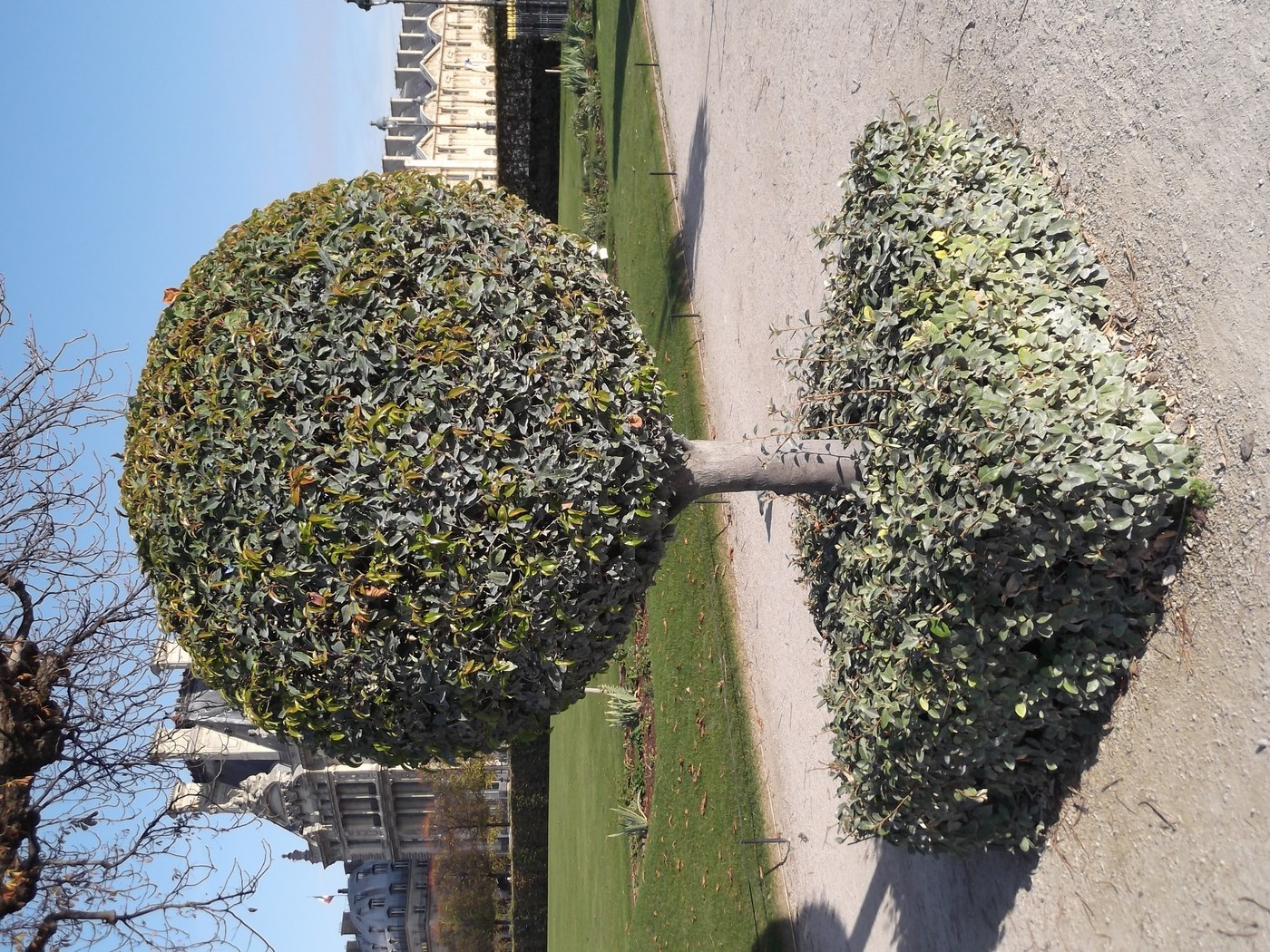
Bay Laurel
Laurus nobilis
Bay laurel is an aromatic evergreen tree or shrub, a classic culinary herb most often grown as an elegant clipped topiary or hedge. Slow-growing and easily shaped.
- Light
- Full sun to part shade
- Water
- Moderate; let topsoil dry between waterings
- Difficulty
- Easy
Got a plant like this?
Identify any plant from a photo, free.
Overview
Bay laurel (Laurus nobilis) is an aromatic evergreen native to the Mediterranean and a well-known culinary herb. Left unpruned it can become a tree 20 to 40 ft tall, but it is most often grown as a clipped shrub, hedge or container topiary.
The leaves are leathery, glossy and intensely fragrant when crushed or dried. Small yellowish flowers in spring may be followed by dark berries on female plants, as bay is usually dioecious.
Steeped in history, bay laurel was used to crown victors and poets in ancient Greece and Rome, giving us terms like laureate, and it remains a prized culinary and ornamental plant.
How to identify it
- Leaves: leathery, glossy dark green, elliptical with slightly wavy margins; powerfully aromatic when crushed
- Flowers: small, pale yellow-green, in clusters in spring; male and female usually on separate plants
- Fruit: small, dark purple-black berries on female plants
- Habit: dense evergreen tree or large shrub, very tolerant of clipping into formal shapes
- Bark: smooth, dark on young stems
Care & growing
Grows in full sun to part shade with shelter from cold, drying wind.
- Water: moderate; let the topsoil dry between waterings, especially in containers; avoid waterlogging
- Soil: well-drained, fertile
- Temperature: USDA zones 8 to 10; protect or move containers indoors below about 20F
- Feeding: light feeding in spring and summer, particularly for potted plants
- Pruning: clip in summer to shape topiary, standards or hedges; tolerates hard pruning
- Pests: watch for scale insects, especially indoors
- Propagation: semi-hardwood cuttings (slow to root) or seed
Habitat & origin
Native to the Mediterranean region, where it grows in woodland, scrub and on hillsides in a warm, dry-summer climate.
Cultivated worldwide as a culinary herb and ornamental, it is commonly grown in containers in colder regions so it can be moved to shelter in winter, and it thrives outdoors in Mediterranean and warm-temperate gardens.
Frequently asked questions
Can I grow bay laurel in a pot?
Yes, it grows well in containers and is often potted so it can be moved indoors or to shelter in cold winters. Let the topsoil dry between waterings.
Why are there white bumps and sticky leaves?
That is usually scale insects, a common pest of bay, especially indoors. Wipe them off and treat with horticultural oil or insecticidal soap.
How big does a bay tree get?
Unpruned it can reach 20 to 40 ft, but it is slow growing and easily kept as a small clipped shrub or topiary at any desired size.
Bay Laurel guides
In-depth guides for identifying, growing, and caring for Bay Laurel.
How to Care for Bay Laurel
Grow guide for Bay Laurel (Laurus nobilis): a slow, evergreen shrub or small tree that thrives in containers, sun, and well-drained soil.
Bay Laurel Identification Guide
Identify bay laurel (Laurus nobilis) by its aromatic, leathery, wavy-edged leaves and its dense evergreen tree habit.