Bishop Pine
Pinus muricata
Bishop Pine is a hardy two-needle pine of the California and Baja coast, with persistent, prickly cones that often stay closed on the tree for years until fire opens them. It tolerates wind, salt, and poor soils.
- Light
- Full sun
- Water
- Low to moderate; drought-tolerant
- Difficulty
- Moderate
Got a plant like this?
Identify any plant from a photo, free.
Overview
Bishop Pine (Pinus muricata) is a coastal pine native to scattered groves along the California coast and into Baja California, Mexico. It takes its name from the mission of San Luis Obispo near where it was first described.
It is a fire-adapted (serotinous) species whose tightly closed cones cling to the branches for years, opening to reseed after wildfire. Tough and wind-tolerant, it grows on poor coastal soils where many trees struggle.
How to identify it
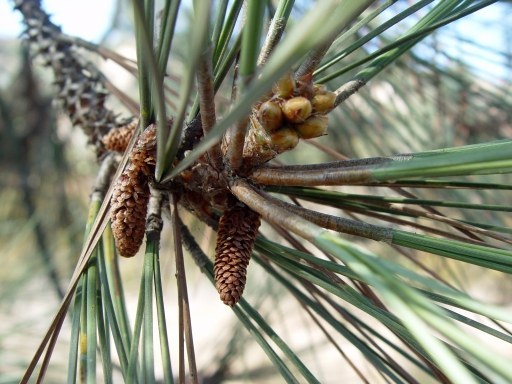
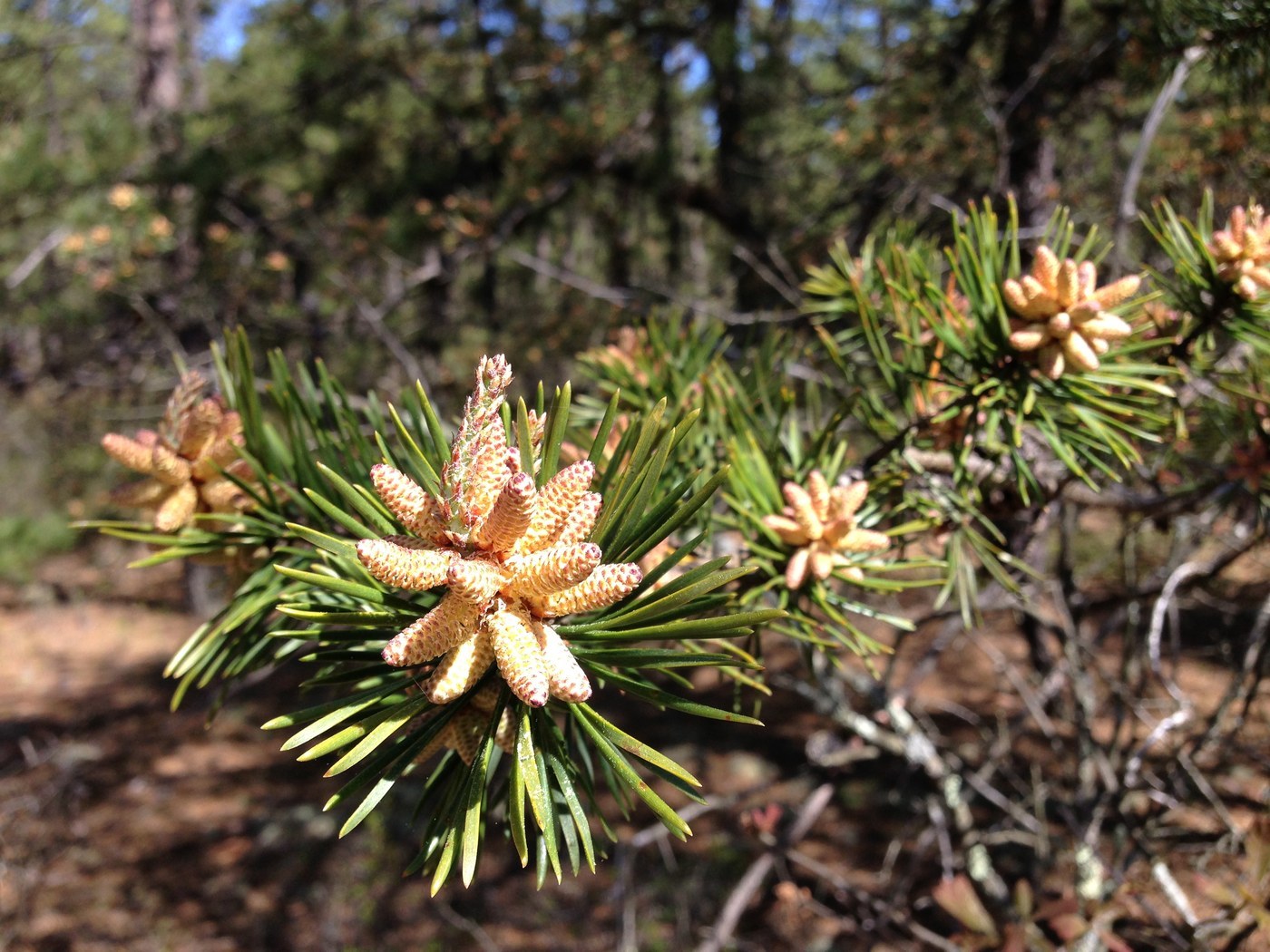
- Needles: Stout, 8-16 cm, in bundles of two, dark green to blue-green (bluer in northern populations), often somewhat twisted
- Cones: Asymmetrical, heavily armed with stout prickles, 5-9 cm, borne in whorls and often remaining closed on the trunk and branches for many years (serotinous)
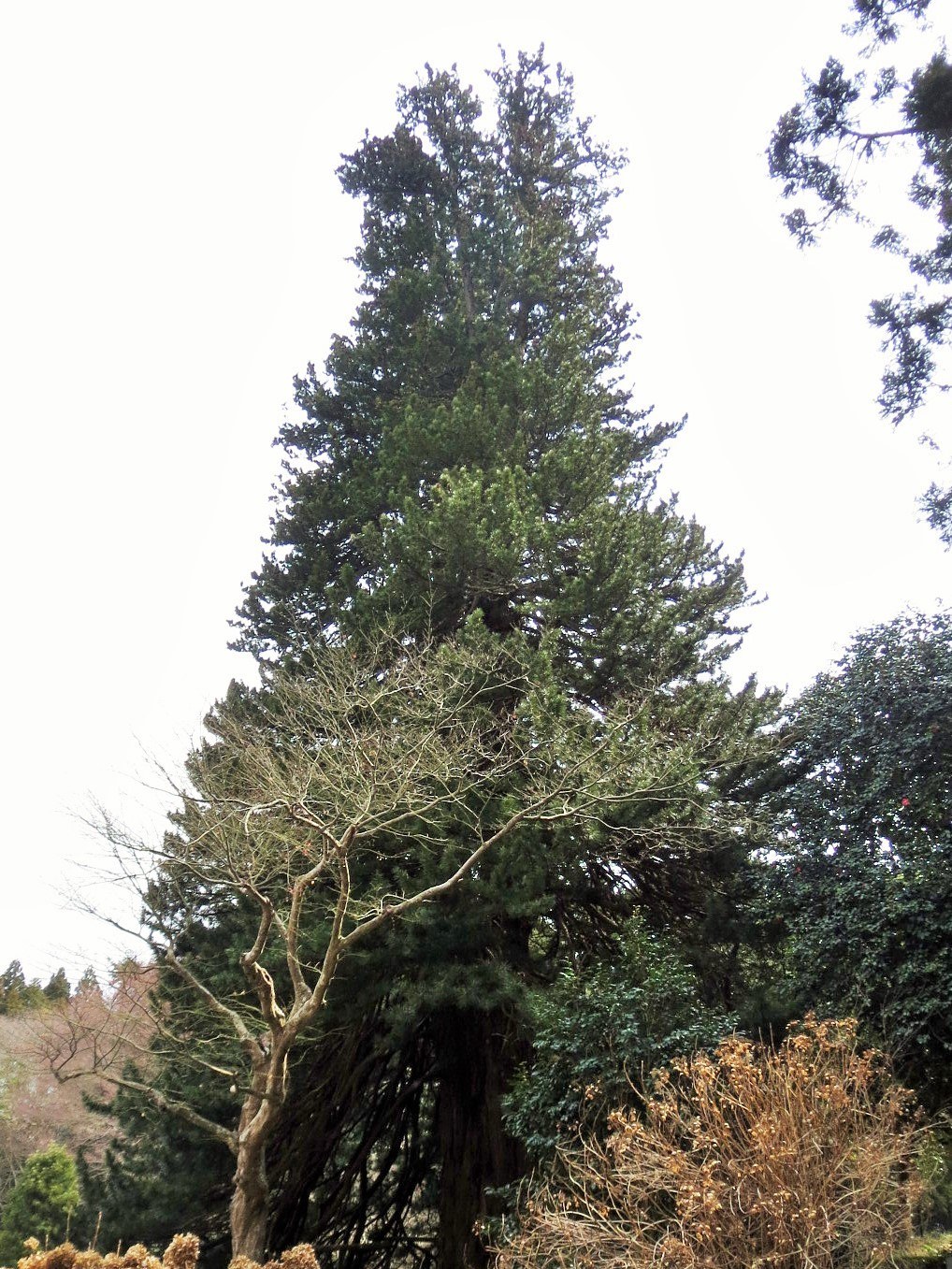
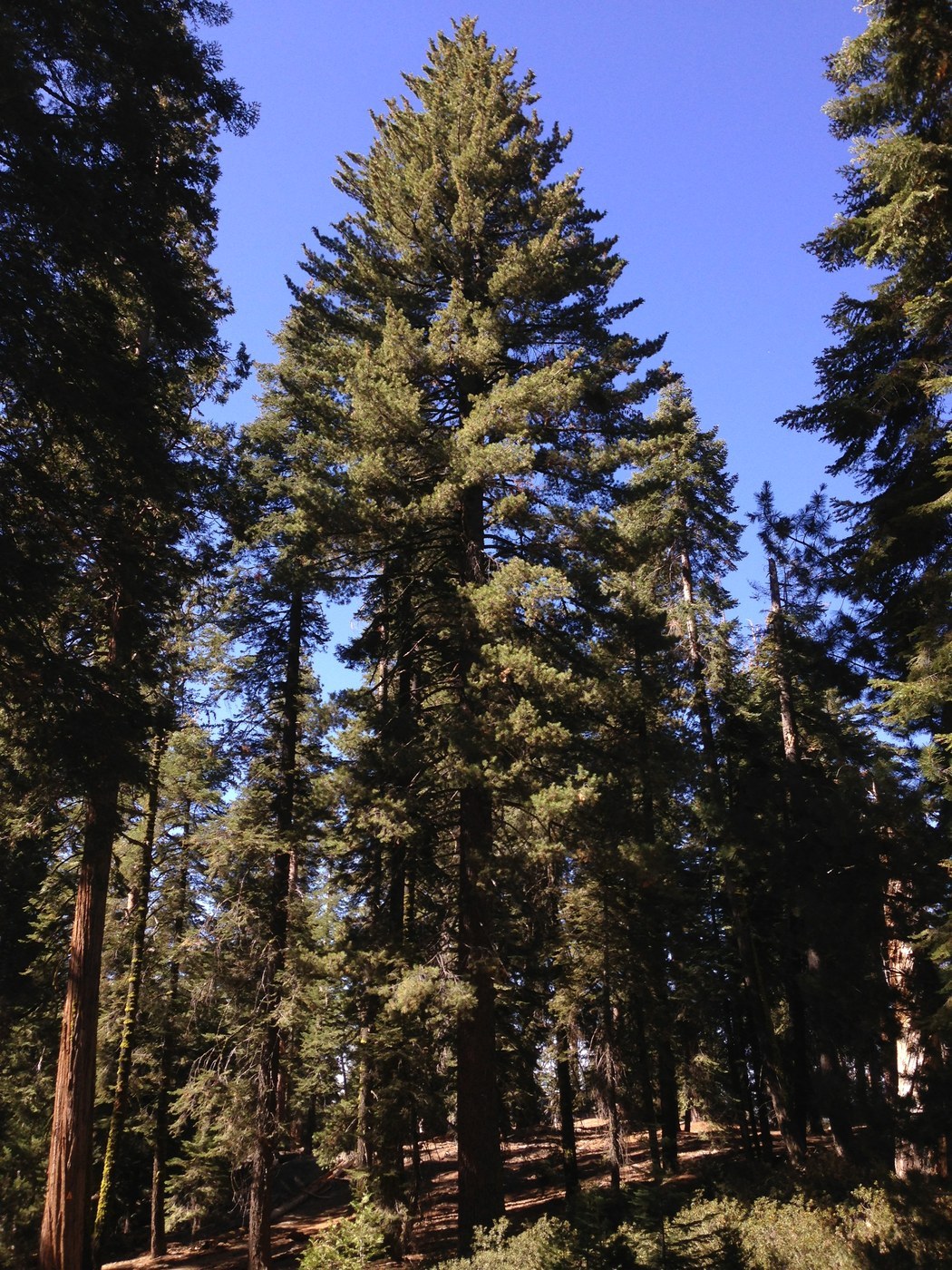
- Habit: Variable, from straight and conical to wind-flattened and irregular, 15-25 m
- Bark: Dark, thick, deeply furrowed
- Persistent prickly clustered cones held tight on the branches are a strong identifier
Care & growing
Light: Full sun.
Water: Drought-tolerant once established; tolerates coastal fog and lean soils.
Soil: Adaptable to poor, sandy, acidic, or serpentine coastal soils with good drainage.
Temperature: Hardy to USDA zone 8; adapted to mild maritime climates and salt-laden wind.
Feeding: Minimal.
Propagation: From seed; cones may need heat to release seed, reflecting its fire adaptation.
Habitat & origin
Native to discontinuous coastal groves from northern California (Mendocino, Marin) south through the Channel Islands to Baja California, Mexico, typically within the fog belt near the ocean.
It grows on exposed headlands, terraces, and poor or serpentine soils, often forming closed-cone pine forests adapted to periodic wildfire. It is also planted for forestry and as a windbreak in maritime climates such as New Zealand and Australia.
Frequently asked questions
Why do bishop pine cones stay closed?
It is a fire-adapted (serotinous) species; resin holds the prickly cones shut for years until the heat of a wildfire opens them to release seed onto cleared, ash-rich ground.
How do I recognize a bishop pine?
Look for two stout needles per bundle and clusters of asymmetrical, sharply prickled cones clinging to the trunk and branches near the coast.
Is it salt-tolerant?
Yes. It thrives in windy, salty maritime conditions and poor coastal soils, making it a good seaside windbreak.
Where is it native?
Scattered coastal groves from northern California through the Channel Islands to Baja California, Mexico, within the fog belt.
Bishop Pine guides
In-depth guides for identifying, growing, and caring for Bishop Pine.
How to Care for Bishop Pine
Bishop pine (Pinus muricata) is a rugged coastal conifer that loves full sun, sharp drainage, and salty ocean air.
Bishop Pine Identification Guide
How to identify bishop pine (Pinus muricata) by its paired needles, asymmetrical clustered cones that stay closed for years, and California coastal range. Covers needles, cones, bark, and look-alikes.