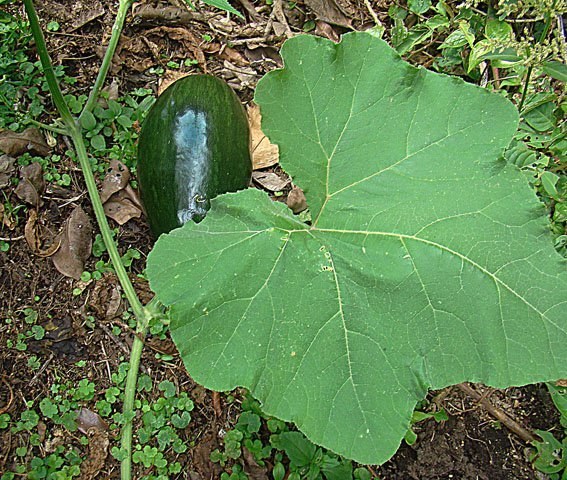
Butternut Squash
Cucurbita moschata
Butternut squash is a winter squash with a tan, bell-shaped rind grown on vigorous trailing vines. The hard-skinned fruit stores well for months.
- Light
- Full sun
- Water
- Deep, regular watering
- Difficulty
- Easy
Got a plant like this?
Identify any plant from a photo, free.
Overview
Butternut squash is a winter squash in the gourd family (Cucurbitaceae), a fruiting annual vine grown in vegetable gardens. Despite being called a winter squash, it grows in summer and is harvested in autumn, then cured for long storage.
The sprawling annual vines produce distinctive pear- or bell-shaped fruit with a smooth tan skin. Its smooth-textured flesh and excellent keeping quality make it one of the most popular squashes.
How to identify it
A trailing vine producing tan, bell-shaped fruit.
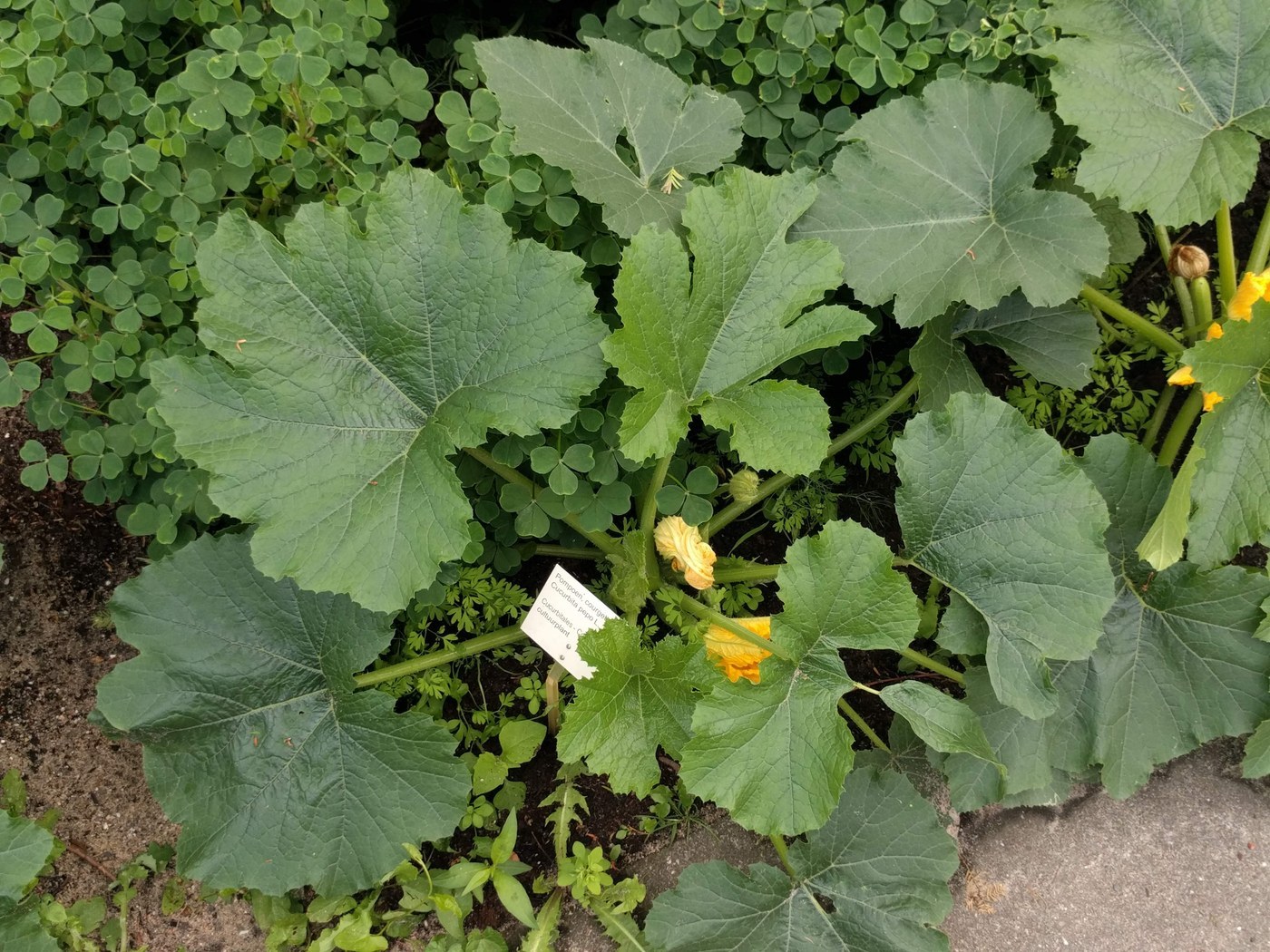
- Leaves: Large, broad, slightly lobed, dark green, sometimes with pale mottling
- Stems: Long, sprawling, trailing vines with tendrils
- Flowers: Large yellow-orange blooms; separate male and female flowers, bee-pollinated
- Fruit: Elongated bell or pear shape with a tan, smooth rind, a bulbous seed end, and a solid neck of deep orange flesh
- Habit: Vigorous ground-running annual spreading several feet
Care & growing
Light: Full sun.
Water: Deep, regular watering, especially as fruit develops; water at the base to limit mildew.
Soil: Rich, well-drained soil with plenty of compost; pH 6.0-6.8.
Temperature: Warm-season crop needing soil above 65 F and a long frost-free season of about 100-120 days.
Feeding: A hungry crop — feed with compost and balanced fertilizer; ease off nitrogen once fruit sets.
Propagation: From seed sown directly after frost or started indoors; give vines plenty of room to run.
Habitat & origin
Butternut squash belongs to Cucurbita moschata, a species domesticated in the Americas (Mexico and Central America) thousands of years ago. The familiar butternut type was developed in the 20th century in the northeastern United States.
It is grown worldwide in warm-summer climates and stores so well that it remains available far from where it is grown.
Frequently asked questions
When is butternut squash ready to harvest?
Harvest when the rind turns fully tan and hard, the stem dries and corks, and the skin can't be dented with a fingernail — usually in autumn, ideally before hard frost.
How should I cure and store butternut squash?
Cure harvested fruit in a warm, airy spot for about 1-2 weeks to toughen the skin, then store in a cool, dry place where it keeps for months.
Why does my butternut have lots of flowers but little fruit?
Early flowers are often male, and poor bee activity can limit pollination of the female flowers. Female blooms (with a tiny squash at the base) need pollen transferred; you can hand-pollinate if needed.
Is butternut squash a fruit or a vegetable?
Botanically it is a fruit (it develops from a flower and contains seeds), though it is grown and used in the garden as a vegetable.
Butternut Squash guides
In-depth guides for identifying, growing, and caring for Butternut Squash.
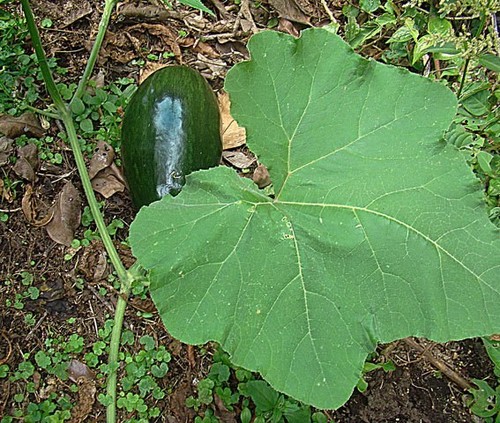
How to Care for Butternut Squash
Grow Cucurbita moschata, a vigorous warm-season vine, in full sun with rich soil and deep, regular watering for a strong sprawling crop.
Butternut Squash Identification Guide
Identify butternut squash by its sprawling vine, large lobed leaves, yellow funnel flowers, and the unmistakable tan, bell- or pear-shaped fruit with a solid neck and orange flesh.