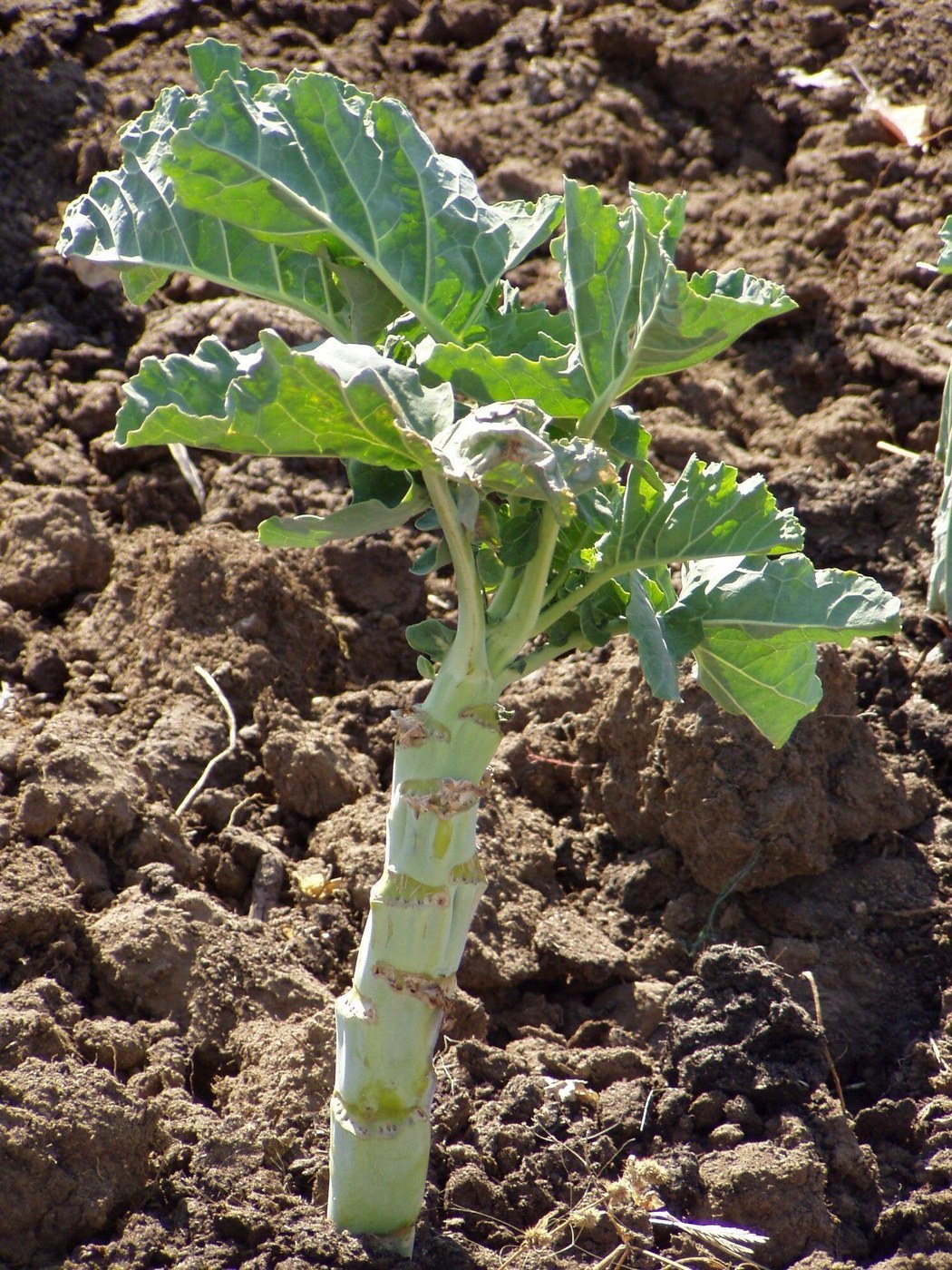
Cauliflower
Brassica oleracea
Cauliflower is a cool-season member of the cabbage family grown for its dense white head of immature flower buds, called a curd. It is one of the more demanding brassicas, needing steady cool conditions to head up well.
- Light
- Full sun
- Water
- Consistent, even moisture
- Difficulty
- Hard
Got a plant like this?
Identify any plant from a photo, free.
Overview
Cauliflower is a cultivar group of Brassica oleracea, closely related to broccoli, cabbage, and kale. It is grown for its compact head of undeveloped flower buds, known as the curd.
It is a cool-season annual that is fussier than its relatives, requiring consistent temperatures and moisture; stress easily causes loose, ricey, or discolored heads.
The classic curd is white, often blanched by tying leaves over it to shield from sun, but orange, green (including pointed Romanesco), and purple varieties also exist.
How to identify it
Cauliflower is a leafy brassica topped by a dense, domed curd.
- Curd: Tight, rounded head of undeveloped flower buds, usually white, surrounded by leaves
- Leaves: Large, blue-green, upright, often wrapped around and shielding the curd
- Habit: Robust plant 1 to 2.5 feet tall and wide
- Color variants: Orange, purple, and lime-green spiraled Romanesco types
- Flowers: If unharvested, the curd loosens and opens into yellow flowers
Care & growing
Cauliflower is the most demanding common brassica and needs steady conditions.
- Light: Full sun
- Water: Consistent, even moisture is essential; any stress ruins the curd
- Soil: Rich, firm, well-draining soil high in organic matter; pH 6.0 to 7.0
- Temperature: Cool-season; thrives 60 to 65 F. Heat or cold shocks cause buttoning and poor heads.
- Feeding: Steady feeding with balanced nutrients plus boron and molybdenum to avoid deficiencies
- Propagation: From transplants timed so heads mature in cool weather. Blanch white types by tying outer leaves over the curd.
Habitat & origin
Cauliflower was developed from wild cabbage in the eastern Mediterranean, with much refinement in Italy, and it spread through Europe by the 16th and 17th centuries.
It is now grown in cool-season vegetable gardens and commercial fields worldwide, favoring regions with mild, stable temperatures. In hot climates it is grown as a winter or early spring crop.
Frequently asked questions
Why is my cauliflower head loose and grainy?
Loose, ricey curds come from heat, stress, or maturing too slowly. Cauliflower needs steady cool temperatures and even moisture to form a tight head.
Why did my plant form a tiny head early?
This is called buttoning, usually caused by cold shock or stress to young plants. Use healthy, unstressed transplants and time the crop for cool, stable weather.
How do I keep the head white?
Sun turns curds yellowish. Blanch them by tying or breaking the outer leaves over the head once it starts forming. Self-blanching varieties do this naturally.
Why is cauliflower harder to grow than broccoli?
Cauliflower is far less tolerant of temperature swings and stress. Inconsistent conditions readily cause buttoning, loose curds, and discoloration.
Cauliflower guides
In-depth guides for identifying, growing, and caring for Cauliflower.
How to Care for Cauliflower
Grow cauliflower successfully with full sun, cool temperatures, rich soil, and the steady even moisture this demanding crop requires.
Cauliflower Identification Guide
Identify cauliflower (Brassica oleracea var. botrytis) by its dense, smooth white curd of undeveloped flower tissue cradled in large blue-green leaves.