Chickweed
Stellaria media
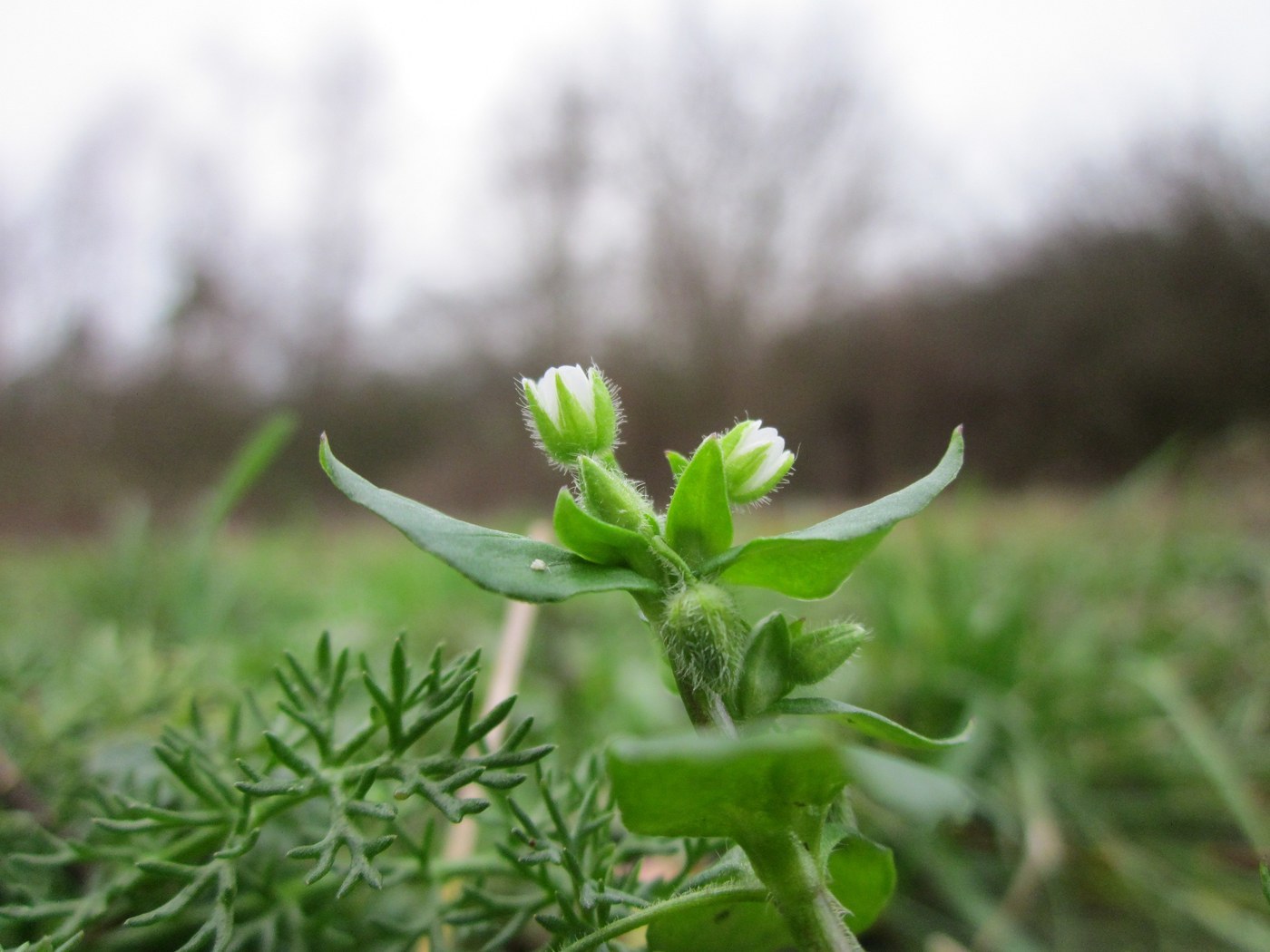
Chickweed is a low, sprawling annual often dismissed as a lawn weed, with weak stems and tiny white star-shaped flowers that give it the name starwort.
- Light
- Part shade to full sun
- Water
- Likes moist, cool soil
- Difficulty
- Easy
Got a plant like this?
Identify any plant from a photo, free.
Overview
Chickweed (Stellaria media) is a low-growing annual herb in the pink family (Caryophyllaceae) found almost worldwide in cool, moist, disturbed ground.
Often treated as a weed of gardens, lawns and cultivated fields, it is a fast-spreading mat-forming plant with delicate stems and small star-like white flowers.
It grows fast in cool weather, frequently green through mild winters, earning the alternate name "winterweed."
How to identify it
- Flowers: tiny white blooms (about 5 mm) with five petals so deeply notched they look like ten, giving a star-like shape
- Leaves: small, oval, pointed, smooth, in opposite pairs
- Stems: weak, sprawling, with a single line of fine hairs running along one side (a key identification clue)
- Habit: mat-forming annual rooting at the nodes, usually under 30 cm
- Test: the stretchy inner cord visible when a stem is gently pulled apart helps confirm true chickweed
Care & growing
Light: Partial shade to full sun; prefers cooler, sheltered spots.
Water: Thrives in moist, cool soil and tends to fade in summer heat and drought.
Soil: Rich, moist, fertile soil; common in cultivated and disturbed ground.
Temperature: A cool-season grower that germinates in autumn or early spring and can stay green over mild winters.
Feeding: None needed; it grows readily in fertile soil.
Propagation: Self-seeds prolifically; simply scatter seed in cool weather. It often appears uninvited.
Habitat & origin
Originally native to Europe, chickweed has naturalized across nearly every temperate and many subtropical regions of the world.
It favors moist, fertile, disturbed habitats: vegetable gardens, lawns, field margins, waste ground and shaded damp corners, where it forms quick-spreading mats during cool seasons.
Frequently asked questions
How do I tell chickweed from look-alikes?
Look for the single line of fine hairs running along one side of the stem, deeply notched white star-shaped flowers, and a stretchy inner cord when the stem is pulled apart.
Why does chickweed appear in winter?
It is a cool-season annual that germinates in autumn and early spring and can stay green through mild winters, which is why it is sometimes called winterweed.
What does chickweed look like?
It is a low, mat-forming annual under 30 cm with weak sprawling stems, small oval paired leaves, and tiny white star-shaped flowers.
Where does chickweed grow?
It favors moist, fertile, disturbed ground such as gardens, lawns, field margins and shaded damp corners during cool seasons.
Chickweed guides
In-depth guides for identifying, growing, and caring for Chickweed.
How to Care for Chickweed
Grow Chickweed (Stellaria media), a low, fast-spreading annual with tiny star-white flowers that thrives in cool, moist soil and part shade.
Chickweed Identification Guide
Identify common chickweed (Stellaria media) by its sprawling stems with a single line of hairs, small oval leaves, and tiny white star-shaped flowers.