Cleavers
Galium aparine
Cleavers is a sprawling annual herb covered in tiny hooked hairs that cling to skin, clothing, and other plants. It is a common hedgerow weed that scrambles over surrounding vegetation.
- Light
- Part shade to full sun
- Water
- Moderate; prefers moist ground
- Difficulty
- Easy
Got a plant like this?
Identify any plant from a photo, free.
Overview
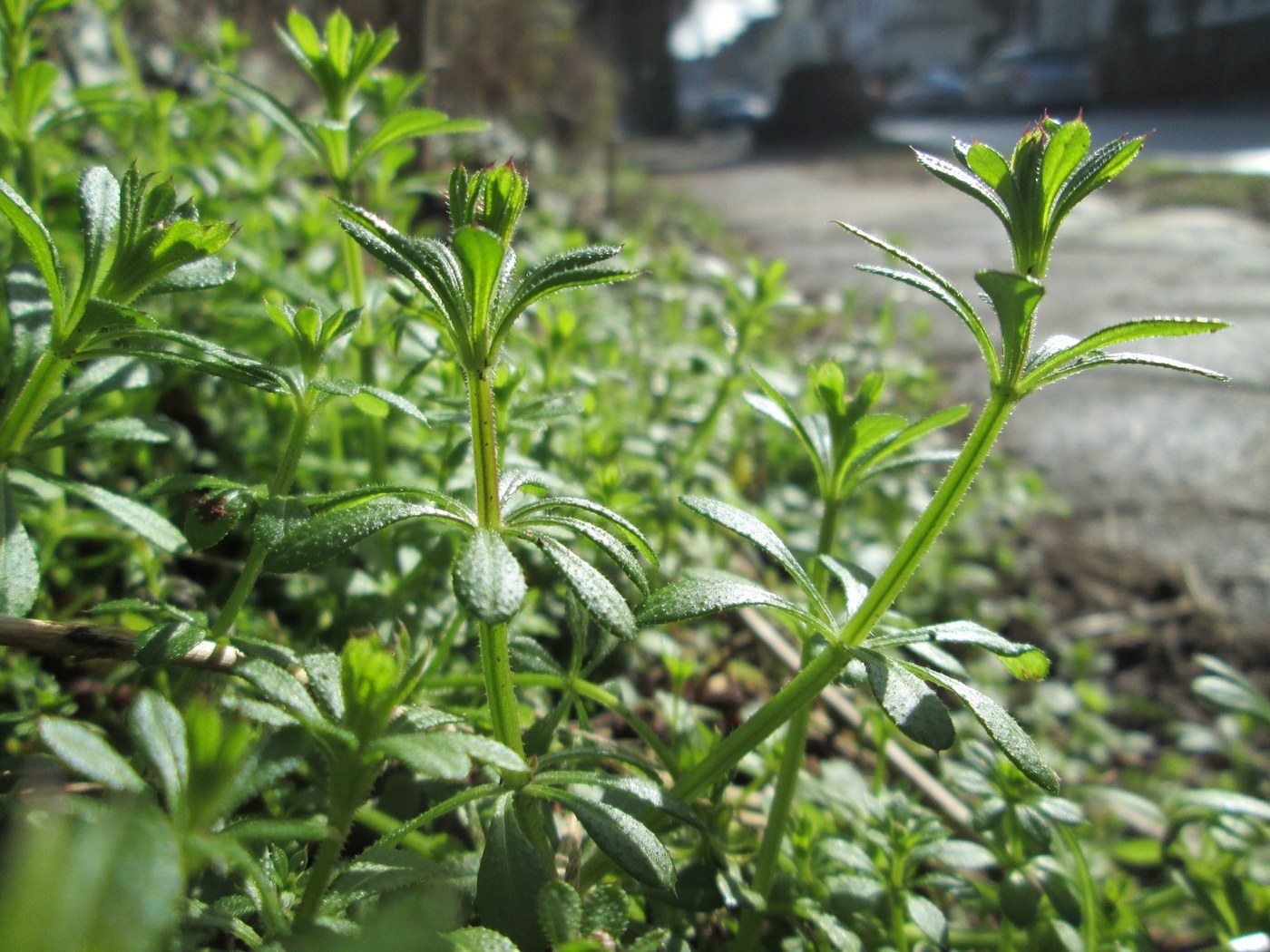
Cleavers (Galium aparine) is a scrambling annual of the bedstraw family, instantly recognizable by its Velcro-like clinging habit. Whorls of narrow leaves and the entire stem are armed with minute backward-facing hooks.
Though widely regarded as a weed, cleavers spreads readily and scrambles over other plants. Its tiny seeds also cling to fur and clothing, aiding its dispersal.
How to identify it
- Leaves: Narrow, lance-shaped leaves arranged in whorls of 6-8 around the stem
- Stems: Square, weak, sprawling stems covered in tiny hooked bristles that cling
- Flowers: Tiny, four-petaled white-to-greenish flowers in small clusters
- Fruit: Pairs of small round burrs covered in hooked hairs
- Habit: Scrambling annual climbing over other vegetation, up to several feet long
Care & growing
Light: Tolerates full sun to fairly deep shade.
Water: Prefers moist, fertile ground but is widely adaptable.
Soil: Rich, damp soils of hedgerows, woods, and waste places.
Temperature: Cool-season annual; germinates in fall or early spring.
Feeding: None needed; thrives in disturbed, nutrient-rich soil.
Propagation: Self-seeds prolifically. In gardens it is more often controlled than cultivated; pull before it sets seed if unwanted.
Habitat & origin
Cleavers is native across Europe, Asia, and North America, growing in hedgerows, woodland edges, riverbanks, gardens, and disturbed ground.
It is a near-cosmopolitan weed of temperate regions and is rarely deliberately planted.
Frequently asked questions
Why does cleavers stick to everything?
Its stems, leaves, and seeds are covered in tiny backward-pointing hooked hairs that catch on fabric, skin, fur, and neighboring plants.
Is cleavers a weed?
It is generally treated as a weed because it self-seeds heavily and scrambles over other plants.
Is cleavers related to coffee?
Yes. Both belong to the same plant family, the Rubiaceae, which is sometimes called the bedstraw or coffee family.
How do I recognize cleavers?
Look for square, weak, sprawling stems with whorls of 6-8 narrow leaves, tiny clusters of white-green flowers, and round hooked burrs, all covered in clinging bristles.
Cleavers guides
In-depth guides for identifying, growing, and caring for Cleavers.
How to Care for Cleavers
Growing notes for cleavers (Galium aparine), the fast, clinging annual with whorled leaves and tiny hooked bristles.
Cleavers Identification Guide
Identify cleavers (Galium aparine) by its sprawling square stems, whorls of narrow leaves, and clingy Velcro-like hooked bristles that stick to clothing.