Cloudberry
Rubus chamaemorus
Cloudberry is a low-growing Arctic and subarctic plant bearing distinctive amber berries. It demands cold, acidic, boggy conditions and is notoriously difficult to cultivate.
- Light
- Full sun in cool climates
- Water
- Constantly moist, boggy conditions
- Difficulty
- Hard
Got a plant like this?
Identify any plant from a photo, free.
Overview
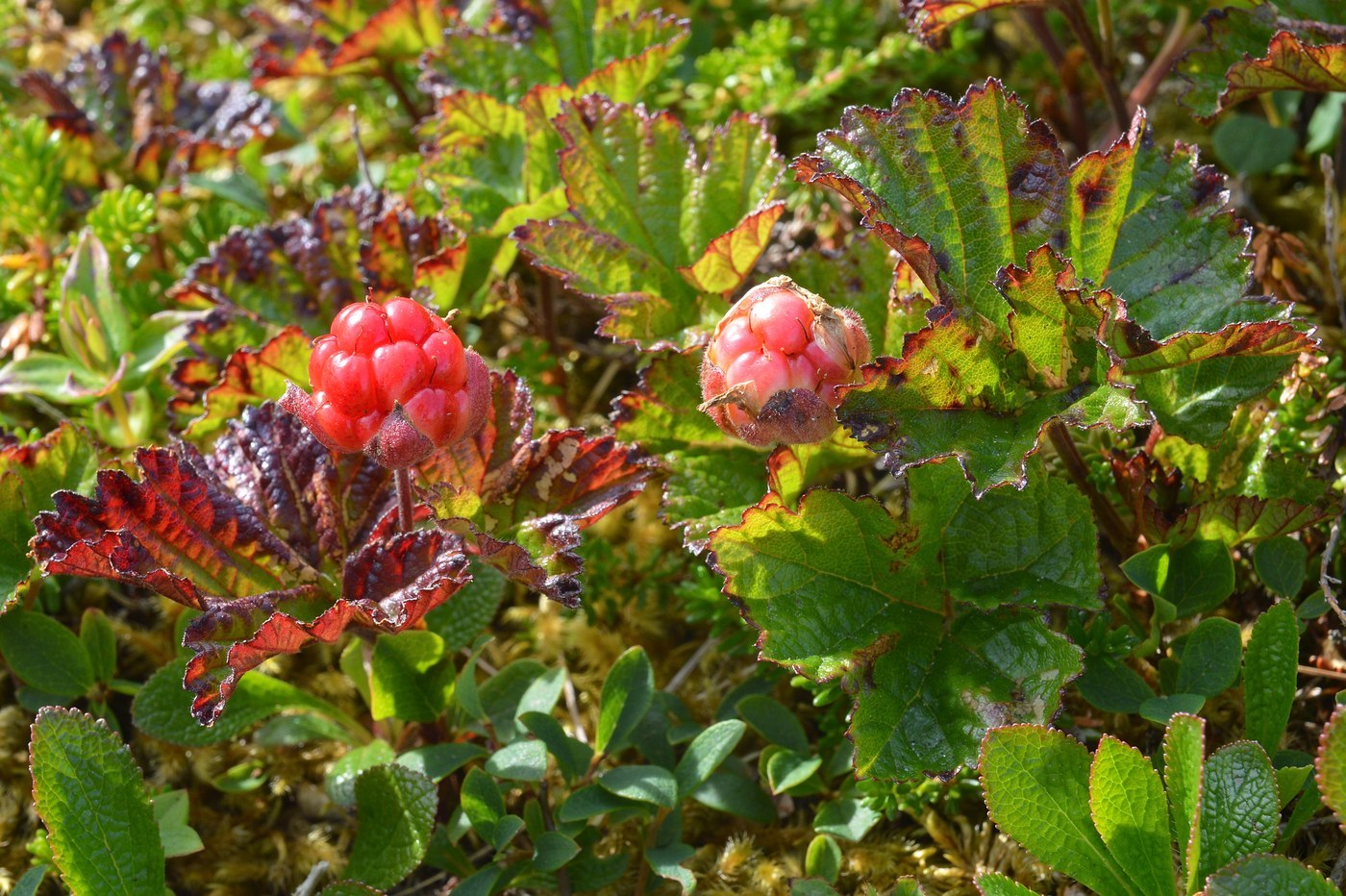
The cloudberry (Rubus chamaemorus) is a small, creeping perennial herb of cold northern peatlands, despite belonging to the same genus as raspberries and blackberries. It produces a single amber-to-golden berry per stem.
Unusually for the genus, cloudberry is dioecious, meaning male and female flowers grow on separate plants, and it spreads by underground rhizomes rather than canes. It is low-growing and lacks the thorns typical of other brambles.
Cloudberries are extremely difficult to cultivate, requiring cold, acidic, waterlogged peat conditions that mimic their native bogs.
How to identify it
- Fruit: Single berry per stem, amber to golden-orange when ripe, made of a few large drupelets
- Leaves: Rounded, lobed, wrinkled, raspberry-like but borne singly on short upright stems
- Flowers: White, five-petaled, solitary; male and female on separate plants
- Size: Low-growing, typically only 4–10 in tall
- Habit: Creeping, rhizomatous, thornless ground-hugging perennial
Care & growing
Light: Full sun in its cold native range; needs long northern summer daylight.
Water: Requires constantly moist to waterlogged, boggy conditions; it grows in peat bogs and never tolerates drying out.
Soil: Highly acidic, nutrient-poor peat (pH around 3.5–5); will not grow in ordinary garden soil.
Temperature: Strictly cold-climate; needs deep winter cold and cool summers (USDA zones 2–6). It dislikes heat.
Feeding: Minimal; it is adapted to nutrient-poor bogs and over-fertilizing harms it.
Propagation: Mainly by rhizome division; both male and female plants are needed for fruit. Cultivation is challenging and yields are low.
Habitat & origin
Cloudberry has a circumpolar distribution across the Arctic and subarctic, including Scandinavia, northern Russia, the Baltic, the British Isles' uplands, Canada, Alaska, and the northern United States.
It grows in cold peat bogs, tundra, and acidic mires, and is rarely cultivated, instead growing wild in these cold northern habitats.
Frequently asked questions
Can I grow cloudberries in my garden?
Only with great difficulty. They need cold winters, cool summers, constantly wet acidic peat, and both male and female plants. Most ordinary gardens cannot meet these requirements.
What is bakeapple?
Bakeapple is the common name for cloudberry in Atlantic Canada, especially Newfoundland and Labrador.
Where do cloudberries grow?
They have a circumpolar Arctic and subarctic distribution, growing in cold peat bogs, tundra, and acidic mires across Scandinavia, northern Russia, Canada, Alaska, and beyond.
How is cloudberry different from raspberries?
Though in the same genus, cloudberry is low-growing and thornless, spreads by underground rhizomes rather than canes, and is dioecious, with male and female flowers on separate plants.
Cloudberry guides
In-depth guides for identifying, growing, and caring for Cloudberry.
How to Care for Cloudberry
Grow cloudberry (Rubus chamaemorus), a low creeping bog plant that demands acidic peat, cold winters, and constantly wet feet.
Cloudberry Identification Guide
Recognizing cloudberry, a low arctic bog plant with single white flowers and amber raspberry-like fruit that ripens from red to gold.