Cup Plant
Silphium perfoliatum
A towering North American prairie perennial whose paired leaves fuse around the square stem to form water-holding cups beneath bright yellow daisy flowers.
- Light
- Full sun to part shade
- Water
- Moderate to high; likes moist soil
- Difficulty
- Easy
Got a plant like this?
Identify any plant from a photo, free.
Overview
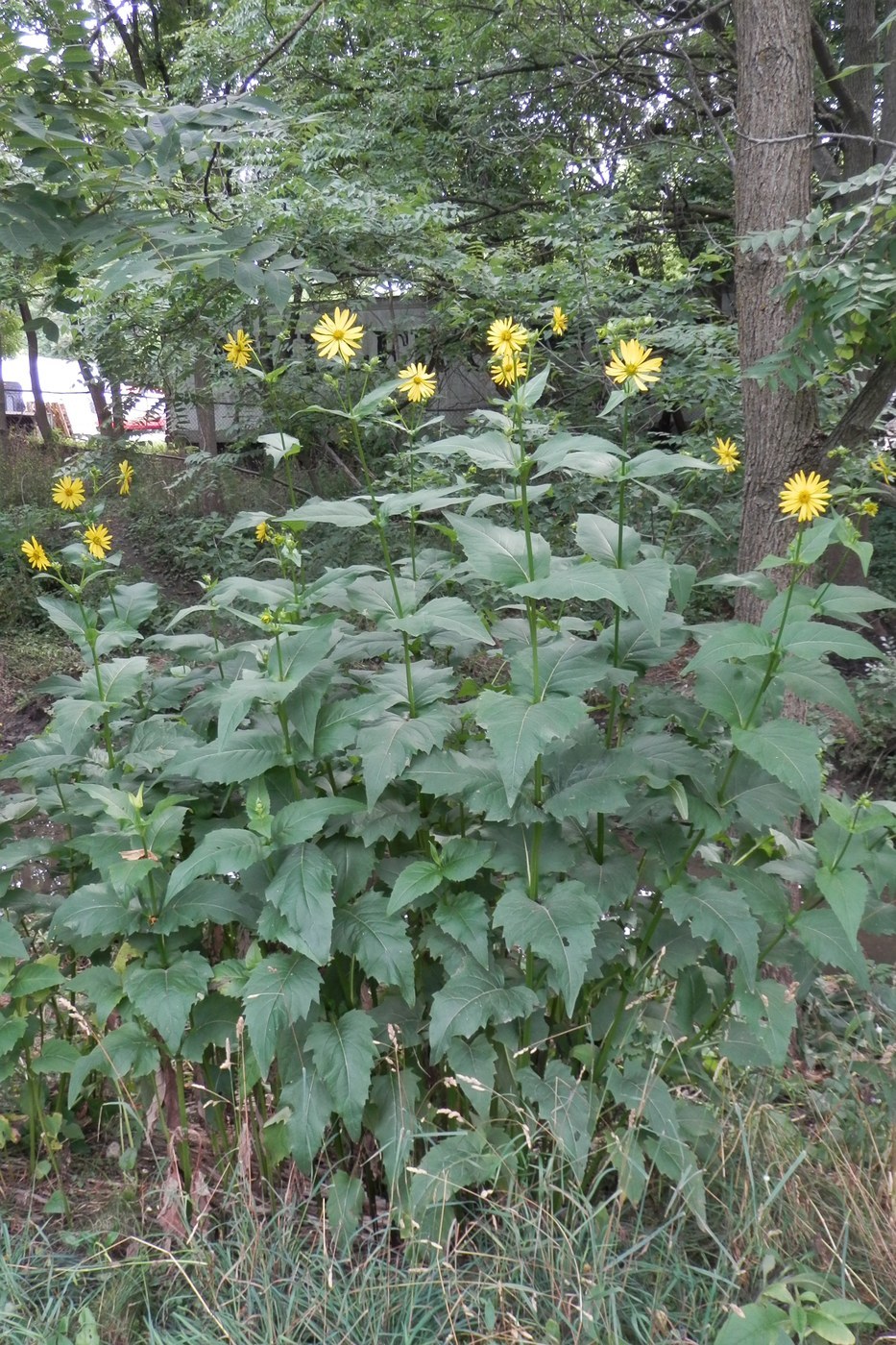
Cup plant is a statuesque prairie perennial that can soar to 2-3 meters tall, topped with clusters of bright yellow, sunflower-like blooms in mid to late summer. Its most distinctive feature is the way its large opposite leaves fuse at the base around the stout square stem, creating small basins that collect rainwater — hence the name.
Those leaf cups become miniature watering stations for birds and beneficial insects, making cup plant a powerhouse wildlife plant for the back of large borders, rain gardens, and naturalistic prairie plantings.
How to identify it
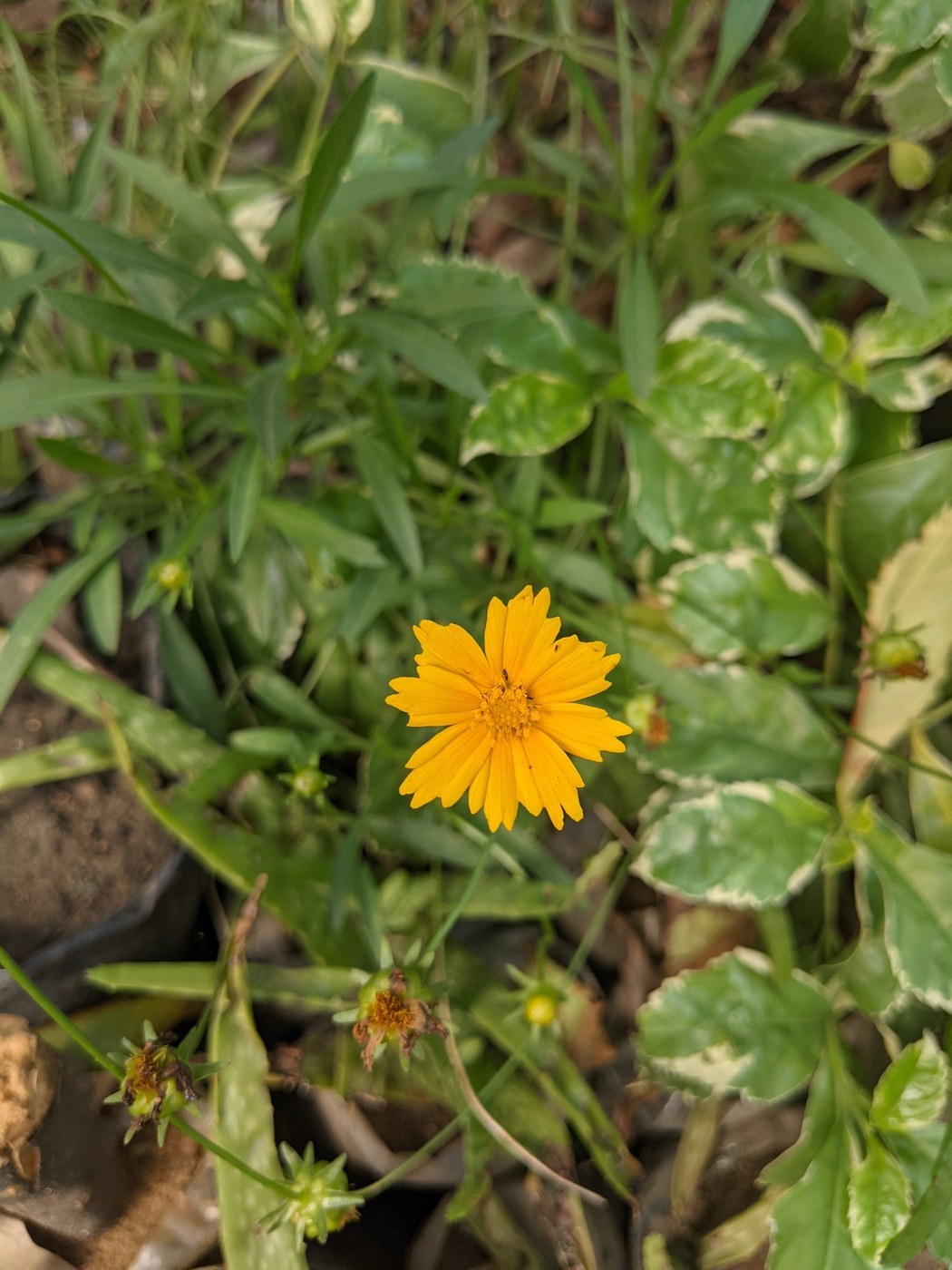
- Flowers: Yellow, daisy-/sunflower-like heads 5-8 cm across in branched clusters atop the stems.
- Leaves: Large, coarse, triangular, and toothed; the opposite pairs fuse around the stem to form water-holding cups.
- Stem: Stout, square in cross-section, often 2-3 m tall.
- Habit: Tall, clump-forming perennial spreading by rhizomes.
- The fused leaf bases catching water are the key diagnostic feature.
Care & growing
Light: Full sun to light shade.
Water: Prefers consistently moist, even wet soil; tolerates periodic flooding.
Soil: Rich, moisture-retentive soils; very adaptable.
Temperature: Very cold-hardy; suited to continental climates.
Feeding: Generally unnecessary in decent soil.
Propagation: Sow seed (cold stratify) or divide rhizomes in spring. Give it room — it gets large and can spread.
Habitat & origin
Native to central and eastern North America, where it grows in moist prairies, wet meadows, floodplains, and along stream banks and ditches. It favors damp, fertile ground.
In cultivation it is used in large native and pollinator gardens, rain gardens, and increasingly as a perennial biomass and forage crop in parts of Europe and North America.
Frequently asked questions
Why is it called cup plant?
Its opposite leaves fuse around the square stem to form small cups that collect rainwater, providing drinking spots for birds and insects.
How big does it get?
It is a giant, commonly reaching 2-3 meters (6-10 feet) tall, so it belongs at the back of a border or in a large naturalistic planting.
Is it good for wildlife?
Exceptionally. The leaf cups water wildlife, the flowers feed pollinators, and birds like goldfinches feed heavily on the seeds.
Does it need wet soil?
It thrives in consistently moist to wet soil and tolerates flooding, making it ideal for rain gardens and damp spots, though it adapts to average garden soil.
Cup Plant guides
In-depth guides for identifying, growing, and caring for Cup Plant.
How to Care for Cup Plant
Grow Silphium perfoliatum for towering yellow blooms and distinctive cupped leaves - a bold, easy native for moist sunny beds.
Cup Plant Identification Guide
Identify Cup Plant by its tall square stems, fused leaf-bases that form water-holding cups, and yellow sunflower-like blooms.