Jimsonweed
Datura stramonium
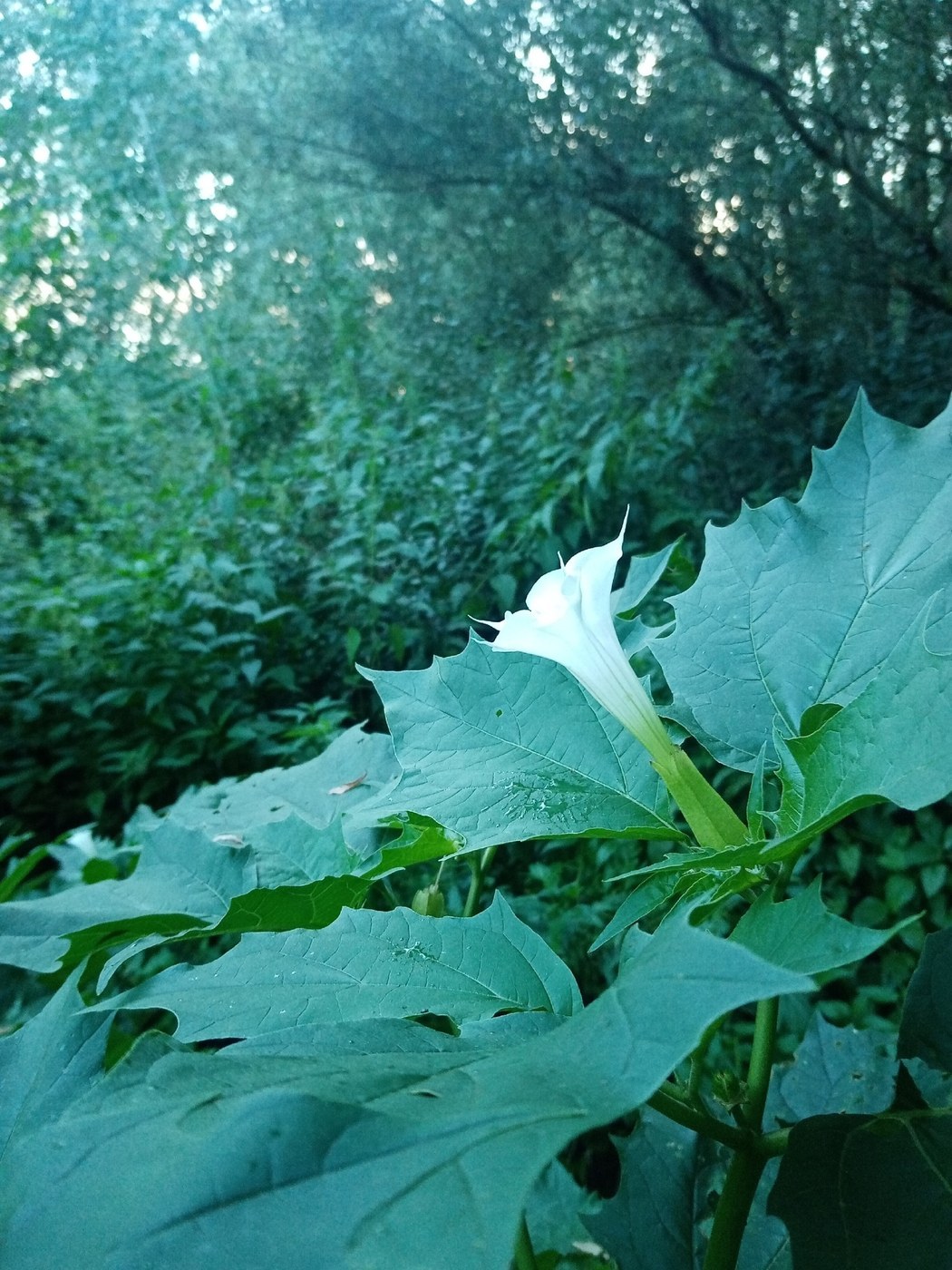
Jimsonweed is a rank-smelling nightshade with large white-to-purple trumpet flowers and spiny seed pods, and one of the most distinctive weeds of North America.
- Light
- Full sun
- Water
- Low to moderate; drought-tolerant
- Difficulty
- Moderate
Got a plant like this?
Identify any plant from a photo, free.
Overview
Jimsonweed (Datura stramonium) is a vigorous annual in the nightshade family, grown — or more often weedy — for its dramatic large white-to-purple trumpet flowers and distinctive spiny seed capsules. Its common name is a corruption of 'Jamestown weed,' after soldiers stationed in Virginia in 1676 who became associated with the plant.
It is a widespread, persistent weed, easily recognized by its coarse foliage, evening-opening trumpet flowers, and spiny capsules.
How to identify it
A coarse, foul-smelling annual that can reach 1–1.5 m tall, branching widely.
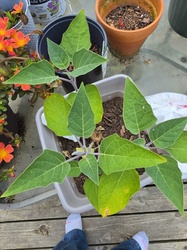
- Leaves: large, jagged-toothed, soft, with an unpleasant odor when crushed
- Flowers: large, upward-facing trumpets 5–10 cm long, white to pale lavender, opening in the evening
- Fruit: an egg-shaped capsule covered in stout spines (the 'thorn apple'), splitting to release many dark seeds
- Stems: stout, often purplish, smooth
- Odor: rank and disagreeable
Care & growing
Sometimes grown as a striking ornamental but more often treated as a weed.
- Light: full sun
- Water: drought-tolerant; moderate watering suffices
- Soil: rich, disturbed soils; tolerates poor ground
- Temperature: warm-season annual killed by frost
- Propagation: by seed, which can stay dormant in soil for years
It is vigorous and self-sows readily, so many gardeners remove it to keep it from spreading.
Habitat & origin
Of uncertain origin (likely Central America), jimsonweed is now naturalized worldwide in temperate and warm regions. It colonizes disturbed, fertile ground — fields, barnyards, roadsides, waste places and overgrazed pastures.
It is a common agricultural and garden weed.
Frequently asked questions
Where does the name 'jimsonweed' come from?
It is a contraction of 'Jamestown weed,' after British soldiers stationed in Virginia in 1676 who became associated with the plant.
How do I identify the seed pods?
Look for egg-shaped capsules densely covered in sharp spines — the source of the alternate name 'thorn apple.'
How tall does jimsonweed grow?
It is a coarse annual that can reach about 1 to 1.5 m tall, branching widely, with stout, often purplish stems.
Where does jimsonweed grow?
It colonizes disturbed, fertile ground such as fields, barnyards, roadsides and waste places, and is naturalized across temperate and warm regions worldwide.
Jimsonweed guides
In-depth guides for identifying, growing, and caring for Jimsonweed.
How to Care for Jimsonweed
Grow ornamental Datura stramonium in full sun with lean, well-drained soil for dramatic trumpet flowers and spiny seed pods.
Jimsonweed Identification Guide
Identify jimsonweed (Datura stramonium), a rank-smelling poisonous annual with large white or violet trumpet flowers and spiny egg-shaped seed pods. Covers its jagged leaves, foul odor, and safety warnings.
Jimsonweed identified by the community
Real specimens identified with Plant Identifier.