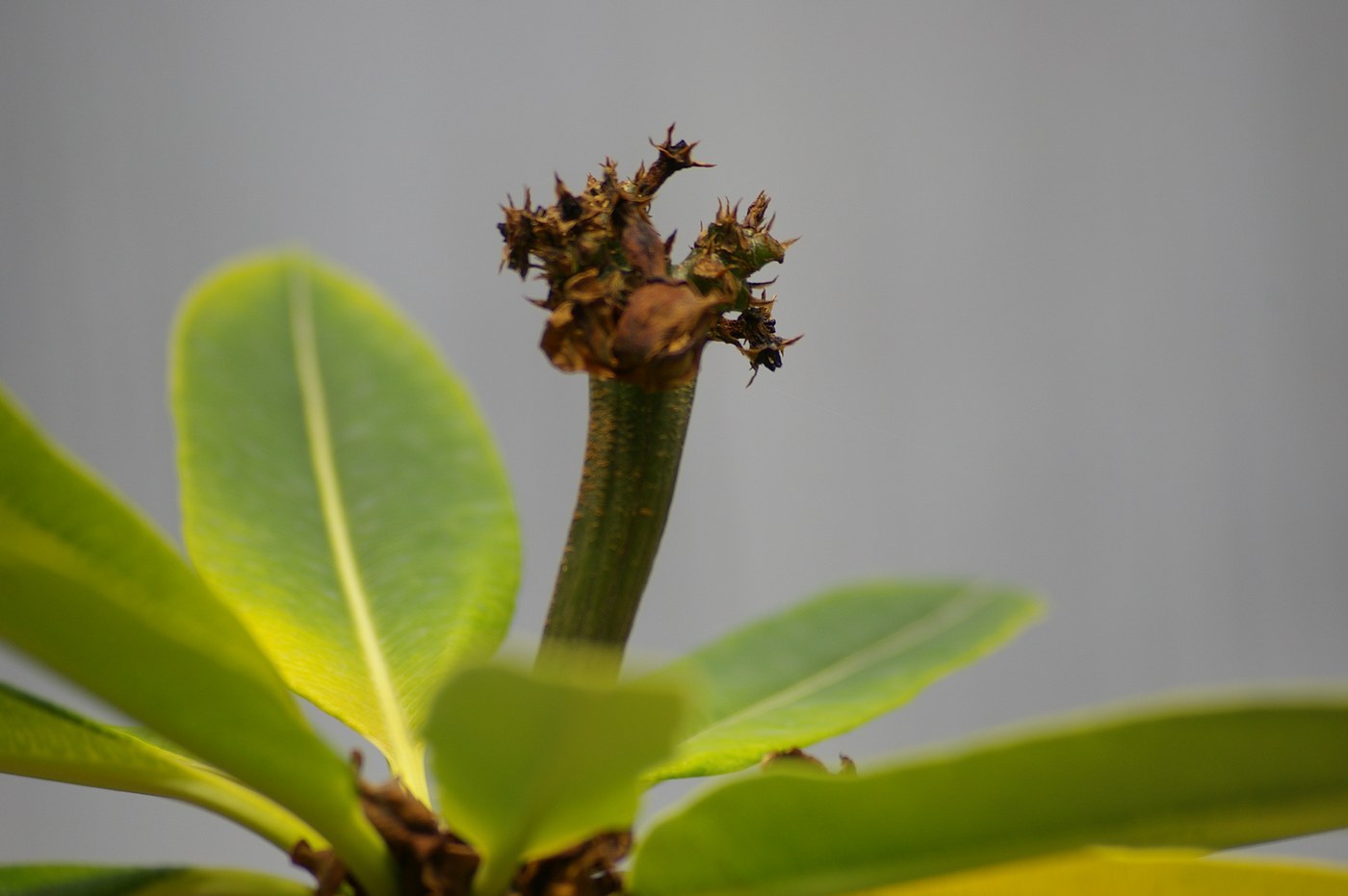
Madagascar Palm
Pachypodium lamerei
The Madagascar palm is a spiny, succulent caudex plant with a thick, spine-covered trunk topped by a crown of strappy leaves. Despite its name and look, it is not a true palm but a relative of the desert rose.
- Light
- Full sun to bright light
- Water
- Moderate in growth; dry in winter
- Difficulty
- Moderate
Got a plant like this?
Identify any plant from a photo, free.
Overview
The Madagascar palm (Pachypodium lamerei) has a tall, silvery trunk densely covered in sharp spines, crowned by a tuft of long, glossy green leaves, giving it a palm-like silhouette. It is actually a succulent in the dogbane family, closely related to Adenium.
Its thick, water-storing trunk lets it endure long dry periods. Indoors it makes a dramatic, sculptural specimen, slowly reaching several feet tall.
In ideal warm, sunny conditions mature plants can produce fragrant white flowers at the crown.
How to identify it
- Thick, upright, succulent trunk covered in clusters of sharp spines
- A crown of long, strappy green leaves at the top, palm-like in appearance
- Usually single-stemmed, branching only with age or after damage
- Reaches several feet indoors, taller outdoors
- White, fragrant, five-petaled flowers on mature plants
Care & growing
- Light: Full sun or the brightest indoor spot available
- Water: Water moderately during active growth, letting soil dry between; keep nearly dry in winter when it may drop leaves
- Soil: Gritty, very well-draining mix
- Temperature: Warmth-loving; protect from cold below about 50 F
- Feeding: Light feeding in spring and summer
- Propagation: Mostly from seed; rarely from offsets if the plant branches
Habitat & origin
Native to southern Madagascar, where it grows in hot, arid, rocky scrub and spiny forest.
It is grown around the world as a striking container and conservatory plant, and outdoors in frost-free desert and subtropical gardens.
Frequently asked questions
Is it really a palm?
No. Despite the name and look, it is a succulent in the dogbane family, closely related to the desert rose, not a true palm.
Why did it drop all its leaves?
Leaf drop is normal in winter dormancy or after a cold snap or drought. New leaves usually return with warmth and water in spring.
How big does it get?
Indoors it slowly reaches several feet tall; outdoors in ideal climates it can grow to 15 feet or more over many years.
Madagascar Palm guides
In-depth guides for identifying, growing, and caring for Madagascar Palm.
How to Care for Madagascar Palm
Grow a striking Pachypodium lamerei with strong light, careful watering, and a fast-draining succulent mix for a sculptural spined trunk.
Madagascar Palm Identification Guide
How to identify the Madagascar Palm by its spiny silver trunk topped with a crown of long, glossy palm-like leaves.