Rhubarb
Rheum rhabarbarum
Rhubarb is a hardy herbaceous perennial grown for its thick, ruby-to-green leaf stalks rising from a ground-level crown. It is a robust, long-lived cool-season garden plant.
- Light
- Full sun to part shade
- Water
- Keep evenly moist; never waterlogged
- Difficulty
- Easy
Got a plant like this?
Identify any plant from a photo, free.
Overview
Rhubarb is a long-lived herbaceous perennial in the buckwheat family (Polygonaceae), grown for its thick, fleshy leaf stalks and bold clumping form.
It grows from a stout crown and dies back each winter, re-emerging vigorously in early spring. A well-sited plant can persist for 10-15 years, making it a reliable cold-climate perennial.
How to identify it
Recognizable by its huge leaves rising on thick, often reddish stalks from a ground-level crown.
- Leaves: Very large (1-2 ft wide), broad, triangular to heart-shaped, deeply crinkled, with wavy margins
- Stalks (petioles): Thick, fleshy, celery-like, ranging from green to deep red
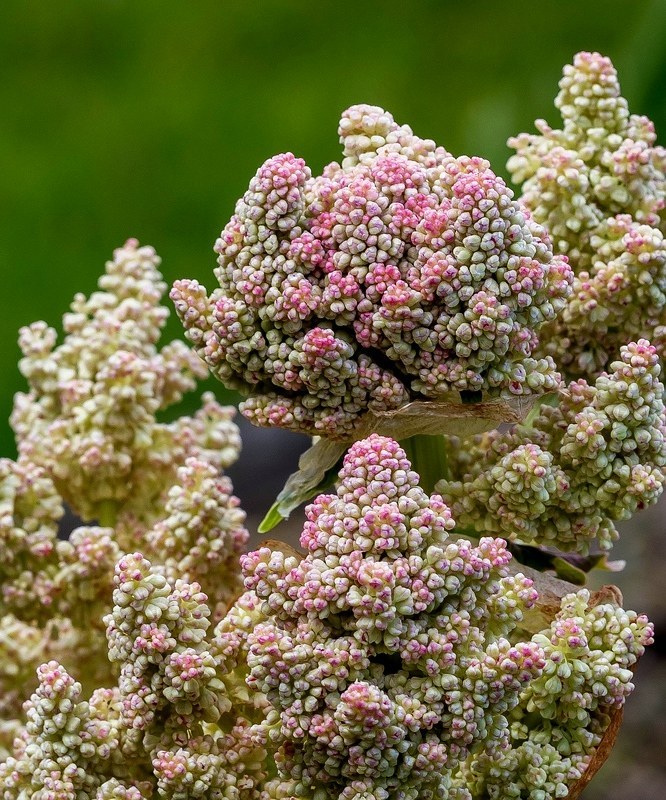
- Flowers: Tall (3-6 ft) creamy-white plumes on a hollow stalk; usually removed to keep energy in the crown
- Habit: Clumping perennial 2-3 ft tall and wide
Care & growing
Light: Full sun in cool climates; afternoon shade where summers are hot.
Water: Keep soil consistently moist, especially in spring; avoid standing water that rots the crown.
Soil: Deep, fertile, well-drained soil enriched with compost or aged manure; pH 6.0-6.8.
Temperature: A cold-loving plant needing winter chill below 40 F to break dormancy; struggles in hot, humid regions.
Feeding: Top-dress with compost or manure annually in early spring.
Propagation: Best divided from crowns in early spring or fall; each division needs at least one bud.
Habitat & origin
Rhubarb originated in the cold highlands of Siberia and northwest China and spread through Europe by the 18th century.
It thrives in cool temperate zones — northern Europe, the northern US, Canada, and the UK — where cold winters provide the dormancy it needs. It is a classic backyard and allotment plant.
Frequently asked questions
What does rhubarb look like?
It forms a clump of very large, broad, triangular to heart-shaped leaves with crinkled, wavy margins, borne on thick, fleshy stalks that range from green to deep red.
Why is my rhubarb green instead of red?
Stalk color is mostly genetic — many vigorous varieties are naturally green. Red color depends on variety and cool weather, not maturity.
Should I cut off the flower stalks?
Yes. Removing the tall flower stalks as they appear keeps the plant's energy directed into leafy growth and a strong crown.
What conditions does rhubarb need?
A cold-loving plant, it needs full sun (afternoon shade in hot climates), deep fertile moist well-drained soil, and winter chill to break dormancy.
Rhubarb guides
In-depth guides for identifying, growing, and caring for Rhubarb.
How to Care for Rhubarb
Growing guide for Rheum rhabarbarum: a hardy, long-lived perennial grown for its bold architectural foliage and thick crimson stalks.
Rhubarb Identification Guide
How to identify rhubarb by its huge crinkled heart-shaped leaves, thick red-to-green stalks rising from a ground-level crown, and tall plumed flowering stalks.