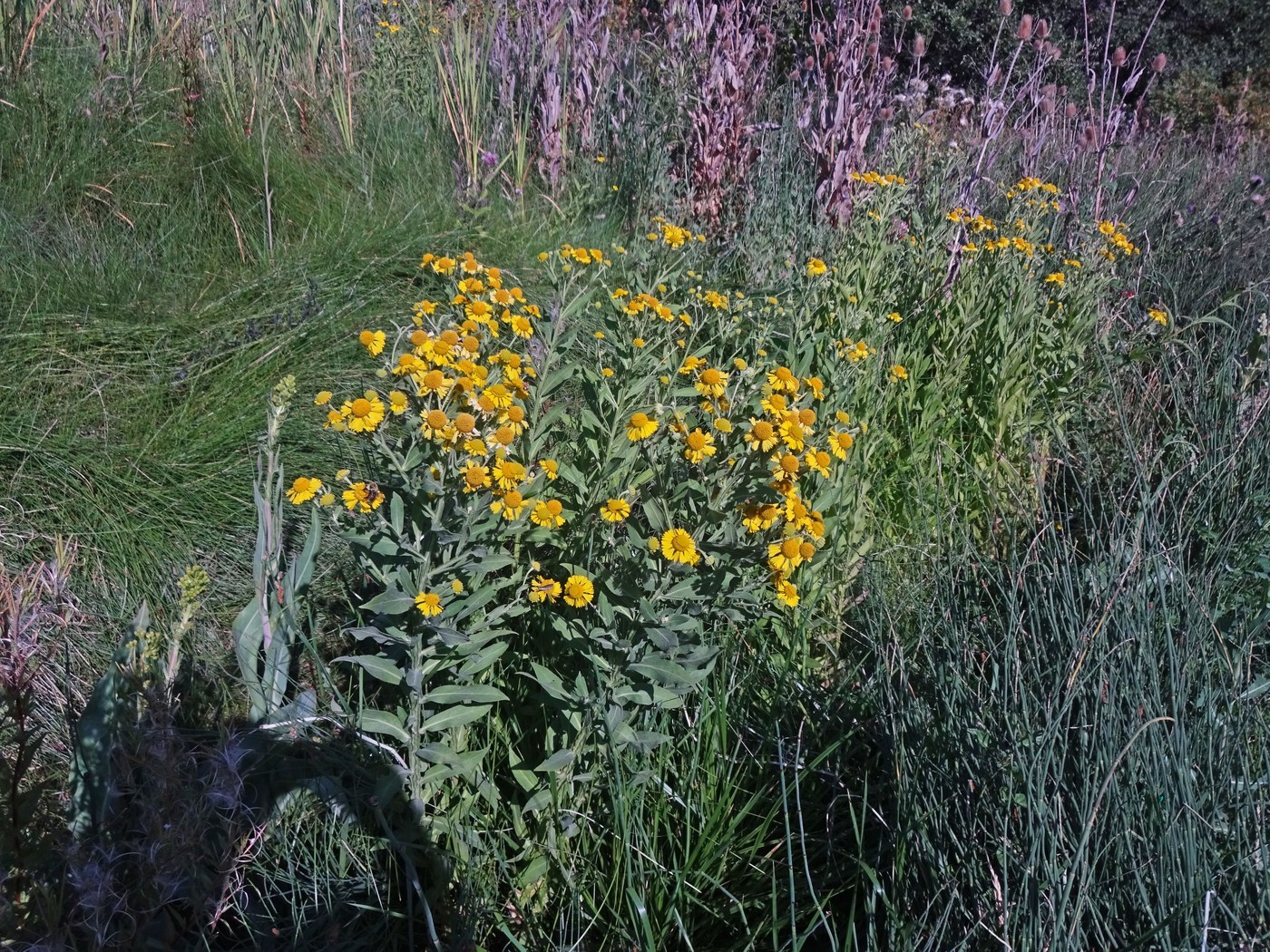
Sneezeweed
Helenium autumnale
Sneezeweed is a cheerful late-summer perennial bearing masses of daisy-like flowers with raised central cones in warm shades of yellow, orange, red and bronze. Despite its name, it doesn't cause sneezing from pollen; the name comes from old use of its dried leaves as snuff.
- Light
- Full sun
- Water
- Regular; likes moist soil
- Difficulty
- Easy
Got a plant like this?
Identify any plant from a photo, free.
Overview
Sneezeweed (genus Helenium) is a group of North American perennials in the aster family, with Helenium autumnale the most commonly grown species and the parent of many fiery garden hybrids.
It blooms profusely from late summer into autumn, covering itself in warm-toned, daisy-like flowers that bridge the gap between summer and fall color.
Contrary to the name, the plant does not trigger hay fever; historically its dried, crushed leaves were used to make a sneezing snuff, which gave rise to the name.
How to identify it
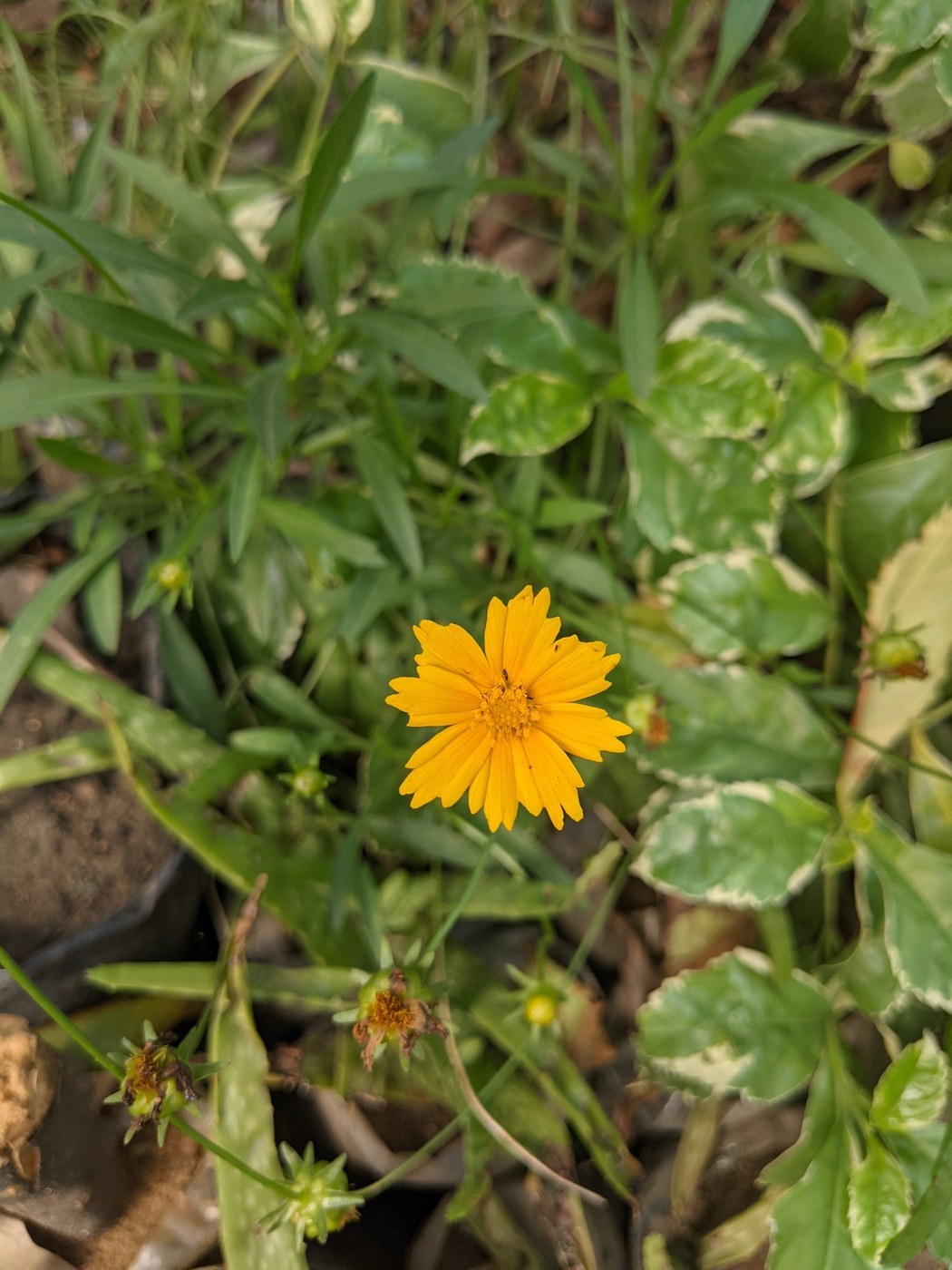
Distinctive raised central disk and reflexed petals identify it.
- Flowers: Daisy-like with a prominent, domed central disk and fan-shaped, often three-lobed, downward-angled ray petals in yellow, orange, red, copper, or bronze
- Leaves: Lance-shaped, toothed, with winged ridges running down the stems
- Habit: Upright, bushy clumps usually 2-5 ft tall
- Bloom time: Late summer through fall
Care & growing
Easy given sun and moisture.
- Light: Full sun for the most flowers and sturdiest stems
- Water: Regular; prefers consistently moist soil and dislikes drying out
- Soil: Average to rich, moisture-retentive soil
- Temperature: Hardy in USDA zones 3-8
- Feeding: Light; overly rich soil can cause floppy growth
- Propagation: Division every 2-3 years keeps clumps vigorous; also from cuttings or seed
- Tip: Pinch stems in early summer for bushier, sturdier plants and deadhead to prolong bloom
Habitat & origin
Sneezeweed is native to North America, found across much of the United States and Canada in moist meadows, wet prairies, ditches, and along streambanks and pond margins.
It is widely grown in perennial borders, prairie and pollinator plantings, and rain gardens, valued especially for its rich autumn coloring.
Frequently asked questions
Does sneezeweed make you sneeze?
Not from its pollen, which is heavy and insect-borne. The name comes from the historic use of its dried leaves to make a sneezing snuff.
When does sneezeweed bloom?
From late summer into autumn, making it valuable for extending garden color into the fall.
Why is my sneezeweed flopping over?
It can get leggy in rich soil or shade. Grow in full sun and pinch the stems back in early summer for a bushier, self-supporting plant.
Sneezeweed guides
In-depth guides for identifying, growing, and caring for Sneezeweed.
How to Care for Sneezeweed
Grow sneezeweed for late-season fire: sturdy daisy-form perennials in gold, orange, and red that love full sun and steady moisture.
Sneezeweed Identification Guide
How to identify sneezeweed (Helenium) by its wedge-shaped, three-toothed, drooping ray petals and prominent rounded central button, plus its winged stems.