Swamp White Oak
Quercus bicolor
Swamp white oak is an adaptable white oak of moist North American bottomlands, with two-toned leaves that are green above and silvery beneath. It is a popular, easy-to-grow shade and street tree.
- Light
- Full sun
- Water
- High; tolerates wet soils
- Difficulty
- Easy
Got a plant like this?
Identify any plant from a photo, free.
Overview
Swamp white oak (Quercus bicolor) is a medium-to-large deciduous tree in the white oak group, native to the moist lowlands of eastern and central North America.
The species name bicolor refers to its two-toned leaves — dark green above and whitish or silvery beneath. As the common name suggests, it naturally grows in wet bottomlands and along streams, yet it adapts readily to ordinary garden and urban soils.
It is widely valued as a fast-establishing, transplant-friendly shade tree and was chosen as a memorial tree at the 9/11 Memorial in New York.
How to identify it
- Leaves: 4–7 in long, broadly oval, with shallow, wavy lobes or coarse teeth; dark green above and silvery-white, downy beneath — a key field mark.
- Acorns: Often paired on long stalks, with a fringed-edged cap covering about a third of the nut.
- Bark: On young branches it peels and curls; mature trunk bark is gray-brown, ridged, and flaky.
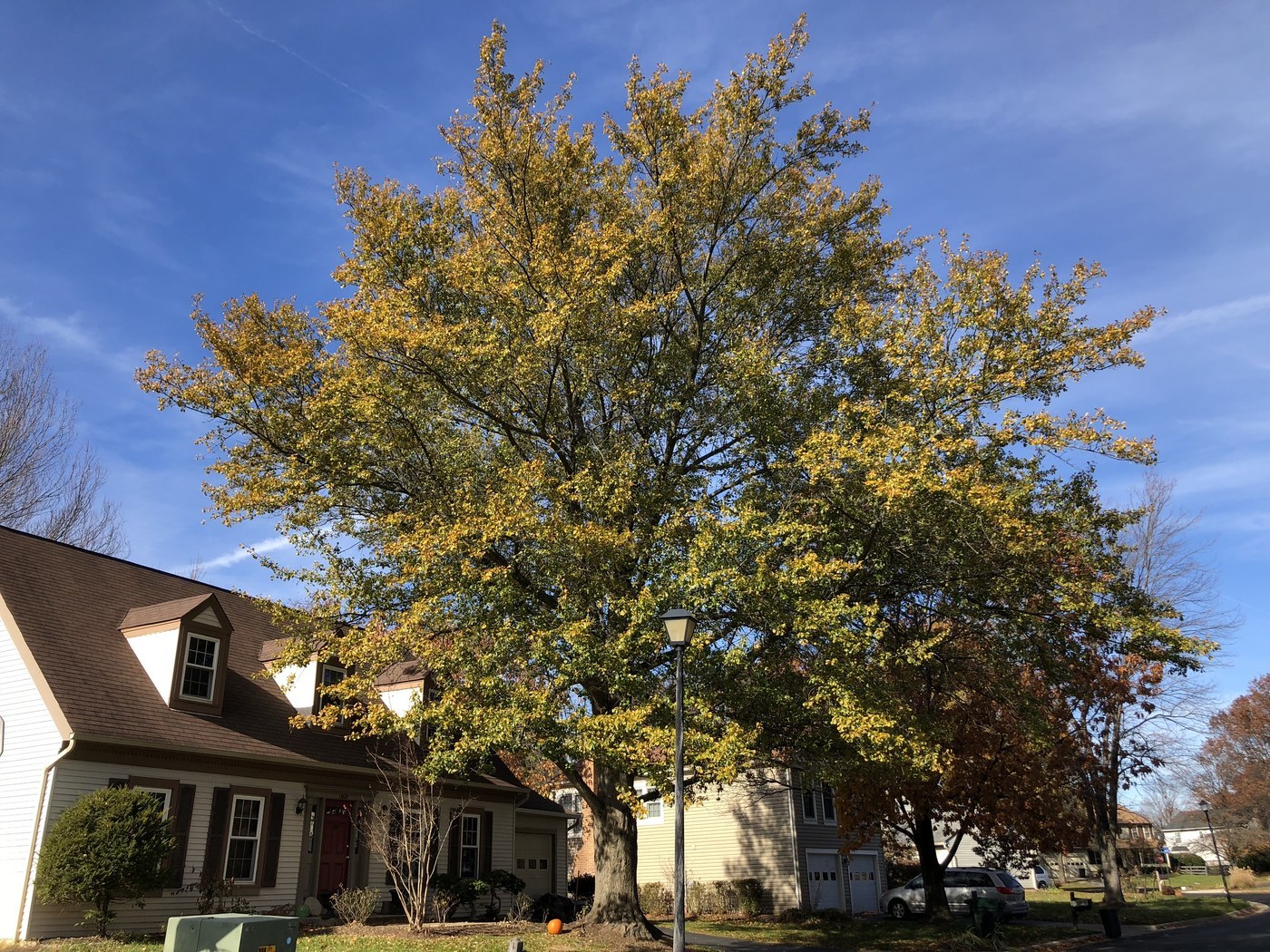
- Habit: Rounded, open crown with somewhat ragged lower branches.
- Size: Typically 50–60 ft tall.
Care & growing
Swamp white oak grows in full sun and tolerates a wide range of moisture.
- Water: Thrives in moist to wet soils and tolerates periodic flooding, yet also handles average garden conditions and some drought once established.
- Soil: Prefers slightly acidic soils; can develop chlorosis on highly alkaline ground.
- Temperature: Hardy in USDA zones 3–8.
- Feeding: Seldom needed.
- Propagation: From acorns; it transplants more easily than most oaks, which makes it a nursery favorite.
Habitat & origin
Native to eastern and central North America, from Quebec and Maine west to Minnesota and south to Georgia and Arkansas.
It grows naturally in bottomlands, swamp margins, floodplains, and along streams and lake shores. Despite its wetland preference, it is widely planted in parks, yards, and along streets thanks to its adaptability.
Frequently asked questions
Why is it called swamp white oak?
It naturally grows in wet bottomlands and swamp edges and belongs to the white oak group, hence the name.
What makes its leaves distinctive?
The leaves are bicolored, dark green on top and silvery-white and downy underneath, which is the source of the species name bicolor.
Is swamp white oak easy to grow?
Yes. It transplants more easily than most oaks and tolerates wet, dry, and compacted soils, making it a reliable shade and street tree.
Will it grow in dry yards?
Yes. Although it prefers moisture, it adapts well to average garden soils and tolerates some drought once established.
Swamp White Oak guides
In-depth guides for identifying, growing, and caring for Swamp White Oak.

How to Care for Swamp White Oak
Grow a stately Quercus bicolor shade tree that tolerates wet soils and full sun. A tough, long-lived native for large landscapes.
Swamp White Oak Identification Guide
How to identify Swamp White Oak (Quercus bicolor) by its two-toned leaves with white-felted undersides, long-stalked acorns, and peeling young-branch bark.