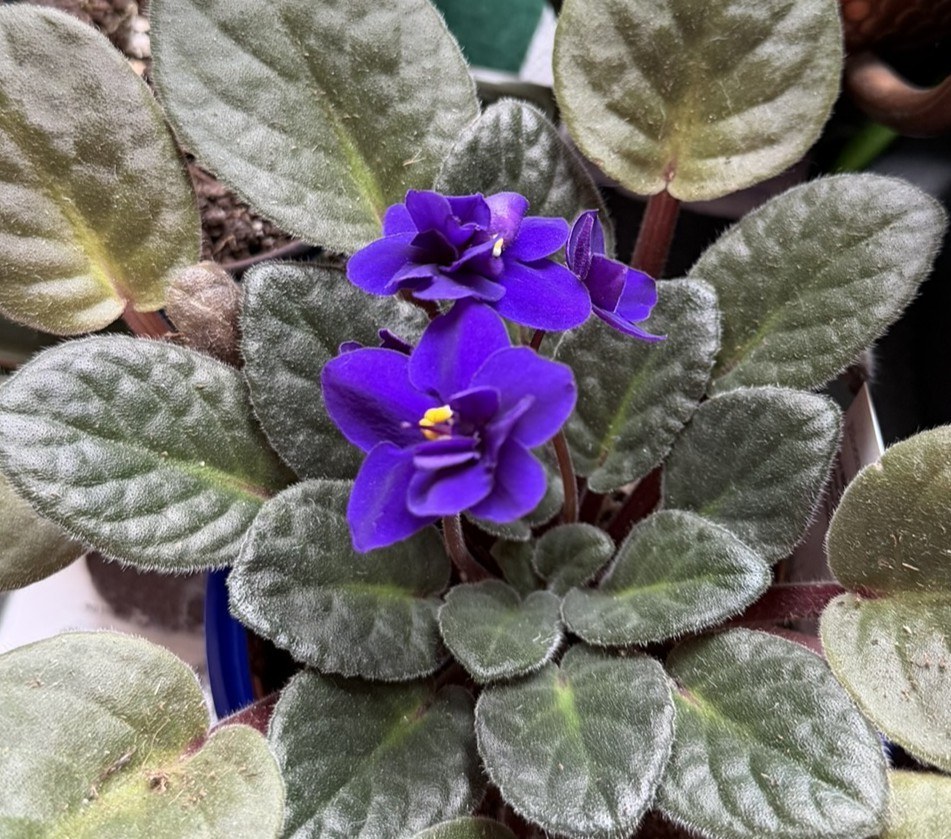
African Violet
Streptocarpus ionanthus
The African violet is a compact flowering houseplant beloved for its velvety leaves and clusters of purple, pink, or white blooms that can appear nearly year-round.
- Light
- Bright indirect light
- Water
- Keep lightly moist; water from below
- Difficulty
- Moderate
Got a plant like this?
Identify any plant from a photo, free.
Overview
African violet (formerly Saintpaulia, now classified in Streptocarpus) is a small flowering plant native to East Africa, famous as one of the most popular blooming houseplants. It forms a low rosette of fuzzy leaves topped by clusters of five-petaled flowers.
With proper care it can flower almost continuously, in shades of violet, purple, blue, pink, red, and white, including bicolor and ruffled forms. Thousands of cultivars exist among collectors.
Its compact size makes it perfect for windowsills and small spaces.
How to identify it
Identify the African violet by:
- Leaves: thick, rounded to oval, velvety-hairy, dark green (sometimes variegated), in a flat rosette
- Flowers: clusters of small five-petaled blooms held just above the foliage
- Color: purple, blue, pink, red, white, and bicolors; single or double forms
- Size: compact, usually 6-16 in across
- Habit: low, symmetrical rosette
Care & growing
- Light: bright, indirect light; an east or north window or fluorescent light is ideal
- Water: keep lightly and evenly moist with room-temperature water; water from below or at the soil to avoid wetting leaves
- Humidity: moderate; avoid cold drafts
- Soil: light, airy African violet mix
- Temperature: 65-75 degrees F, steady
- Feeding: dilute high-phosphorus African violet fertilizer regularly during growth
- Propagation: very easy from a single leaf-petiole cutting rooted in soil or water
Habitat & origin
African violets are native to the cloud forests of the Eastern Arc Mountains of Tanzania and Kenya, particularly the Usambara Mountains, where they grow in humid, shaded conditions on mossy rocks and slopes.
Many wild species are now endangered in their native habitat, but the plant is cultivated worldwide as a treasured indoor flowering plant.
Frequently asked questions
Why won't my African violet bloom?
The most common cause is too little light. Provide bright, indirect light and feed with a bloom-boosting fertilizer; consistent warmth also helps trigger flowering.
Why are there pale spots on the leaves?
Cold water and direct sun on the fuzzy leaves cause pale or yellow blotches. Use room-temperature water and avoid splashing the foliage.
How should I water an African violet?
Water from the bottom by setting the pot in room-temperature water, or apply water directly to the soil. Keep water off the leaves and crown to prevent rot and spotting.
African Violet guides
In-depth guides for identifying, growing, and caring for African Violet.
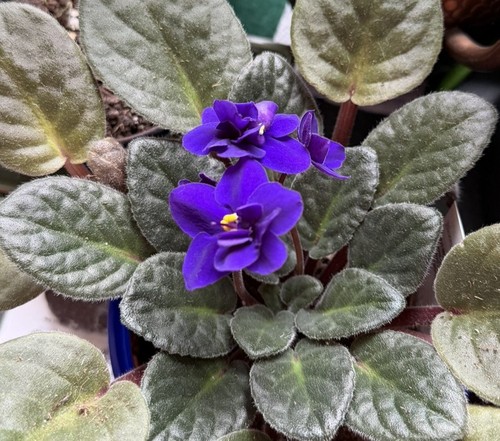
How to Care for African Violet
Keep African violets (Streptocarpus ionanthus) blooming with bright indirect light, bottom watering, warmth, and light feeding on a compact windowsill.
African Violet Identification Guide
Identify the African Violet (Saintpaulia/Streptocarpus ionanthus) by its fuzzy rosette of rounded leaves and clusters of velvety five-petaled flowers.