Baby's Breath
Gypsophila paniculata
Baby's breath is an airy perennial producing clouds of tiny white or pink flowers on wiry, branching stems. It's a florist's staple as a delicate filler in bouquets and a soft accent in the garden.
- Light
- Full sun
- Water
- Low to moderate; well-drained soil
- Difficulty
- Easy
Got a plant like this?
Identify any plant from a photo, free.
Overview
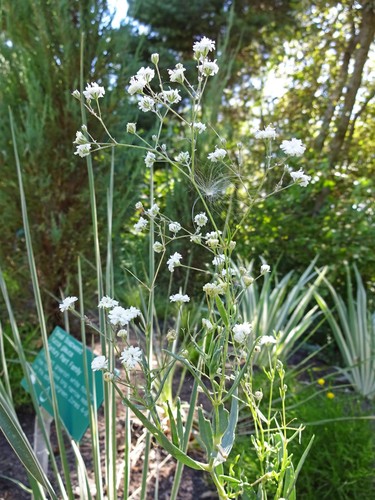
Baby's breath (Gypsophila paniculata) is a mounding perennial in the carnation family, famous for the misty haze of minute flowers that float above its slender stems in summer. The cloud-like effect softens both garden plantings and floral arrangements.
It is one of the most widely used cut flowers in the world, the classic filler that lightens bouquets. The genus name refers to its preference for chalky, gypsum-rich soils. Some forms are annual, but the classic perennial type returns each year and can self-seed.
How to identify it
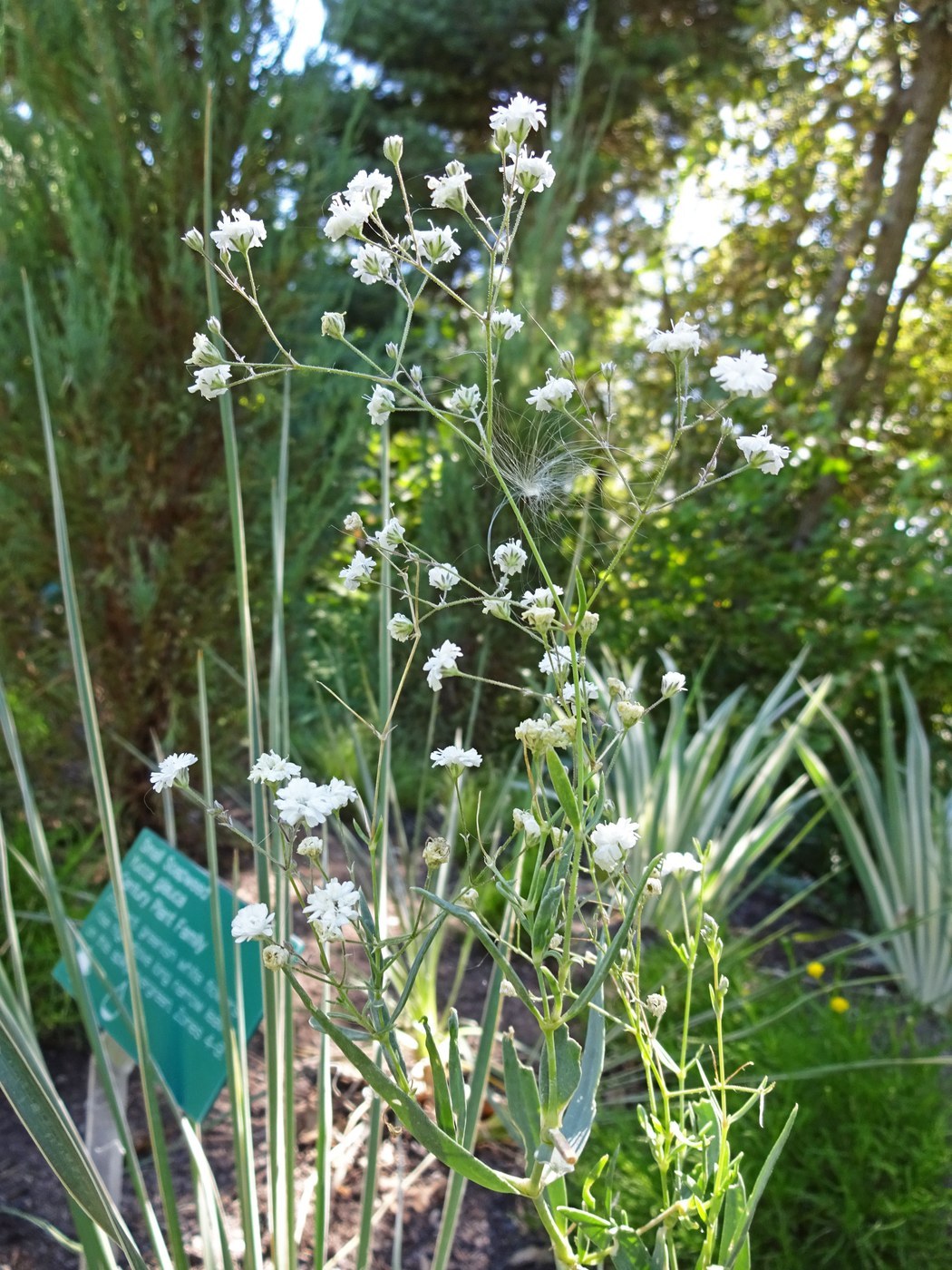
A cloud of tiny flowers on fine, branching stems is the signature look.
- Flowers: very small (about 1/4 in), single or double, white or pale pink, in vast airy panicles
- Leaves: narrow, lance-shaped, blue-green, sparse along the stems
- Habit: rounded, much-branched mound 2-3 ft tall and wide
- Overall: delicate, see-through, gauzy texture
Care & growing
Baby's breath wants sun and sweet, well-drained soil.
- Light: full sun
- Water: low to moderate; established plants are fairly drought tolerant and dislike wet soil
- Soil: well-drained, neutral to alkaline (limey) soil; resents acidity and heavy wet ground
- Temperature: hardy in zones 3-9
- Feeding: light; it grows well in lean soil
- Maintenance: support floppy stems; shear after bloom for a possible second flush
- Propagation: from seed for annual types; perennials from cuttings (the long taproot dislikes transplanting)
Habitat & origin
Gypsophila paniculata is native to central and eastern Europe and Asia, growing on dry, sunny steppes and chalky or sandy soils.
It is cultivated worldwide for the cut-flower trade and in gardens. Note that it has become an invasive weed in some areas, including parts of North American dunes and rangeland, where its deep taproot makes it hard to remove.
Frequently asked questions
Is baby's breath a perennial?
The classic Gypsophila paniculata is a perennial that returns each year. There are also annual species grown the same way from seed.
Why is my baby's breath not thriving?
It needs full sun and well-drained, neutral-to-alkaline soil. Heavy, wet, or acidic soil causes poor growth and rot. Add lime and grit if needed.
Can I dry baby's breath?
Yes. It dries beautifully. Cut stems when most flowers are open and hang them upside down in a dry, airy spot.
Baby's Breath guides
In-depth guides for identifying, growing, and caring for Baby's Breath.