Bishop's Cap Cactus
Astrophytum myriostigma
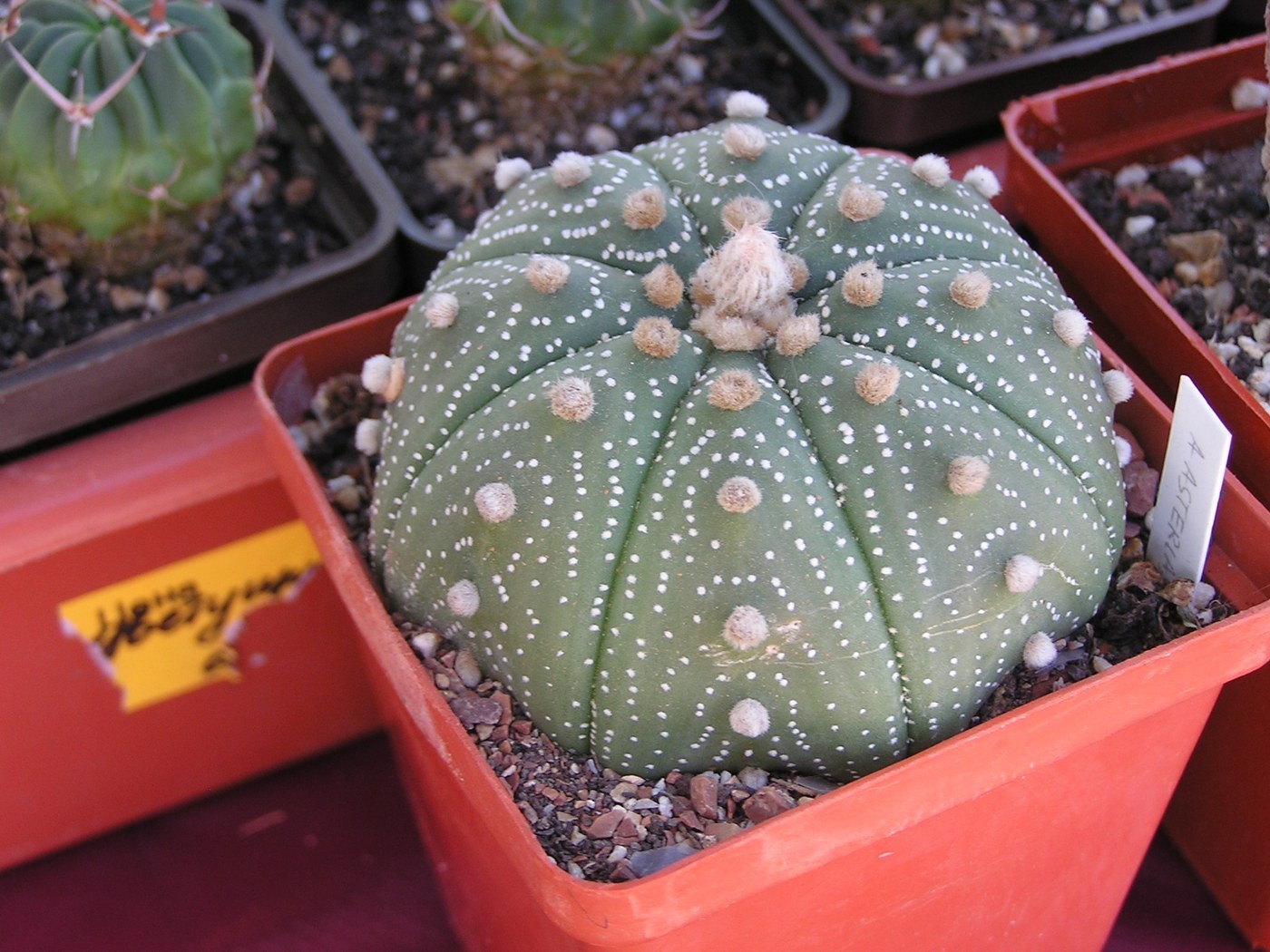
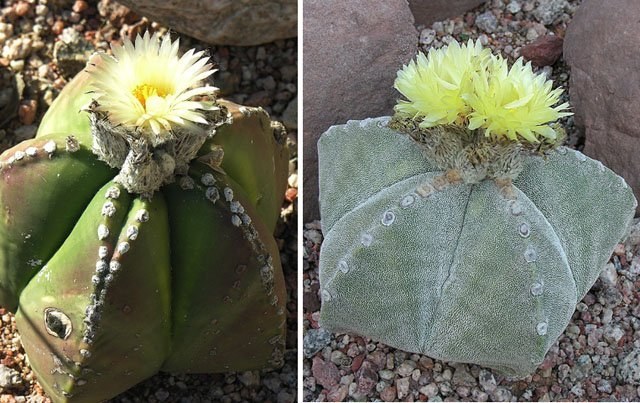
A spineless, star-shaped cactus with a rounded body of distinct ribs flecked with tiny white scales, resembling a bishop's mitre. It produces yellow daisy-like flowers from its crown.
- Light
- Bright light to some direct sun
- Water
- Sparingly; dry between waterings
- Difficulty
- Moderate
Got a plant like this?
Identify any plant from a photo, free.
Overview
The Bishop's Cap Cactus is a small, globular to columnar cactus prized for its geometric beauty. Its body is divided into prominent ribs - usually five, giving a star-shaped cross-section - and is dusted with tiny white woolly scales (trichomes) over a green skin.
Unlike most cacti it is completely spineless, making it safe and pleasant to handle. In summer it produces glossy yellow, daisy-like flowers from the woolly crown.
Slow-growing and undemanding aside from a need for excellent drainage, it is a beloved collector's cactus that develops more ribs and height with age.
How to identify it
- Body: Rounded to short-columnar, divided into prominent ribs (often 5, forming a star shape from above)
- Surface: Green skin covered with fine white woolly scales giving a speckled grey-white appearance
- Spines: None - completely spineless
- Flowers: Yellow, daisy-like blooms, sometimes with an orange-red center, from the crown in summer
- Size: Slow growing, typically 4-12 in (10-30 cm) tall over many years
Care & growing
Light: Bright light with some direct sun; avoid intense midday sun that can scorch.
Water: Water thoroughly only when the soil is completely dry; keep dry in winter. Sensitive to overwatering.
Soil: Very gritty, mineral-rich, fast-draining mix; a slightly alkaline mix suits it.
Temperature: Warm in growth with a cool, dry winter rest.
Feeding: Light, occasional low-nitrogen cactus feed in summer.
Propagation: Usually grown from seed, as it rarely offsets.
Habitat & origin
Astrophytum myriostigma is native to the highlands of northern and central Mexico, where it grows on limestone-rich, well-drained slopes in semi-arid scrub.
It is widely grown by cactus enthusiasts around the world as a slow, ornamental collector's plant.
Frequently asked questions
Why does my Bishop's Cap have no spines?
That is completely normal - the species is naturally spineless, which makes it easy to handle.
What are the white flecks on the body?
They are tiny woolly scales called trichomes that cover the green skin and give the cactus its speckled, mitre-like look.
How fast does it grow?
Very slowly. It can take years to add ribs and height, so patience is part of growing this collector's cactus.
What soil does it prefer?
A very gritty, fast-draining, mineral-rich mix, ideally slightly alkaline, to mimic its limestone native soils.
Bishop's Cap Cactus guides
In-depth guides for identifying, growing, and caring for Bishop's Cap Cactus.
How to Care for Bishop's Cap Cactus
Grow the sculptural, spineless Bishop's Cap cactus with bright light, a gritty mix, and careful sparing watering.
Bishop's Cap Cactus Identification Guide
Identify the Bishop's Cap Cactus (Astrophytum myriostigma) by its spineless, star-shaped ribbed body flecked with tiny white scales.