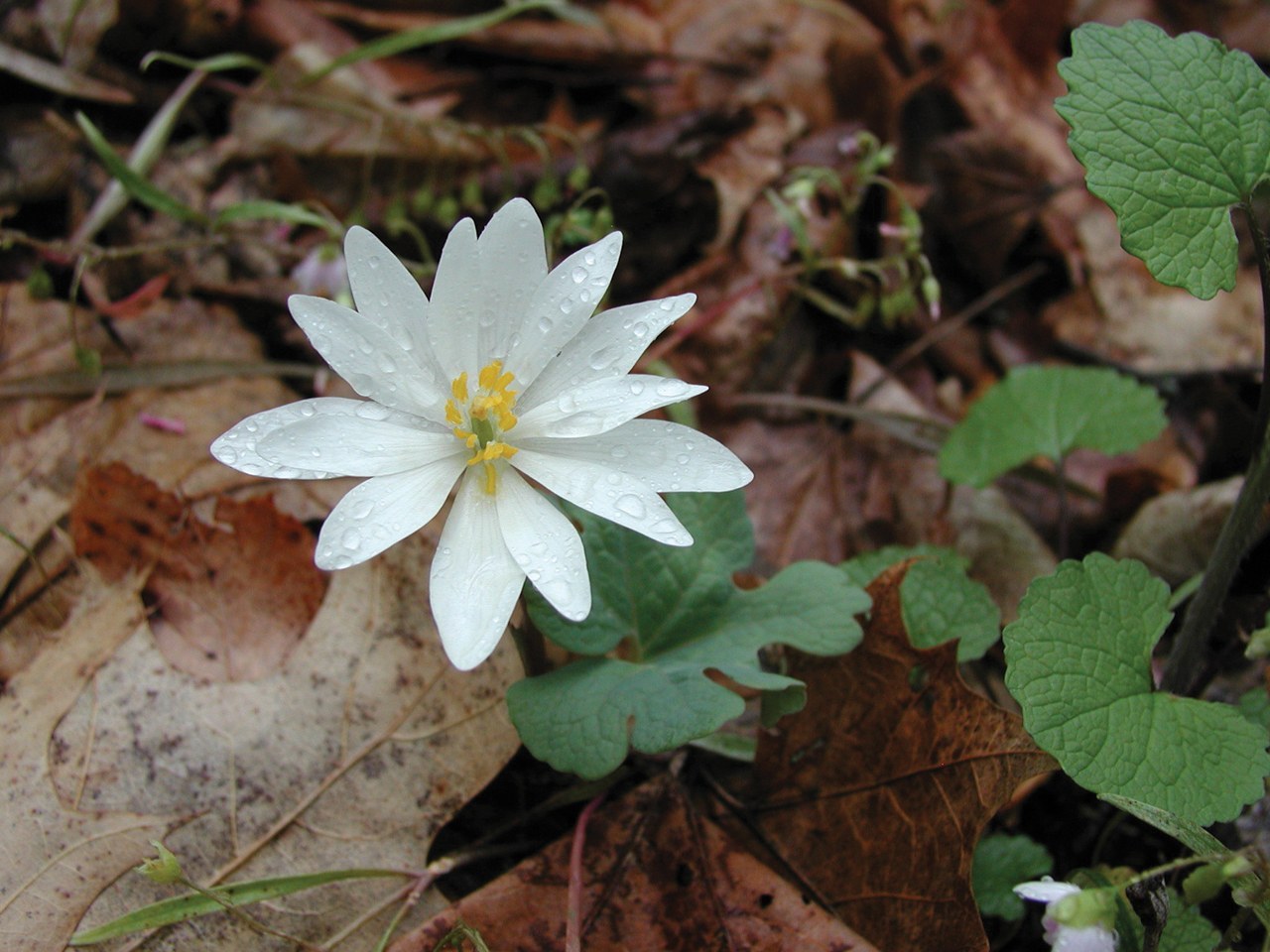
Bloodroot
Sanguinaria canadensis
An early spring ephemeral named for the red-orange sap that bleeds from its roots when cut. Each delicate white flower is wrapped in a single curled leaf and lasts only a few days.
- Light
- Part shade to full shade
- Water
- Moderate; moist soil in spring
- Difficulty
- Moderate
Got a plant like this?
Identify any plant from a photo, free.
Overview
Bloodroot (Sanguinaria canadensis) is a native eastern North American spring ephemeral in the poppy family. Its name comes from the red-orange sap that flows from the rhizome and stems when broken, which Indigenous peoples used as a dye.
In early spring, each flower emerges wrapped in a single curled, scalloped leaf, opening into a pristine white bloom with a golden center. The flowers are short-lived, often lasting only a few days, and close at night.
After blooming, the leaf expands and persists into early summer before the plant goes dormant. A double-flowered form, 'Multiplex,' is popular in gardens.
How to identify it
Look for a solitary white flower emerging from a single curled leaf in early spring.
- Flowers: Solitary, white, with 8 to 12 petals around a golden-yellow center; short-lived
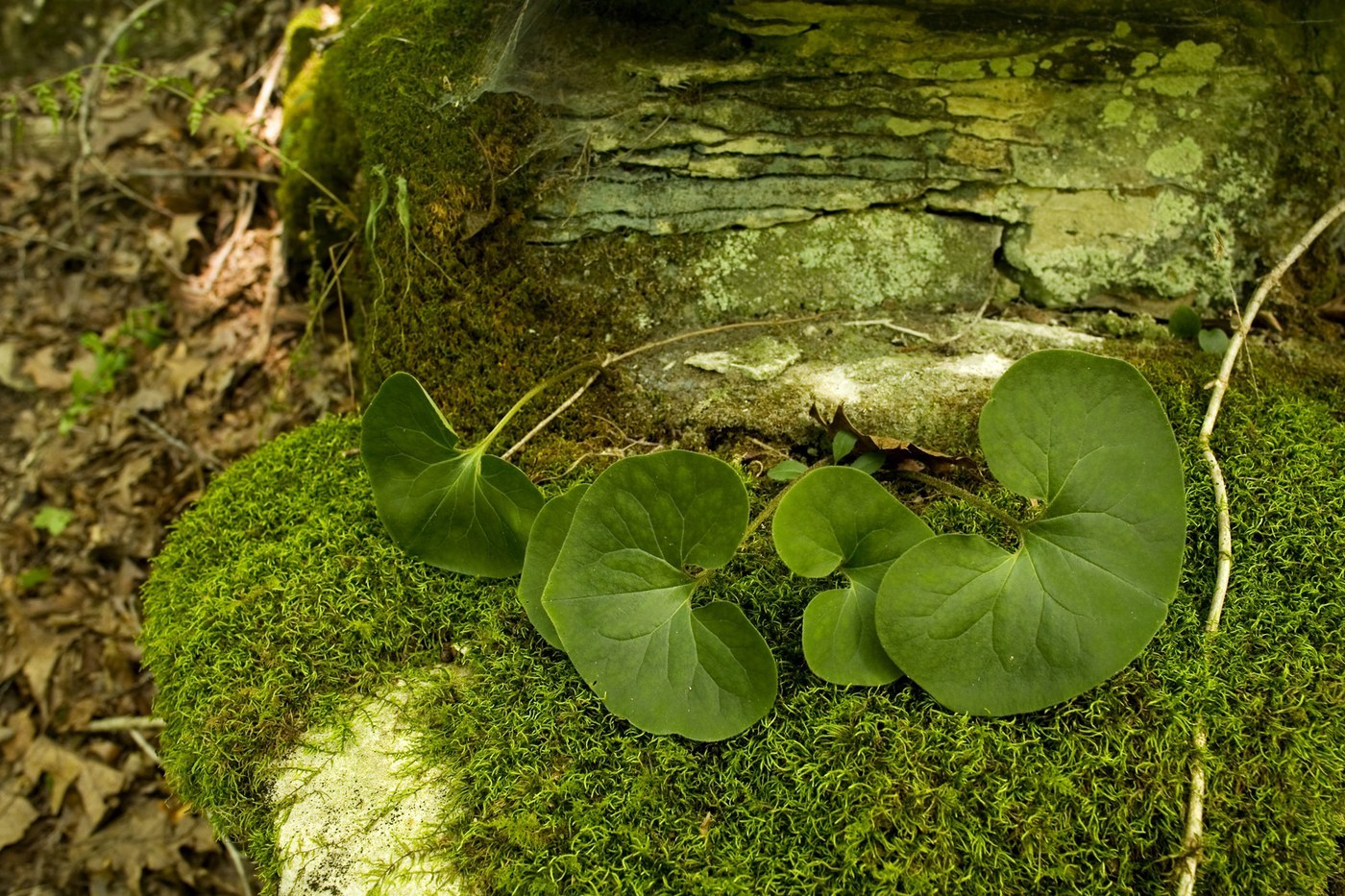
- Leaves: Single, rounded, deeply scalloped or lobed, gray-green, wrapping the flower stem as it emerges
- Sap: Bright red-orange juice in the rhizome and stems
- Size: 6 to 10 inches (15 to 25 cm) tall
- Bloom time: Early spring
Care & growing
Bloodroot thrives in rich, shaded woodland conditions.
- Light: Part to full shade
- Water: Keep soil moist in spring; tolerates summer dryness during dormancy
- Soil: Rich, humusy, well-drained woodland soil
- Temperature: Cold-hardy; requires winter chill
- Propagation: By division of the rhizome after flowering, or by seed (ant-dispersed); buy nursery-propagated plants
- Caution: The red sap stains; handle with care
Habitat & origin
Bloodroot is native to eastern North America, from Nova Scotia and Ontario south to Florida and west to the Great Plains.
It grows in rich, moist deciduous woodlands, on slopes, and along stream banks, blooming on the forest floor before the canopy leafs out.
It is a favorite of woodland and shade gardeners, where it naturalizes slowly into attractive colonies.
Frequently asked questions
Why is it called bloodroot?
When the rhizome or stem is cut, it oozes a bright red-orange sap, which gives the plant its name and was historically used as a dye.
How long do the flowers last?
Only a few days. The white blooms are short-lived spring ephemerals and close up at night and in cloudy weather.
Can I grow bloodroot in my garden?
Yes, in moist, rich, shaded woodland soil. Buy nursery-propagated plants and it will slowly form attractive colonies.
How do I propagate bloodroot?
Divide the rhizome after flowering, or grow from seed, which is naturally dispersed by ants.
Bloodroot guides
In-depth guides for identifying, growing, and caring for Bloodroot.
How to Care for Bloodroot
Grow Bloodroot, a spring woodland ephemeral, in rich shade with moist spring soil; it blooms early then goes dormant by summer.
Bloodroot Identification Guide
Identify Bloodroot (Sanguinaria canadensis) by its solitary white flower, single wrapping lobed leaf, and red-orange sap. This guide covers its early-spring bloom and woodland habitat.