Columbine
Aquilegia vulgaris
Columbine is a graceful perennial prized for its intricate, spurred flowers that nod above lacy blue-green foliage in late spring. It self-seeds readily and is a favorite of hummingbirds and bees.
- Light
- Full sun to part shade
- Water
- Moderate; keep evenly moist
- Difficulty
- Easy
Got a plant like this?
Identify any plant from a photo, free.
Overview
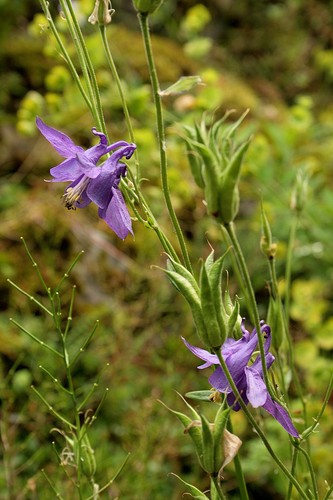
Columbine (Aquilegia) is a clump-forming perennial in the buttercup family, beloved for its distinctive bell-shaped flowers ending in elegant backward-pointing spurs. The common European columbine, A. vulgaris, comes in blues, purples, pinks and white, while North American natives like A. canadensis add red-and-yellow tones.
It is a short-lived perennial that compensates by self-sowing freely, so a single planting often persists in the garden for years through volunteer seedlings. Plants typically reach 1-3 feet tall and bloom from mid-spring into early summer.
How to identify it
Look for the unmistakable spurred flowers and delicate, divided leaves.
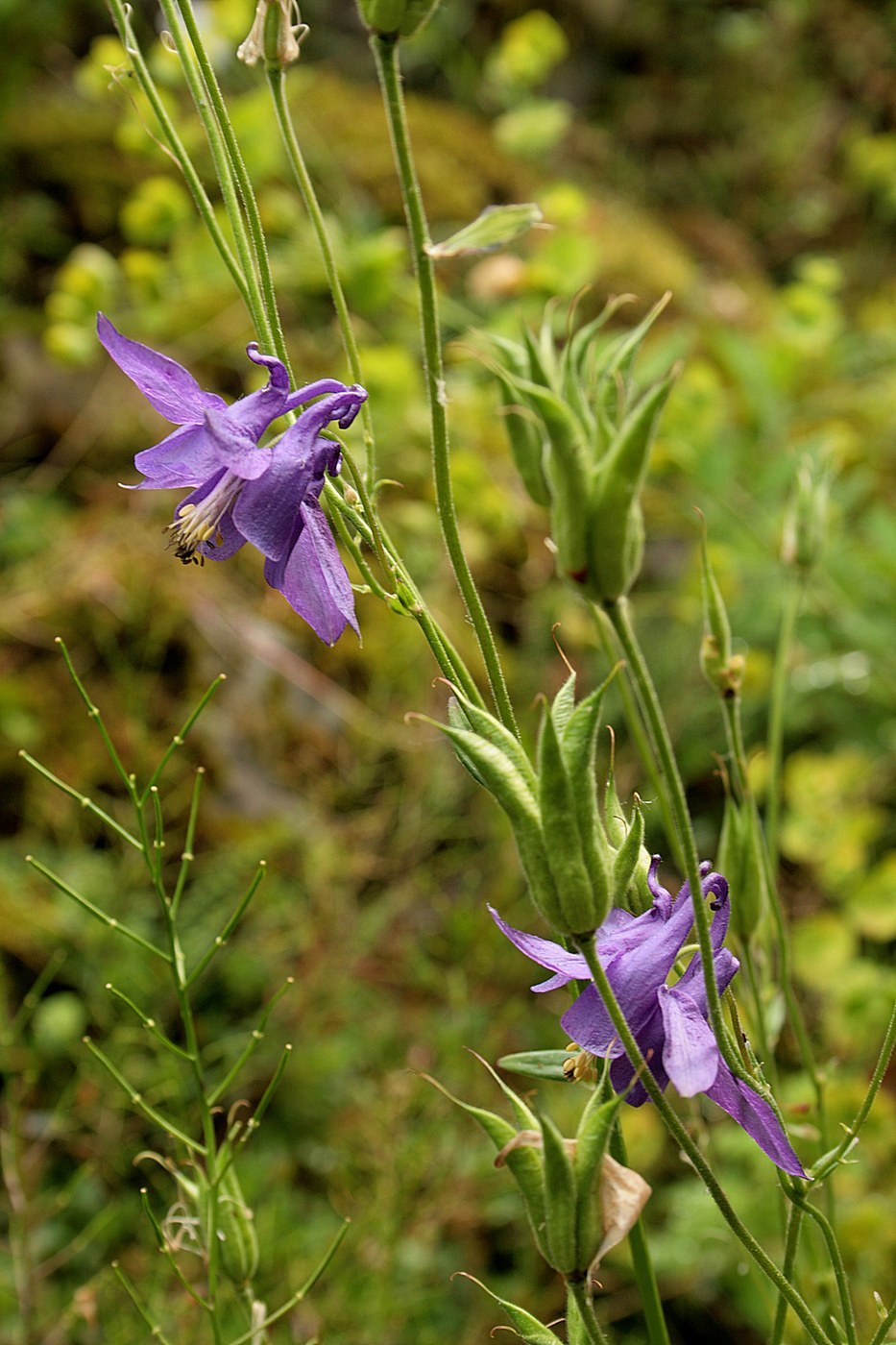
- Flowers: nodding, with five petals each extended into a hollow backward spur; colors include blue, purple, pink, red, yellow and white
- Leaves: fern-like, divided into rounded three-lobed leaflets, often blue-green and slightly glaucous
- Habit: airy, upright clumps 1-3 ft tall on slender branching stems
- Seed pods: erect clusters of follicles that split to release shiny black seeds
Care & growing
Columbine is undemanding once established.
- Light: full sun in cool climates, part shade where summers are hot
- Water: keep soil evenly moist; avoid prolonged drought
- Soil: average, well-drained soil; tolerates a range of pH
- Temperature: hardy in USDA zones 3-9, very cold tolerant
- Feeding: light; too much fertilizer encourages floppy growth
- Propagation: easiest from seed (cold stratify); mature crowns resent division
Cut back foliage if leaf miners disfigure leaves after bloom; fresh growth follows.
Habitat & origin
Aquilegia vulgaris is native to meadows, woodland edges and rocky slopes across Europe. The genus spans temperate regions of the Northern Hemisphere, with many species native to North American mountains and woodlands.
It is widely grown in cottage gardens, woodland borders and naturalized plantings throughout temperate zones, thriving in the dappled conditions found at forest margins.
Frequently asked questions
Why did my columbine disappear after a couple of years?
Columbine is naturally short-lived, but it self-seeds prolifically. Leave some seed pods to ripen and you'll get volunteer plants that keep the patch going.
Does columbine attract hummingbirds?
Yes. The long nectar spurs are especially attractive to hummingbirds, as well as long-tongued bees and moths.
Will it grow in shade?
It does well in part shade and even appreciates afternoon shade in hot climates, though it flowers most heavily with some sun.
What are the holes and squiggles in the leaves?
Leaf miners are common on columbine. They're cosmetic; cut the foliage back after bloom and clean new growth emerges.
Columbine guides
In-depth guides for identifying, growing, and caring for Columbine.