Dragon Fruit
Hylocereus undatus
A climbing cactus that produces vivid pink-skinned fruit covered in green, leaf-like scales. Its enormous, fragrant flowers bloom for a single night.
- Light
- Full sun to bright light; some afternoon shade in hot climates
- Water
- Moderate; let soil dry between waterings
- Difficulty
- Moderate
Got a plant like this?
Identify any plant from a photo, free.
Overview
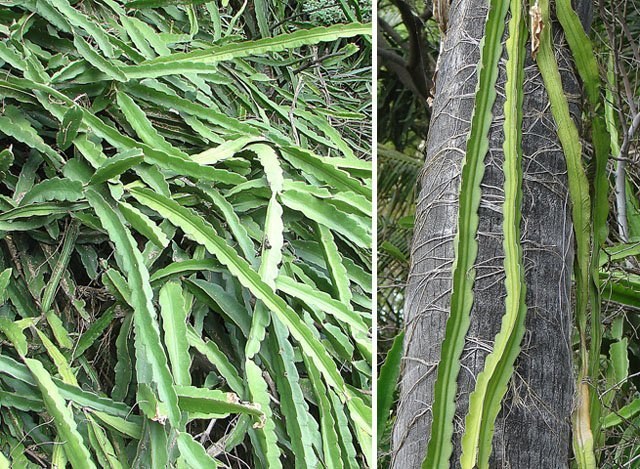
Dragon fruit, or pitaya, is the fruit of climbing, epiphytic cacti in the genus Hylocereus (and related genera). The plant has long, fleshy, three-sided green stems that scramble over trees and rocks, anchoring with aerial roots.
It is famous for its dramatic nocturnal flowers, among the largest of any cactus, which open at night and last only until morning. The resulting fruit has a striking leathery pink skin with green scales and white or red flesh dotted with tiny black seeds.
How to identify it
Identifying features:
- Stems: Long, fleshy, three-ribbed (triangular) green climbing stems with small clusters of short spines along the ribs
- Roots: Aerial roots along stems that grip supports
- Flowers: Very large (up to 25-30 cm), white, fragrant, opening for a single night
- Fruit: Oval, 10-15 cm, with bright pink or yellow leathery skin bearing leafy scales ('dragon scales'); flesh white or magenta with many tiny black seeds
- Habit: Sprawling, epiphytic, requiring support
Care & growing
Light: Bright light to full sun, but protect from intense afternoon sun in very hot climates to avoid scorching.
Water: Water moderately and allow the soil to dry partially between waterings; as a cactus it dislikes constant moisture.
Soil: Fast-draining, slightly sandy soil rich in organic matter, pH 6-7.
Temperature: Frost-sensitive; best in USDA zones 10-11. Protect below 5°C.
Feeding: Light, regular feeding during the growing season supports flowering.
Propagation: Very easy from stem cuttings, which root quickly; also grown from seed. Provide a sturdy trellis or post, as mature plants are heavy.
Habitat & origin
Hylocereus undatus is native to Mexico, Central America, and northern South America, where it grows as an epiphyte or lithophyte in tropical dry forests, climbing trees and rocks.
It is now widely cultivated across Southeast Asia (notably Vietnam and Thailand), Central America, Israel, and Australia, and is a major commercial crop.
Frequently asked questions
Why won't my dragon fruit flower or set fruit?
Plants need maturity (often 1-3 years) and ample sun; many varieties are self-incompatible and require night hand-pollination or a second plant.
How do you pollinate dragon fruit?
Because the flowers open at night and naturally rely on moths and bats, gardeners often hand-pollinate after dark by transferring pollen between flowers.
Is dragon fruit a cactus?
Yes. It is a climbing, epiphytic cactus, which is why it tolerates drought and needs fast-draining soil.
How long does dragon fruit take to fruit?
From cuttings, plants can fruit in 1-2 years; from seed it may take several years longer.
Dragon Fruit guides
In-depth guides for identifying, growing, and caring for Dragon Fruit.
How to Care for Dragon Fruit
Grow dragon fruit (Hylocereus undatus), a climbing night-blooming cactus, with strong support, warmth, bright light, and moderate water.
Dragon Fruit Identification Guide
Identify dragon fruit (pitaya, Hylocereus/Selenicereus) by its three-ribbed climbing cactus stems, huge night-blooming white flowers, and scaly pink fruit.