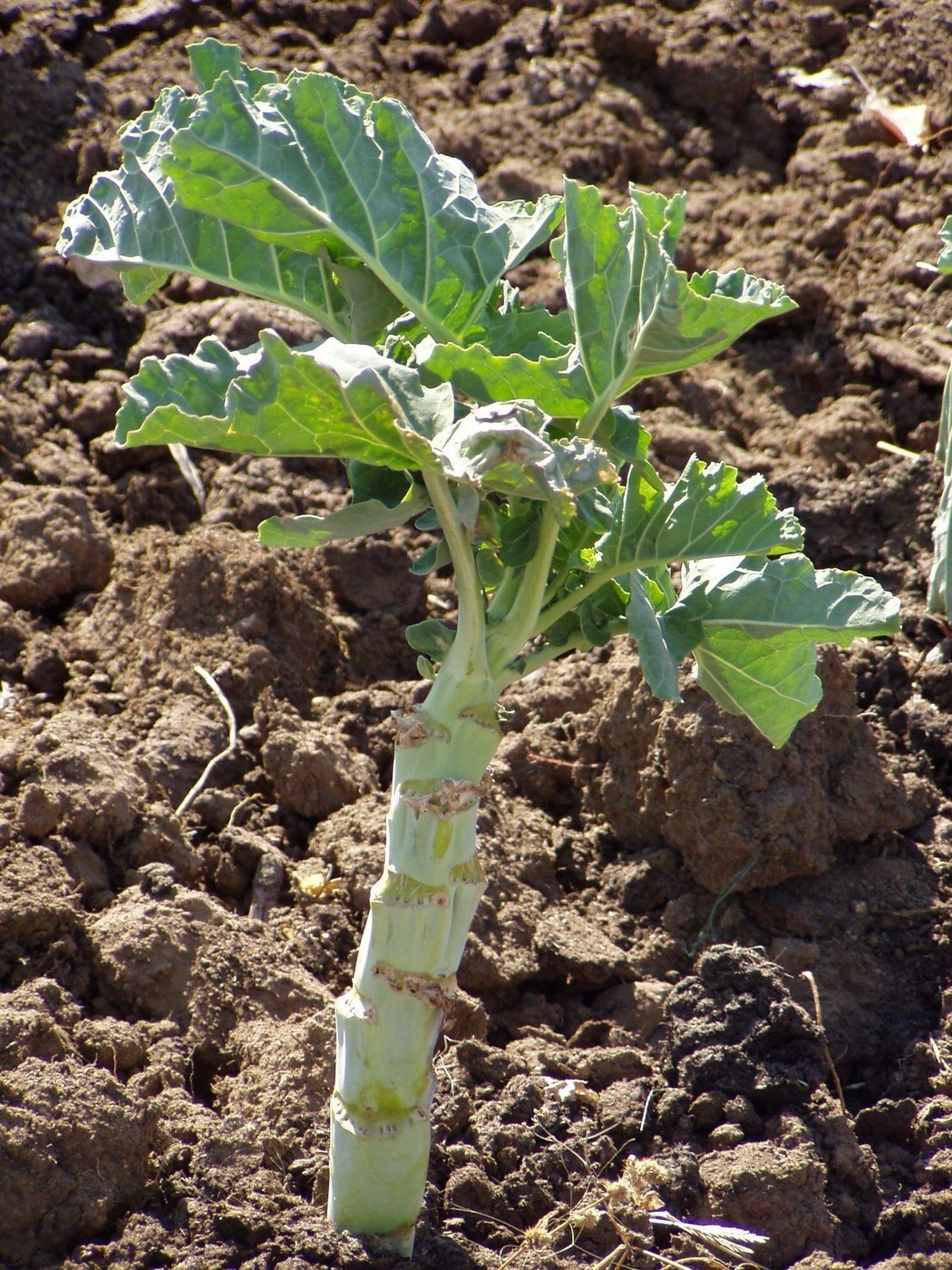
Flowering Kale
Brassica oleracea
Flowering kale is a cool-season ornamental grown for its showy rosettes of frilly leaves in pink, purple, white, and cream. The color intensifies in cold weather, making it a star of fall and winter displays.
- Light
- Full sun
- Water
- Regular; keep evenly moist
- Difficulty
- Easy
Got a plant like this?
Identify any plant from a photo, free.
Overview
Flowering kale is a decorative form of Brassica oleracea, the same species as cultivated kale, cabbage, and broccoli. It is grown for its colorful foliage rather than its flowers, which only appear if the plant overwinters and bolts.
The central rosette colors up vividly as temperatures drop, with frost actually deepening the pinks, purples, and whites.
Varieties with deeply fringed leaves are usually called flowering kale, while those with broad, flat leaves are called ornamental cabbage. Both bring bold color to gardens when little else is blooming.
How to identify it
- Form: Low rosette of leaves, typically 10-15 in across, resembling a giant flower.
- Color: Centers in shades of pink, rose, purple, white, or cream, with green outer leaves; color intensifies in cold.
- Leaves: Frilly and deeply fringed (kale types) or broad and smooth-edged (cabbage types).
- Height: Usually under 12-18 in unless it bolts.
- Best color: Develops after exposure to cool fall temperatures and light frost.
Care & growing
Light: Full sun produces the most vivid coloring.
Water: Keep soil evenly moist; avoid drought stress.
Soil: Fertile, well-drained soil with plenty of organic matter.
Temperature: A cool-season plant; it thrives in fall and winter and colors best below about 50 F. Heat causes leggy green growth.
Feeding: Feed at planting; avoid excess nitrogen, which dulls color.
Propagation: Grown from seed started in mid to late summer for fall display. Watch for cabbage worms and aphids, common Brassica pests.
Habitat & origin
Brassica oleracea originated along the coasts of western Europe and the Mediterranean, where wild cabbage grows on cliffs and rocky shores.
Ornamental kale and cabbage are cultivated worldwide as cool-season bedding plants, especially popular for autumn and winter displays in containers, borders, and public plantings.
Frequently asked questions
When does it turn its brightest colors?
The vivid pink, purple, and white centers develop in cool weather, intensifying after exposure to frost in fall and winter.
Is it a perennial?
It is grown as a cool-season annual or biennial. If it survives winter, it bolts and flowers in spring, after which the rosette deteriorates.
What's the difference between flowering kale and cabbage?
Flowering kale has frilly, deeply fringed leaves, while ornamental cabbage has broad, smooth-edged leaves; both are forms of the same species.
Flowering Kale guides
In-depth guides for identifying, growing, and caring for Flowering Kale.
How to Care for Flowering Kale
Grow ornamental Flowering Kale for vivid rosettes of ruffled foliage that intensify in cool weather. An easy cool-season bedding plant.
Flowering Kale Identification Guide
Identify ornamental flowering kale (Brassica oleracea) by its rosette of frilly or ruffled leaves with vivid pink, purple, white, or cream centers.