Kale
Brassica oleracea
Kale is a hardy leafy green in the cabbage family that forms loose leaves rather than a head. It tolerates cold weather well.
- Light
- Full sun to part shade
- Water
- Keep evenly moist
- Difficulty
- Easy
Got a plant like this?
Identify any plant from a photo, free.
Overview
Kale is a cultivar group of Brassica oleracea, the same species as cabbage and broccoli, but it does not form a head; instead it grows loose leaves on an upright stem. It is one of the closest forms to wild cabbage.
Kale is a cool-season biennial usually grown as an annual. It is exceptionally cold-hardy and is among the toughest leafy plants for the winter garden.
Popular types include curly kale, flat Tuscan (lacinato or dinosaur) kale, and red Russian kale.
How to identify it
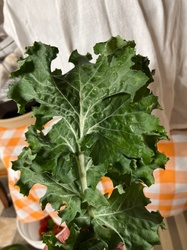
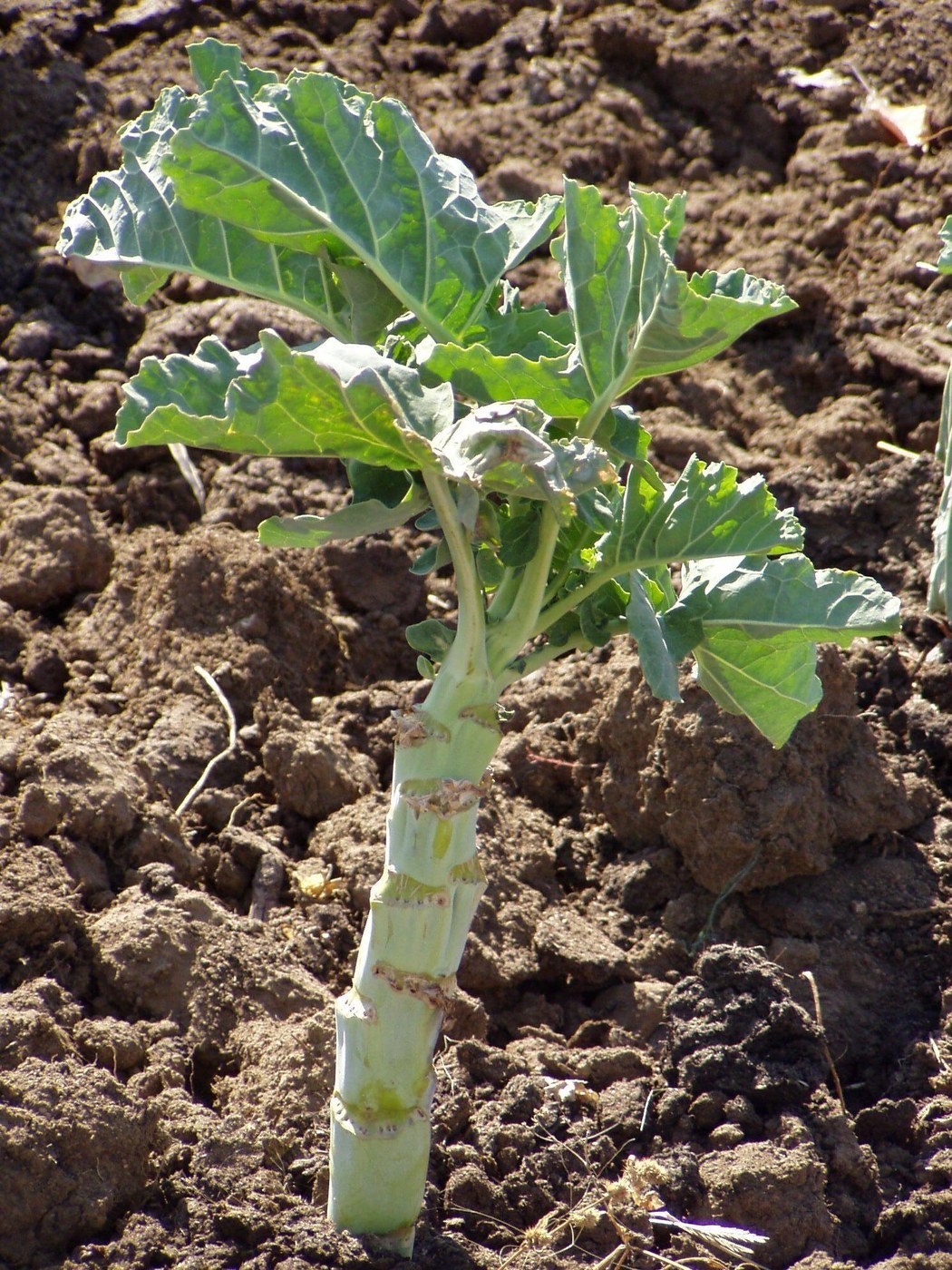
Kale is an upright, leafy plant whose leaves never form a tight head.
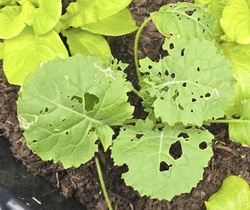
- Leaves: Large, blue-green to purple, curly or savoyed (bumpy), growing along a sturdy central stem
- Habit: Upright, 1 to 3 feet tall depending on type
- Flowers: In its second year, yellow four-petaled flowers on tall stalks
- Texture: Leaves are firm and ridged, with a hardy waxy surface
- Stem: Thick and fibrous, often woody at the base
Care & growing
Kale is one of the easiest and most cold-tolerant leafy plants.
- Light: Full sun for best growth; tolerates part shade
- Water: Keep soil evenly moist for steady leaf growth
- Soil: Fertile, well-draining soil rich in organic matter; pH 6.0 to 7.5
- Temperature: Cool-season; thrives 60 to 70 F and survives hard frost
- Feeding: Nitrogen-rich feeding supports continuous leaf production
- Propagation: From seed sown in spring or, for a fall and winter crop, in mid to late summer. Picking the outer leaves keeps the plant producing.
Habitat & origin
Kale descends from wild cabbage native to the coasts of the Mediterranean and western Europe and is one of the oldest forms of cultivated Brassica, grown since ancient Greek and Roman times.
It is grown across temperate regions worldwide and is especially valued in cool and cold climates where it overwinters long after other crops finish.
Frequently asked questions
What does kale look like?
Kale grows as an upright leafy plant 1 to 3 feet tall with large, blue-green to purple curly or bumpy (savoyed) leaves along a sturdy central stem; it never forms a tight head.
How do I keep kale producing new leaves?
Pick the lower, outer leaves first and leave the central growing tip intact. The plant will keep producing new leaves from the top for months.
Can kale survive winter?
In many climates yes. Kale is very cold-hardy and can overwinter under mulch or row cover through the cold months.
Kale guides
In-depth guides for identifying, growing, and caring for Kale.
How to Care for Kale
Grow Kale (Brassica oleracea), a hardy cool-season leafy plant, in full sun to part shade with rich, evenly moist soil.
Kale Identification Guide
Identify kale (Brassica oleracea var. sabellica/acephala) by its non-heading rosette of curly, frilled, or strap-like blue-green leaves on a sturdy stem.
Kale identified by the community
Real specimens identified with Plant Identifier.