Lady's Mantle
Alchemilla mollis
Lady's mantle is a soft, mounding perennial known for its scalloped, pleated leaves that catch dewdrops like beads of mercury, topped by airy sprays of chartreuse-green flowers. It is a versatile, low-maintenance plant for edging and softening borders.
- Light
- Full sun to part shade
- Water
- Moderate; even moisture
- Difficulty
- Easy
Got a plant like this?
Identify any plant from a photo, free.
Overview
Lady's mantle (Alchemilla mollis) is a clump-forming perennial in the rose family, beloved for its foliage as much as its frothy flowers. The velvety, fan-pleated leaves are slightly water-repellent, so rain and dew bead up on their surface in a way that has long charmed gardeners.
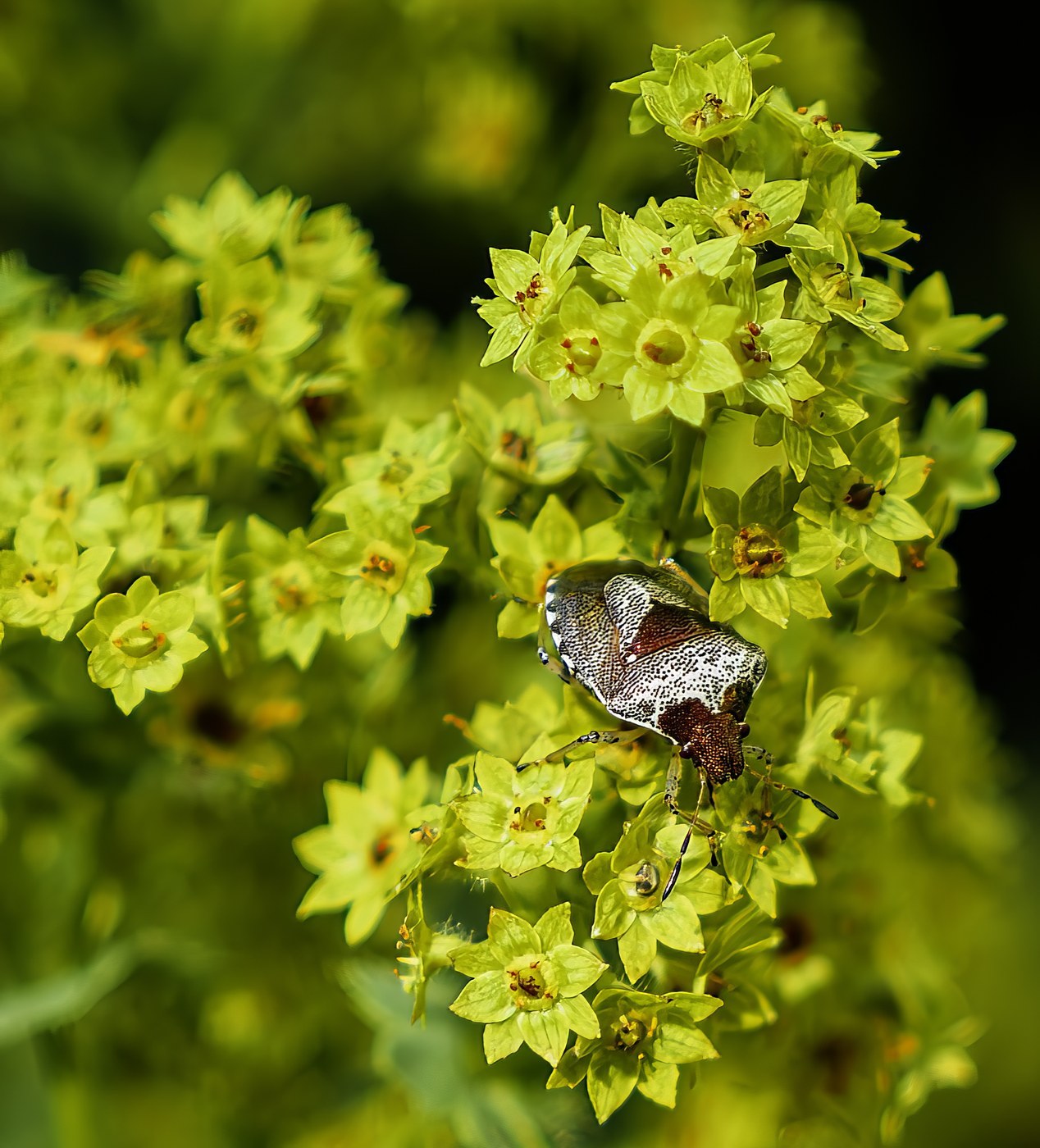
In early summer it produces clouds of tiny, sulphur-yellow to lime-green flowers that froth above the foliage and contrast beautifully with bolder companions.
The genus name Alchemilla references alchemy, as the dewdrops collected on its leaves were once thought to have magical properties.
How to identify it
The pleated, dew-catching leaves are unmistakable.
- Leaves: Rounded, softly hairy, with shallow scalloped lobes and radiating pleats; water beads on the surface
- Flowers: Tiny, petalless, chartreuse to greenish-yellow, in large frothy sprays
- Habit: Soft, spreading mounds usually 12-18 in tall and wide
- Bloom time: Early to midsummer
Care & growing
Tolerant and easy to please.
- Light: Full sun to partial shade; afternoon shade helps in hot climates
- Water: Moderate, even moisture; tolerates some dryness once established
- Soil: Adaptable; prefers moist, well-drained soil
- Temperature: Hardy in USDA zones 3-8
- Feeding: Minimal
- Propagation: Division or self-sown seedlings, which appear readily
- Tip: Shear back after flowering to refresh foliage and limit prolific self-seeding
Habitat & origin
Lady's mantle is native to southern Europe and Asia, particularly the Carpathian and Caucasus mountains, where it grows in damp meadows, woodland clearings, and along streams.
It is widely naturalized and cultivated across temperate gardens as an edging plant, groundcover, and filler, and can self-seed enthusiastically.
Frequently asked questions
Why does water bead up on lady's mantle leaves?
The leaf surface is covered in fine water-repellent hairs, causing rain and dew to form silvery, mercury-like droplets that sit on top.
Does lady's mantle self-seed?
Yes, sometimes prolifically. Shearing off the spent flowers before they set seed keeps it in check while also tidying the plant.
Can I use lady's mantle flowers in arrangements?
Absolutely. The frothy chartreuse sprays are popular with florists for both fresh bouquets and drying.
Where did the name lady's mantle come from?
The scalloped leaf is said to resemble a cloak or mantle, which gave the plant its common name.
Lady's Mantle guides
In-depth guides for identifying, growing, and caring for Lady's Mantle.
How to Care for Lady's Mantle
Lady's mantle (Alchemilla mollis) is an easy cottage-garden perennial with soft pleated leaves and frothy chartreuse flowers.
Lady's Mantle Identification Guide
How to identify lady's mantle (Alchemilla) by its softly pleated, fan-shaped scalloped leaves that hold water droplets, and frothy sprays of tiny petalless chartreuse flowers.