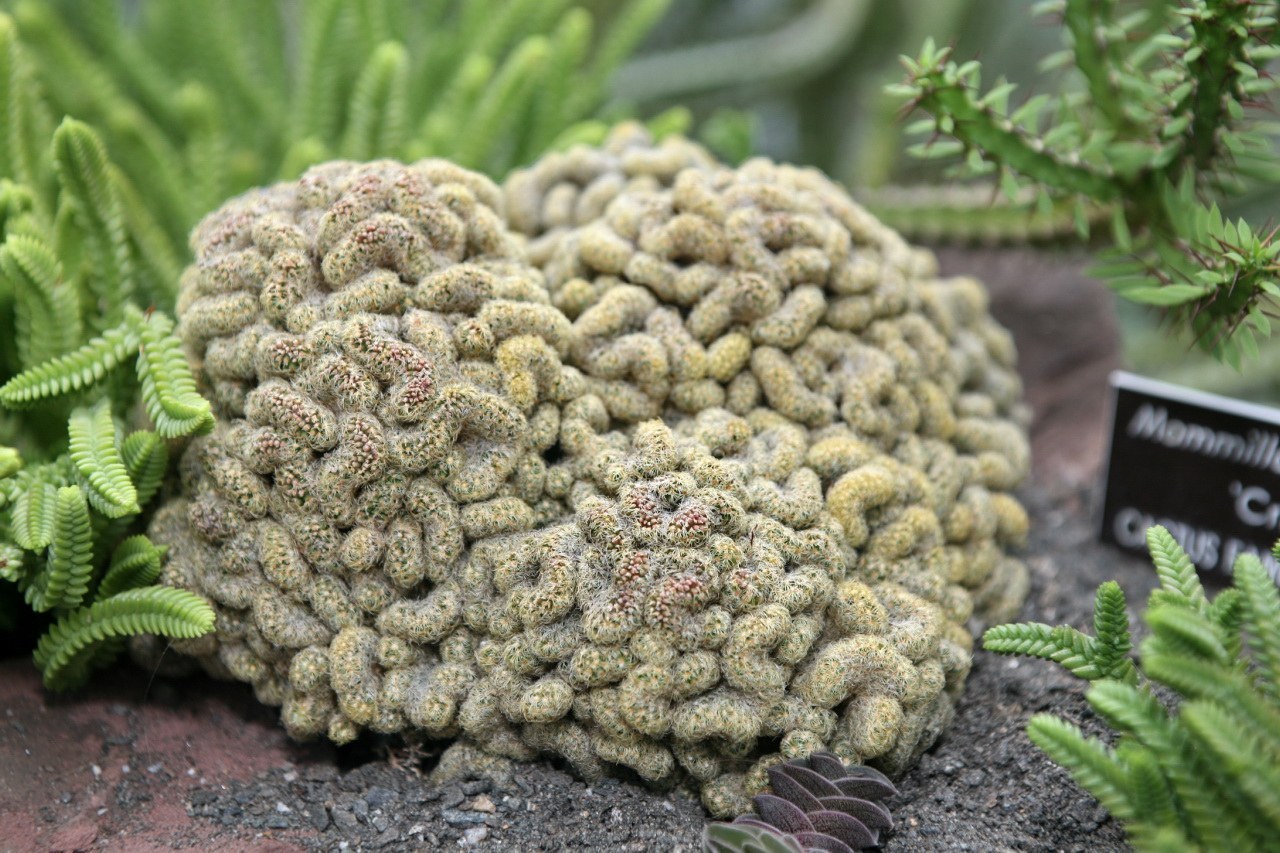
Ladyfinger Cactus
Mammillaria elongata
A clustering cactus of slender, finger-like stems covered in neat, star-like spine clusters. One of the easiest and most rewarding small cacti for beginners.
- Light
- Bright light, direct sun
- Water
- Sparingly; dry between waterings
- Difficulty
- Easy
Got a plant like this?
Identify any plant from a photo, free.
Overview
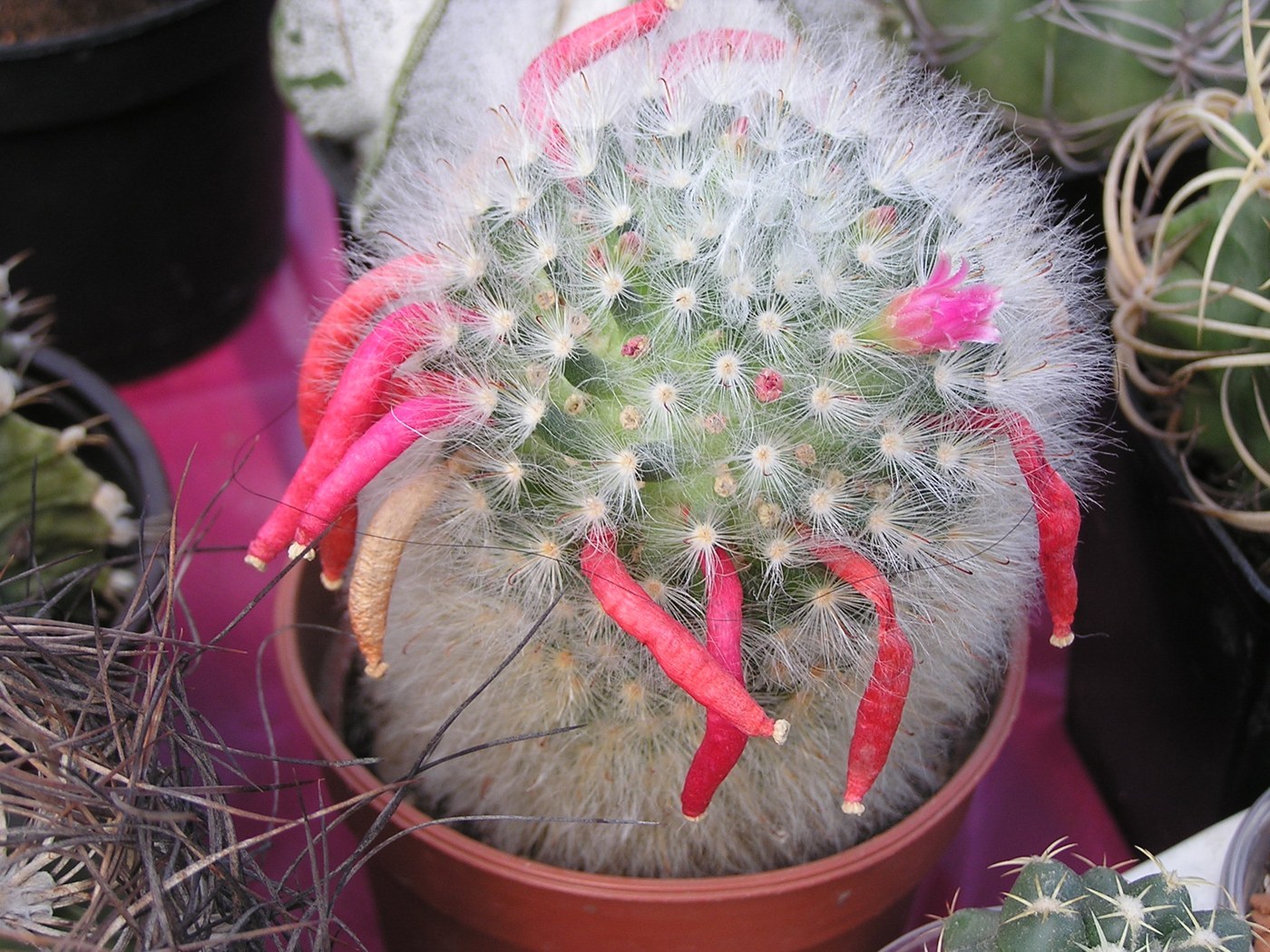
Ladyfinger Cactus is a clumping Mexican cactus made up of many slender, cylindrical stems that branch and cluster into dense colonies. Each stem is studded with tubercles bearing radiating spines arranged in tidy, starburst patterns, ranging from gold to brown.
It is sometimes called gold lace cactus or golden stars for the lacy, symmetrical spine clusters. In spring it can produce a ring of small cream to yellowish flowers near the stem tips.
Undemanding and fast to offset, it is one of the most popular beginner cacti and the species from which the crested 'Brain Cactus' is derived.
How to identify it
- Stems: Slender, finger-like cylinders 4-6 in long, clustering into dense mounds
- Spines: Radiating clusters arranged in neat stars, gold, yellow, or brown, with no hooked central spines
- Tubercles: Stems covered in small bumps (tubercles) rather than ribs
- Flowers: Small, cream to pale yellow, sometimes pinkish, in a ring near stem tips
- Size: Individual stems to 6 in; clumps spread wider over time
Care & growing
Light: Bright light, including direct sun, for healthy compact growth and good spine color.
Water: Water sparingly and let the soil dry completely between waterings; reduce to almost none in winter.
Soil: Fast-draining, gritty cactus mix.
Temperature: Warm in summer; a cool, dry winter rest encourages flowering.
Feeding: Dilute cactus fertilizer once or twice in the growing season.
Propagation: Very easy; detach offset stems, let them callus, and root in dry mix.
Habitat & origin
Native to central Mexico, particularly the state of Hidalgo, where it grows on rocky limestone slopes and outcrops in arid, sunny conditions.
It is among the most widely cultivated mammillarias, grown as a potted houseplant and in succulent gardens around the world.
Frequently asked questions
Is the ladyfinger cactus good for beginners?
Yes, it is one of the easiest cacti, tolerant of neglect as long as it has bright light and infrequent watering.
How do I get it to flower?
Give it a cool, dry rest in winter and plenty of light; this triggers the spring ring of small flowers.
Why are the stems stretching and thin?
Too little light causes etiolation. Move it to a brighter, sunnier spot for sturdy, compact stems.
How do I make more plants?
Gently twist off an offset stem, let it callus for a few days, then set it on dry cactus mix to root.
Ladyfinger Cactus guides
In-depth guides for identifying, growing, and caring for Ladyfinger Cactus.
How to Care for Ladyfinger Cactus
Grow easy Ladyfinger Cactus with bright direct sun, sparse watering, and gritty soil for tidy clustering gold-spined fingers.
Ladyfinger Cactus Identification Guide
Identify the Ladyfinger Cactus (Mammillaria elongata) by its clustering, slender finger-like stems densely covered in radiating golden spines.