Meadow Rue
Thalictrum aquilegiifolium
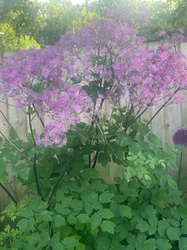
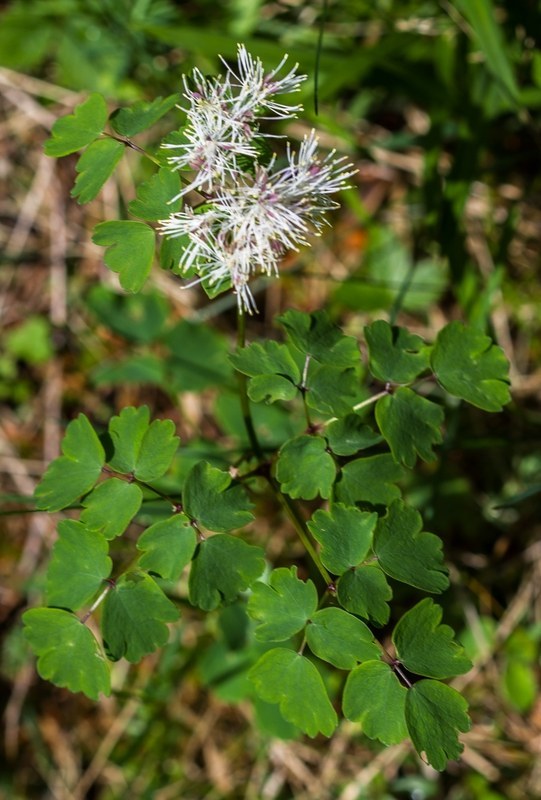
Meadow rue is an airy perennial with delicate, columbine-like foliage and fluffy clouds of tiny lilac, pink, or white flowers. It brings a soft, ethereal texture to part-shade borders.
- Light
- Part shade
- Water
- Keep consistently moist
- Difficulty
- Moderate
Got a plant like this?
Identify any plant from a photo, free.
Overview
Meadow rue (Thalictrum species, commonly Thalictrum aquilegiifolium) belongs to the buttercup family (Ranunculaceae). It is grown as much for its lacy, blue-green foliage as for its frothy flower clusters.
The flowers lack true petals; their fluffy appearance comes from masses of showy stamens. The overall effect is light and gauzy, lending an almost weightless quality to the garden.
Most meadow rues range from 2 to 6 feet tall depending on species, and they pair beautifully with bolder, broad-leaved plants.
How to identify it
Identify meadow rue by its fine, divided foliage and powder-puff flowers.
- Leaves: Finely divided and compound, resembling columbine or maidenhair fern, often blue-green
- Flowers: Tiny, petal-less blooms with prominent stamens forming fluffy lilac, pink, or white clusters
- Size: Commonly 2 to 6 feet tall depending on species
- Stems: Slender, often purplish, giving an airy, see-through structure
- Bloom time: Late spring to summer
Care & growing
Meadow rue rewards attention to moisture and shelter.
- Light: Part shade is ideal; tolerates full sun in cool climates with steady moisture
- Water: Keep soil consistently moist; do not let it dry out
- Soil: Rich, humusy, well-draining soil
- Temperature: Hardiness varies by species, generally USDA zones 3 to 8
- Feeding: Compost or balanced fertilizer in spring
- Propagation: Division in spring or seed; taller types may need light staking or wind shelter
Habitat & origin
Meadow rues are native to moist meadows, woodland edges, and stream banks across temperate Europe, Asia, and North America.
They thrive in woodland gardens, the middle to back of shaded borders, and near water features. Widely grown across temperate gardens for their delicate texture.
Frequently asked questions
Why do meadow rue flowers look fluffy?
The flowers have no petals. Their puffy appearance comes from dense clusters of showy stamens.
Does meadow rue need staking?
Tall species can flop, especially in wind or rich soil. Staking or growing them among supporting plants helps.
Will meadow rue grow in full sun?
Yes in cool climates with reliably moist soil, but it generally prefers part shade.
Is meadow rue a fern?
No. The foliage resembles fern or columbine leaves, but it is a flowering perennial in the buttercup family.
Meadow Rue guides
In-depth guides for identifying, growing, and caring for Meadow Rue.
How to Care for Meadow Rue
Grow Meadow Rue (Thalictrum aquilegiifolium), an airy woodland perennial with fluffy flowers that thrives in part shade and moist soil.
Meadow Rue Identification Guide
Identify Thalictrum species by their delicate columbine-like foliage and airy clouds of petalless, fluffy flowers.
Meadow Rue identified by the community
Real specimens identified with Plant Identifier.