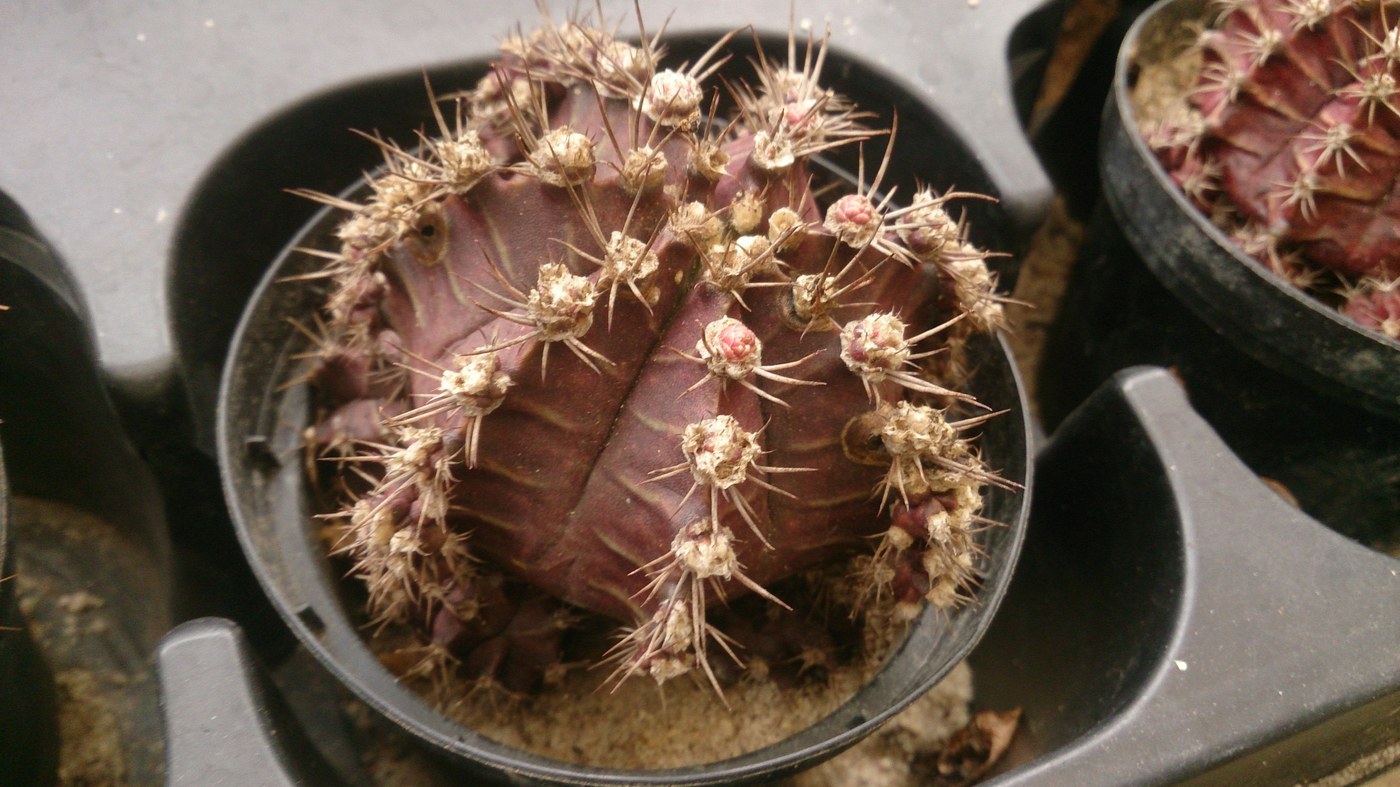
Moon Cactus
Gymnocalycium mihanovichii
The moon cactus is a brightly colored grafted novelty cactus, with a red, yellow, orange, or pink top fused onto a green rootstock. The colorful top lacks chlorophyll and depends on the host cactus to survive.
- Light
- Bright indirect light
- Water
- Sparingly; let soil dry
- Difficulty
- Moderate
Got a plant like this?
Identify any plant from a photo, free.
Overview
The moon cactus is not a single plant but a graft: a colorful mutant form of Gymnocalycium mihanovichii attached to the top of a green columnar cactus, usually a Hylocereus. The vivid top would die on its own because it lacks chlorophyll.
The striking reds, yellows, oranges, and pinks come from pigments that are normally masked by green in healthy plants. Without chlorophyll, the colored scion cannot photosynthesize and relies entirely on the rootstock for food.
Because the two cacti grow at different rates, moon cactus grafts are often relatively short-lived, but they make eye-catching, low-cost houseplants.
How to identify it
- A small round, ribbed colored ball (red, yellow, orange, pink, or purple) sitting atop a green stem
- Clear graft junction where the two cacti meet
- The green rootstock is usually a slender, three- or four-sided columnar cactus
- The colored top may produce small offsets and occasional pale flowers
- Spines are short and soft on the colored portion
Care & growing
- Light: Bright but indirect light; the colored top can scorch in harsh direct sun
- Water: Let the soil dry between waterings; avoid overwatering, which rots the graft
- Soil: Standard fast-draining cactus mix
- Temperature: Warm, ideally 65-85 F; sensitive to cold and frost
- Feeding: Light cactus feed during the growing season
- Propagation: Difficult for home growers; requires re-grafting the colored scion onto fresh rootstock
Habitat & origin
The colored scion derives from Gymnocalycium mihanovichii, native to Paraguay and northeastern Argentina, where the wild green form grows in dry scrub and grassland.
The moon cactus as sold is a manufactured ornamental, grafted in nurseries and grown indoors worldwide as a colorful, inexpensive novelty houseplant.
Frequently asked questions
Why is my moon cactus turning brown or shriveling?
This often signals a failing graft, overwatering, or rot. Check that the graft junction is firm and reduce watering.
Why can't the colored top grow on its own?
The colorful scion lacks chlorophyll and cannot photosynthesize, so it must stay grafted onto a green rootstock that feeds it.
How long do moon cacti live?
Often only a few years, because the two grafted cacti grow at different rates and eventually become incompatible.
Does it need direct sun?
No. Bright indirect light is best; intense direct sun can scorch the colorful top.
Moon Cactus guides
In-depth guides for identifying, growing, and caring for Moon Cactus.
How to Care for Moon Cactus
Grow a vivid Moon Cactus indoors with bright indirect light, sparing water, and gritty, fast-draining soil for a healthy grafted specimen.
Moon Cactus Identification Guide
How to identify the grafted Moon cactus by its brightly colored top globe sitting on a green rootstock stem.