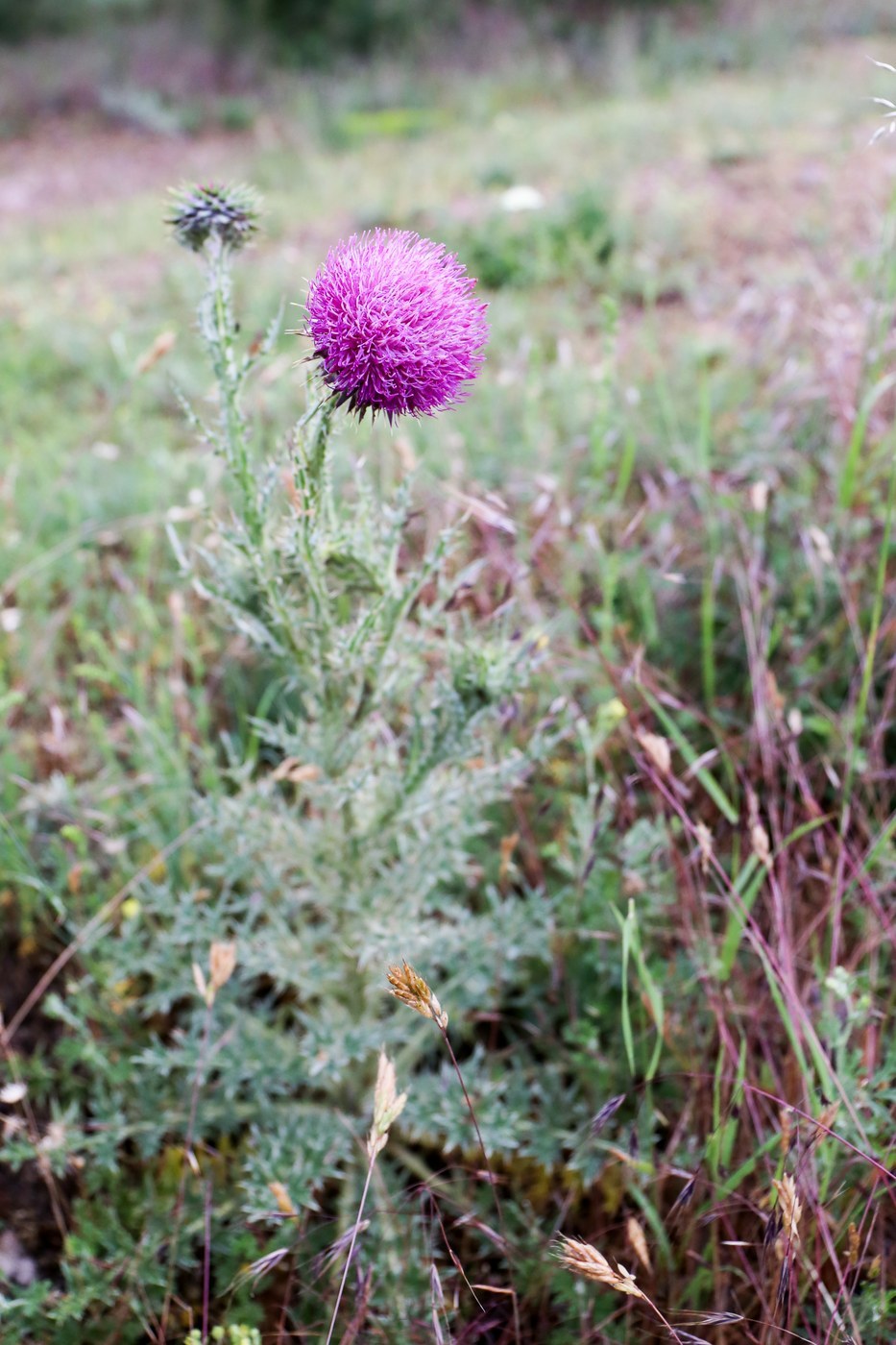
Musk Thistle
Carduus nutans
Musk thistle is a spiny biennial weed with large, nodding rose-purple flower heads; native to Eurasia, it is an aggressive invader of pastures and rangelands across North America.
- Light
- Full sun
- Water
- Low; drought-tolerant
- Difficulty
- Easy
Got a plant like this?
Identify any plant from a photo, free.
Overview
Musk thistle (Carduus nutans), also called nodding thistle, is a biennial (sometimes winter annual) in the aster family, native to Europe and Asia. It is named for the musky fragrance and the characteristic way its large flower heads droop, or nod, on the stem.
Introduced to North America, it has become a widespread noxious weed of pastures, rangelands and roadsides, where its spiny foliage deters grazing and its prolific seed lets it spread rapidly. A first-year rosette is followed by a tall, branched, flowering stalk in the second year.
How to identify it
A robust, very spiny plant up to 1.5–2 m tall in its flowering year.
- Rosette (year one): a large flat rosette of deeply lobed, waxy, spine-edged leaves with a pale midrib
- Stems: stout, branched, with spiny wings running down them
- Flowers: large (4–7 cm) rose-purple heads that nod downward, subtended by broad, spine-tipped bracts
- Seeds: plumed and wind-dispersed, produced in great numbers
Care & growing
Not cultivated; managed as a noxious weed.
- Light: full sun
- Water: drought-tolerant once established
- Soil: thrives on disturbed, fertile and overgrazed ground
- Temperature: biennial or winter annual; rosette overwinters, then bolts and flowers
- Propagation: by seed only, but a single plant can produce many thousands
Control by digging or cutting rosettes before flowering, mowing at bud stage, maintaining competitive pasture, and using biological control weevils or herbicides.
Habitat & origin
Native to Europe, western Asia and North Africa, musk thistle has naturalized across temperate North America and elsewhere. It invades pastures, rangelands, roadsides, ditches and other disturbed, sunny sites.
Overgrazed and disturbed land is especially vulnerable, where it can form dense, spiny stands that crowd out forage.
Frequently asked questions
Why is it called nodding thistle?
The large flower heads characteristically bend over and nod downward on their stalks, especially as they mature.
Is musk thistle good for pollinators?
Bees and butterflies are drawn to its nectar-rich blooms, but it is still an invasive weed that should be controlled in pastures and rangelands.
How do I get rid of musk thistle?
Cut or dig the rosettes before flowering, mow at the bud stage to prevent seeding, keep pasture dense, and use biocontrol weevils or herbicides for large infestations.
Is musk thistle native to North America?
No, it is native to Eurasia and North Africa and is an introduced noxious weed across much of North America.
Musk Thistle guides
In-depth guides for identifying, growing, and caring for Musk Thistle.
How to Care for Musk Thistle
Musk Thistle is a sun-loving, drought-tolerant biennial with nodding rose-purple blooms; grow it in lean soil and full sun where permitted.
Musk Thistle Identification Guide
Identify musk thistle (Carduus nutans), a spiny biennial with large nodding rose-purple flower heads backed by broad spine-tipped bracts. Covers its deeply lobed spiny leaves and how to separate it from bull and Canada thistle.