Nasturtium
Tropaeolum majus
Nasturtiums are easygoing annuals with round, lily-pad leaves and bright spurred flowers in fiery reds, oranges, and yellows. They are a cheerful, low-fuss choice for beds, baskets, and borders.
- Light
- Full sun to part shade
- Water
- Moderate; let topsoil dry
- Difficulty
- Easy
Got a plant like this?
Identify any plant from a photo, free.
Overview
Nasturtium in the garden refers to Tropaeolum majus, a fast-growing annual (or tender perennial) in the family Tropaeolaceae — not to be confused with watercress, whose botanical genus is also Nasturtium. It is grown as an ornamental.
With their distinctive round leaves resembling tiny lily pads and their boldly colored, long-spurred flowers, nasturtiums bring cheerful color to beds, baskets, and gardens. They thrive in poor soil and require almost no fuss, making them a classic beginner's plant.
Trailing and climbing types scramble over supports, while compact bush forms suit edging and containers.
How to identify it
Nasturtiums are easy to recognize by their unique foliage and spurred flowers.
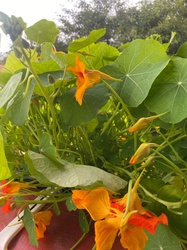
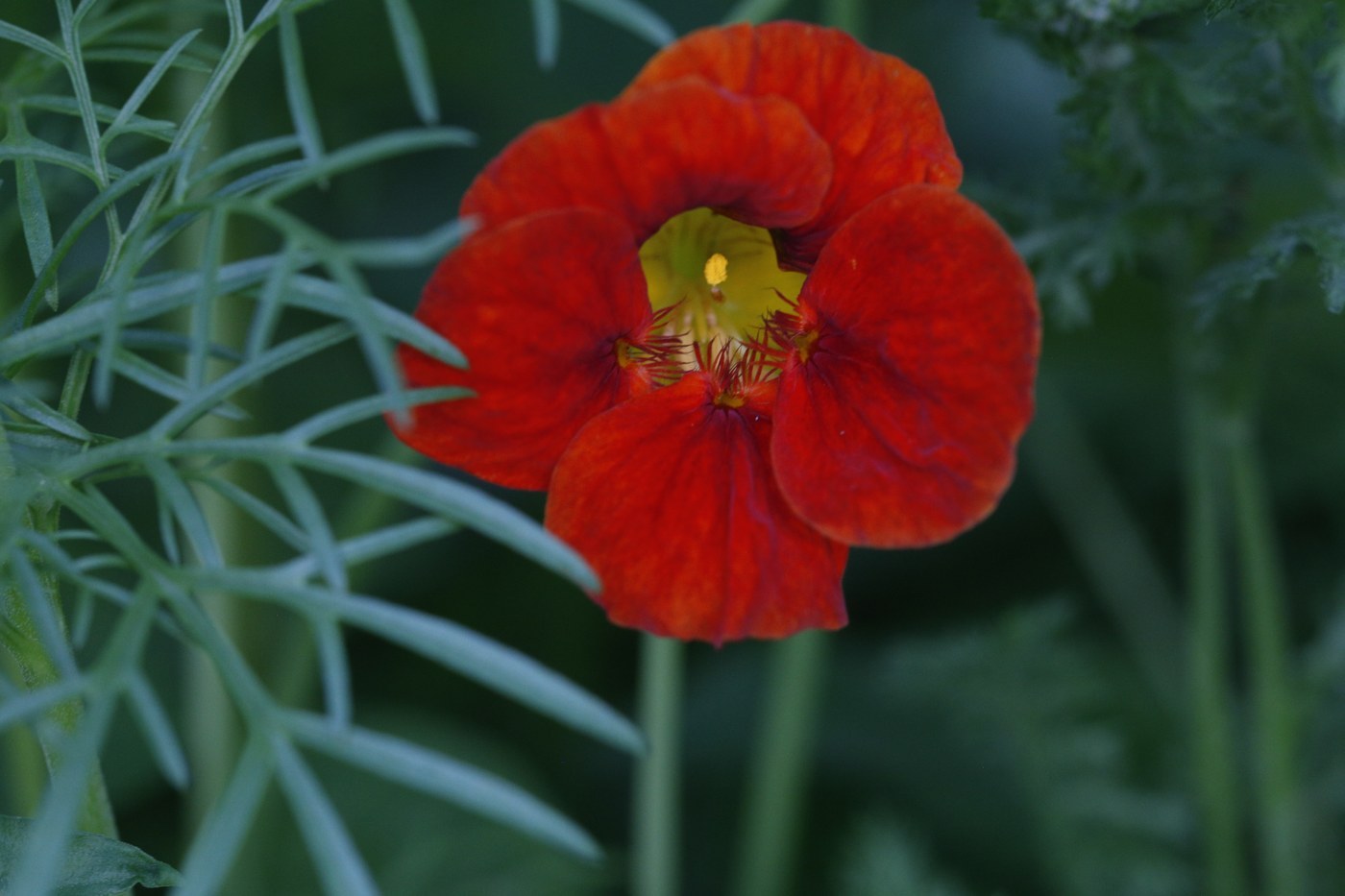
- Leaves: Round, shield-shaped (peltate) with the stalk attached near the center, like small lily pads; soft blue-green
- Flowers: Funnel-shaped with five petals and a long backward spur; vivid orange, red, yellow, and cream, often with darker throat markings
- Habit: Trailing, climbing, or mounding annual
- Size: Bush types around 1 ft; trailing/climbing types reaching several feet
Care & growing
Nasturtiums famously flower best when treated meanly.
- Light: Full sun for best flowering; tolerate light shade
- Water: Moderate; let the topsoil dry between waterings
- Soil: Poor to average, well-drained soil — rich soil produces lush leaves but few flowers
- Temperature: Warm-season annual, killed by frost; sow after danger of frost passes
- Feeding: None or very little needed; avoid nitrogen-rich feeds
- Propagation: Very easy from their large seeds sown directly where they are to grow
Watch for aphids and cabbage white caterpillars, which favor nasturtiums (a trait exploited in companion planting).
Habitat & origin
Tropaeolum majus is native to the Andes of South America, from Bolivia to Colombia, where the genus grows in cool mountain habitats. It was introduced to Europe in the 16th-17th centuries and quickly became a garden favorite.
Today nasturtiums are grown worldwide as warm-season ornamentals, popular in cottage gardens, vegetable plots, and hanging baskets. They self-seed readily in mild climates.
Frequently asked questions
Why does my nasturtium have lots of leaves but no flowers?
The soil is probably too rich in nitrogen; nasturtiums flower best in poor, lean soil, so avoid fertilizing them.
Do nasturtiums come back every year?
They are tender annuals killed by frost, but they self-seed freely and often reappear on their own the following spring.
Are nasturtiums good companion plants?
Yes, they are often planted near vegetables as a trap crop to draw aphids and caterpillars away from the main crop.
Nasturtium guides
In-depth guides for identifying, growing, and caring for Nasturtium.
How to Care for Nasturtium
Grow easy, cheerful nasturtiums: fast-sprouting climbers and trailers with round leaves and vivid jewel-toned blooms that thrive on neglect.
Nasturtium Identification Guide
Identify nasturtium by its round shield-like leaves, spurred funnel-shaped flowers in fiery colors, and trailing habit. Covers how to separate it from watercress nasturtium.
Nasturtium identified by the community
Real specimens identified with Plant Identifier.