Prairie Smoke
Geum triflorum
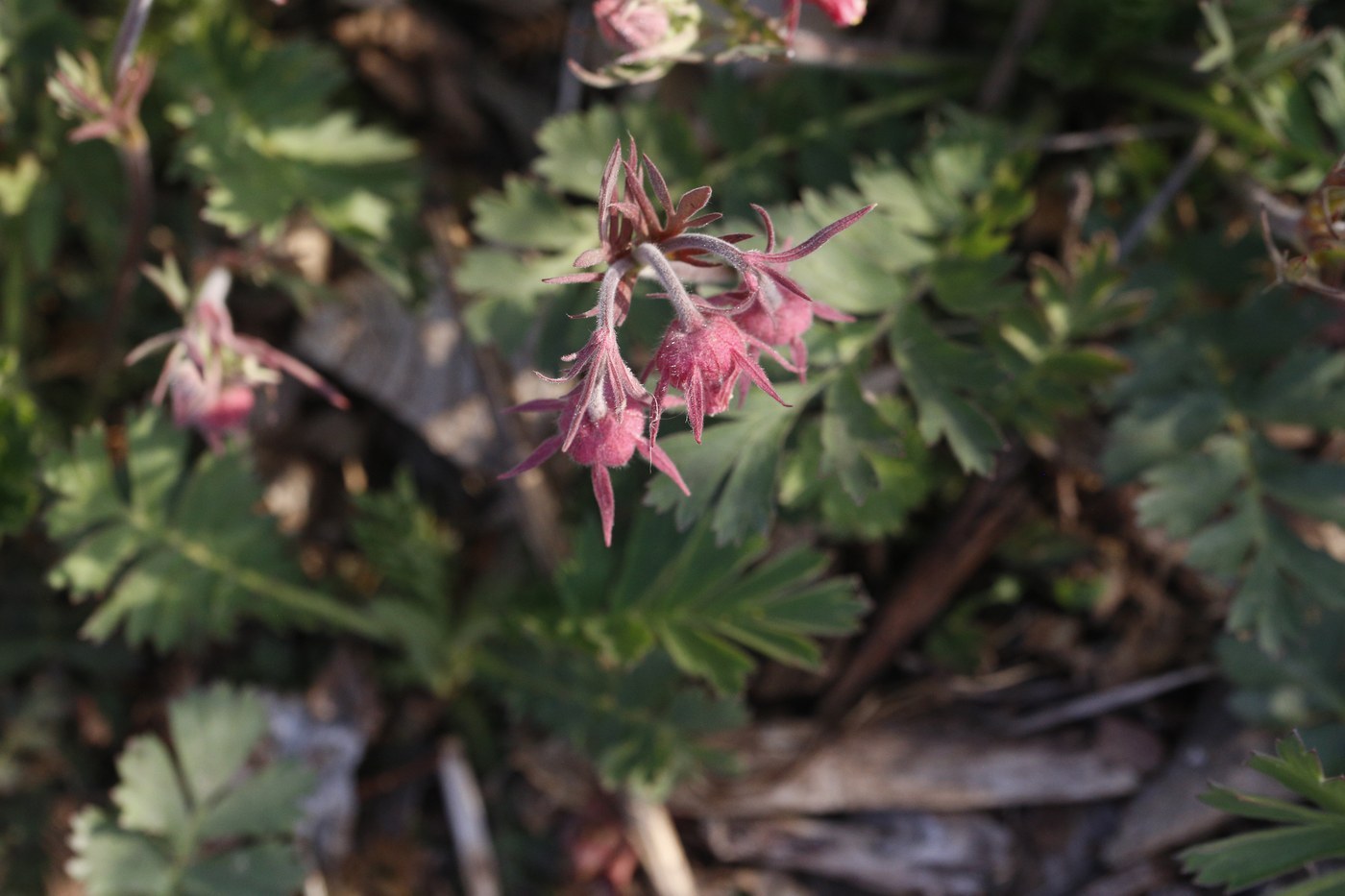
A charming North American prairie wildflower named for its feathery, smoke-like pink seed heads that follow nodding maroon spring flowers.
- Light
- Full sun to light shade
- Water
- Low; drought-tolerant once established
- Difficulty
- Easy
Got a plant like this?
Identify any plant from a photo, free.
Overview
Prairie smoke is a low, clump-forming perennial of the open prairies and dry meadows of North America. In spring it bears nodding, urn-shaped reddish-pink flowers, but its real fame comes afterward, when the seed heads elongate into wispy, plume-like tufts that shimmer across a hillside like drifting smoke.
A tough, long-lived plant, it forms tidy mounds of soft fern-like foliage and is a favorite for rock gardens and native plantings where its unusual seed display can be appreciated up close.
How to identify it
- Flowers: Nodding, urn- or bell-shaped, dusky pink to maroon, usually in groups of three on a single stalk.
- Seed heads: The signature feature — upright clusters of feathery, pinkish-gray styles 2-5 cm long resembling tufts of smoke or whiskers.
- Leaves: Fern-like, deeply divided, soft and hairy, forming a basal rosette.
- Height: Low, typically 15-40 cm tall, taller in fruit.
- Habit: Mat-forming clump that spreads slowly by rhizomes.
Care & growing
Light: Full sun gives the best form and seed display; tolerates light shade.
Water: Drought-tolerant once established; dislikes soggy soil.
Soil: Lean, well-drained, even gravelly soils; resents heavy wet clay.
Temperature: Very cold-hardy, suited to northern prairie climates.
Feeding: None needed; rich soil produces floppy growth.
Propagation: Sow seed (cold stratification helps) or divide clumps in spring or early fall.
Habitat & origin
Native to much of central and western North America, from the prairies of the Great Plains north into Canada and west to the Rockies. It grows in dry prairies, open meadows, rocky slopes, and well-drained grasslands.
In cultivation it is prized in native plant gardens, rock gardens, and water-wise landscapes across temperate regions with sufficient winter cold.
Frequently asked questions
Why is it called prairie smoke?
After flowering, the seed heads develop long, feathery pinkish-gray plumes that, en masse across a prairie, look like wisps of drifting smoke.
Does it need a lot of water?
No. Prairie smoke is drought-tolerant once established and actually prefers lean, well-drained soil over rich, moist conditions.
Is it good for pollinators?
Yes. Its early spring flowers are an important nectar source for native bees and bumblebees emerging at the start of the season.
When do the smoky seed heads appear?
The feathery plumes develop in late spring to early summer, shortly after the nodding flowers finish.
Prairie Smoke guides
In-depth guides for identifying, growing, and caring for Prairie Smoke.
How to Care for Prairie Smoke
Prairie Smoke (Geum triflorum) is an easy, drought-tolerant native perennial with nodding pink blooms and wispy, smoke-like seed plumes.
Prairie Smoke Identification Guide
Recognize Prairie Smoke by its nodding pink-maroon flowers and the wispy, smoke-like feathery seed plumes that give it its name.