Purple Coneflower
Echinacea purpurea
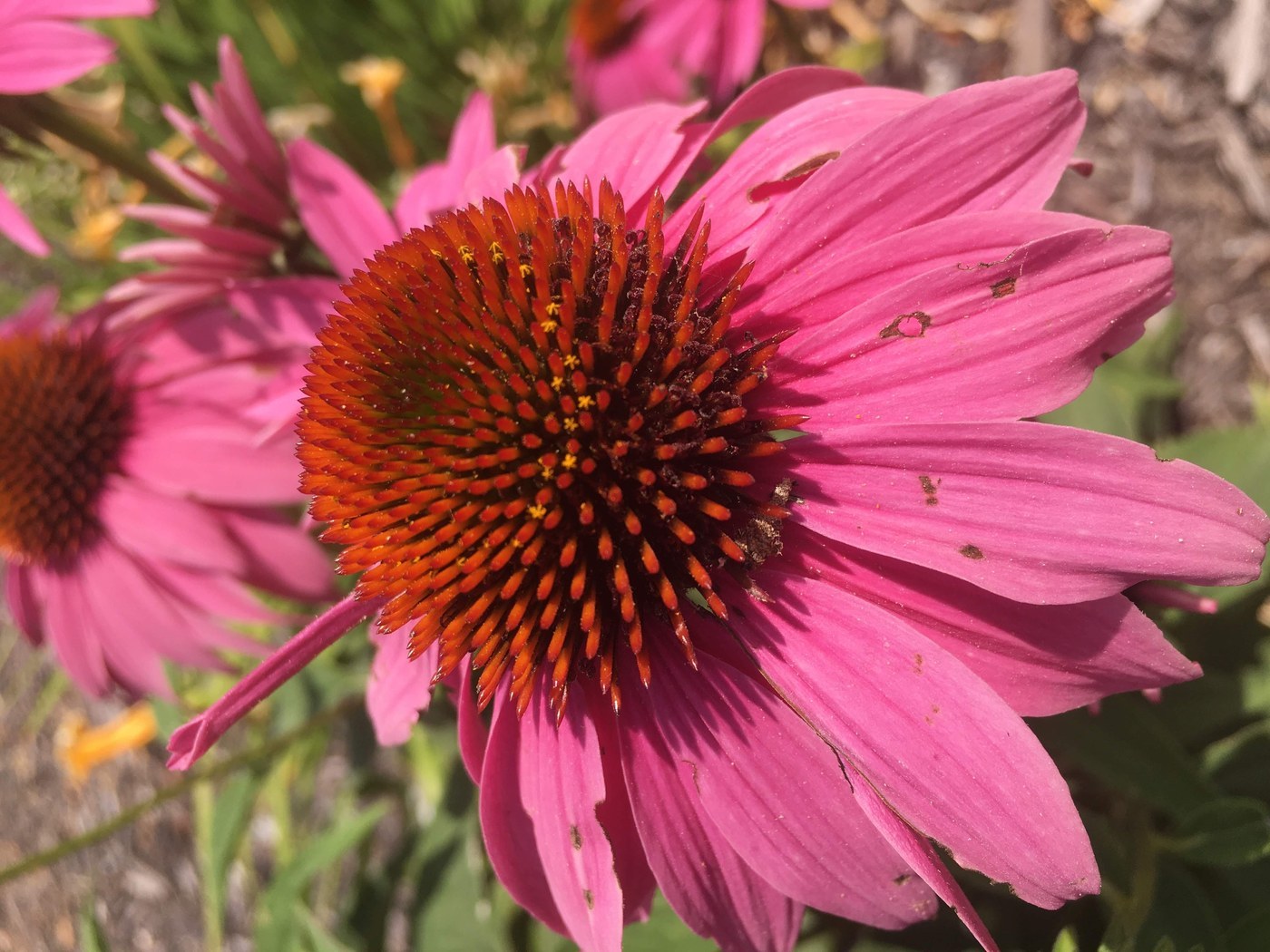
Purple coneflower is a tough, long-blooming prairie perennial with daisy-like pink-purple flowers and a raised, spiny orange center that draws butterflies and bees.
- Light
- Full sun
- Water
- Low; drought-tolerant once established
- Difficulty
- Easy
Got a plant like this?
Identify any plant from a photo, free.
Overview
Purple coneflower is a hardy North American perennial in the daisy family, prized for its resilience, long bloom season, and value to pollinators. Its name refers to the prominent cone-shaped central disk.
A staple of prairie and naturalistic plantings, it tolerates heat, drought, and poor soil, and is one of the most widely grown perennials in temperate gardens.
How to identify it
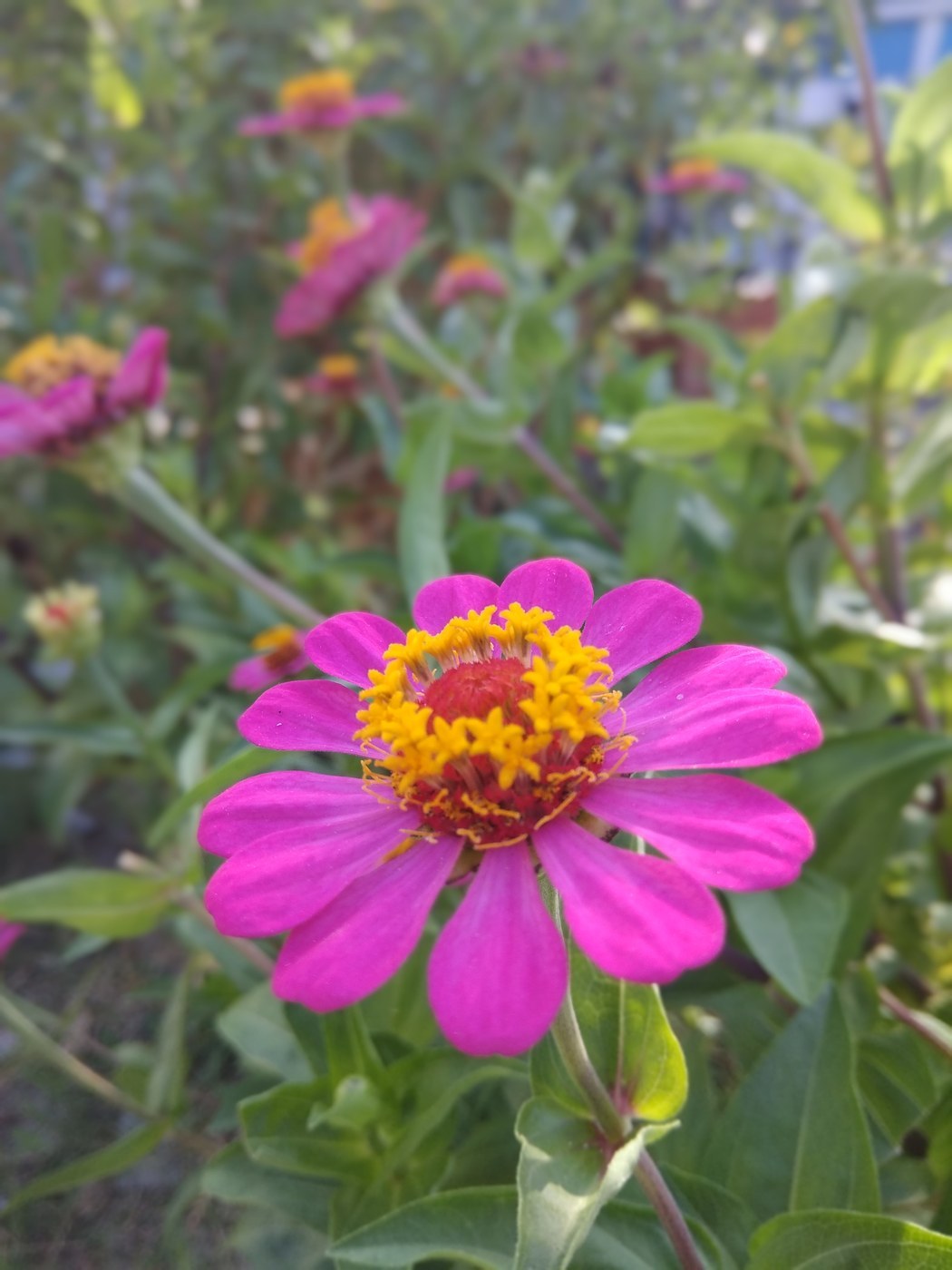
Identified by its drooping pink-purple petals around a bristly orange cone.
- Flowers: 8-12 cm wide, rosy-purple ray petals that droop slightly, surrounding a raised, spiky copper-orange center
- Leaves: coarse, lance-shaped, rough-textured, on stiff stems
- Height: 60-120 cm, upright clump-forming
- Seed heads: persistent spiny cones that feed birds in winter
Care & growing
Among the easiest perennials once established.
- Light: full sun (tolerates light shade)
- Water: drought-tolerant once rooted; water young plants regularly
- Soil: well-drained, average to poor; dislikes wet feet
- Feeding: minimal
- Propagation: division in spring or sow seed; self-seeds modestly
Habitat & origin
Native to the prairies, open woodlands, and meadows of central and eastern North America.
Adapted to full sun and well-drained soils, it withstands heat and drought. It is now one of the most widely grown perennials in gardens across temperate regions.
Frequently asked questions
Do I need to deadhead coneflowers?
Deadheading prolongs bloom, but leaving some seed heads feeds birds and allows self-seeding.
Will coneflowers spread?
They form expanding clumps and self-seed modestly, but are not aggressive and are easy to divide.
Is coneflower good for pollinators?
Yes, it is one of the best perennials for attracting bees and butterflies, and birds eat its seeds.
Purple Coneflower guides
In-depth guides for identifying, growing, and caring for Purple Coneflower.
How to Care for Purple Coneflower
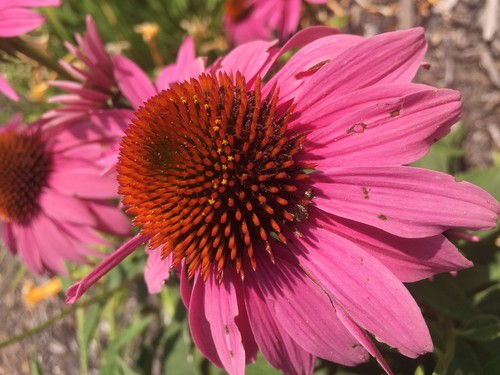
Grow Purple Coneflower (Echinacea purpurea), a sun-loving, drought-tolerant prairie perennial with bold daisy-like blooms and spiny cones.
Purple Coneflower Identification Guide
Identify purple coneflower (Echinacea purpurea) by its drooping pinkish-purple ray petals, spiny raised orange-brown central cone, and coarse rough leaves.